Your First Saree Buyer Guide: Easy Fabrics, Mistakes to Avoid & a Starter Checklist
Shopping for your first saree or Indian festive outfit in 2026? This updated guide for Indian-American women covers beginner-friendly fabrics, common mistakes, a practical checklist, and expert tips for buying sarees online. Discover which sarees work best for first-time buyers, how to spot authentic handloom, and must-know care steps—so you can shop confidently and celebrate in style.
First Saree Buyer Guide 2026: Start Confident, Shop Smart
Are you shopping for your first saree or Indian festive outfit in 2026? The secret is to choose easy-to-drape fabrics and authentic weaves that flatter, feel comfortable, and suit your occasion. This updated first saree buyer guide—especially for Indian-American women in the US—explains beginner-friendly fabrics, current pricing, authenticity checks, and care tips. Skip the overwhelm and discover which sarees online work best for first-time buyers so you can shop with confidence.
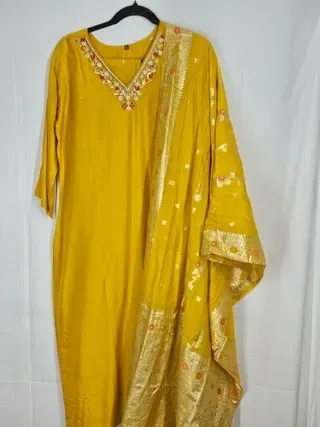
Why Beginner Fabrics Matter
If you’re new to sarees or Indian festive wear, fabric choice is everything. Fabrics like pure Dola silk, Chinon, and muslin are naturally lightweight, drape smoothly, and resist creasing—making them ideal for first-timers. These qualities help your saree or gown fall gracefully and stay comfortable throughout weddings, Diwali parties, or family gatherings. For more on how sarees compare to other Indian outfits, see Saree vs Salwar Kameez: Comfort, Occasion & Styling Compared.
What is the Best Saree for a First-Time Buyer?
Definition Snippet: The best saree for a first-time buyer in 2026 is a soft, lightweight, and easy-to-manage fabric—like pure Dola silk, Chinon, or muslin. Look for minimal embellishment and a pre-stitched or semi-stitched option for easier draping. These beginner sarees offer comfort, a neat fall, and are simple to wear beautifully, especially when buying sarees online.
Beginner-Friendly Fabrics by Region & Weave
- Dola Silk (Bihar, Odisha): Smooth, subtly lustrous, and less prone to wrinkling than pure silk. Dola silk, woven on pit looms, blends traditional Indian artistry with easy wearability.
- Chinon (Varanasi, Surat): A soft, sheer silk blend that’s airy and forgiving. Pure Chinon is prized for its flowing drape and is often used for Anarkali gowns.
- Muslin (Bengal, Lucknow): Historically known as the world’s finest cotton, muslin is feather-light and cool on the skin. Modern silk muslin adds a gentle sheen.
How to Choose Your First Saree or Festive Outfit: Starter Checklist
- Opt for easy-to-drape fabrics: Pure Dola silk, Chinon, or muslin are excellent for beginners.
- Select semi-stitched or ready-to-wear: These minimize draping errors and save time.
- Avoid heavy zari borders: Thick metallic work can weigh down the saree and make pleating harder for first-timers.
- Pick cheerful, mid-tone colors: Ruby red, emerald green, or off-white flatter most skin tones and are versatile for various occasions.
- Check for authentic handloom or artisan-made tags: Look for GI tag or state handloom board labels where possible. Swathi Design sources directly from artisan weavers in India for authenticity. Learn more about handloom certification in our GI Tag Handloom Certification Saree guide.
- Start with a manageable budget: Quality entry-level sarees and gowns at Swathi Design range from $28–$48, making it easy to explore styles before investing more.
Budget Tiers: What to Expect in Each Range
| Budget | What You Get | Recommended Pieces |
|---|---|---|
| Under $100 | High-quality machine or hand-finished sarees, pre-stitched gowns, muslin lehengas | Elegant Pure Dola Silk Gown, Off-White Silk Muslin Lehenga |
| $100–$300 | Handloom sarees, more intricate embroidery, pure silk blends | Entry-level Kanjivarams, Chanderi, Banarasi, or premium Anarkalis |
| $300+ | Certified GI tag handloom sarees, wedding heirlooms, complex handwork | Kanjivaram silk sarees (see how they're made), pure Banarasi zari sarees |
Which Saree Fabric is Easiest to Drape?
List Snippet: The easiest saree fabrics to drape for beginners are:
- Dola Silk – smooth, medium-weight, resists creasing
- Chinon – soft, airy, and forgiving for pleating
- Muslin – extremely lightweight, natural fall
Fabrics like pure Kanjivaram or Banarasi silk, while beautiful, can be stiff or heavy for first-timers. For a stress-free experience, start with drapes that have a soft hand-feel and manageable body. For tips on wearing sarees in different settings, check How to Wear a Saree to the Office: Workwear Styling Guide.
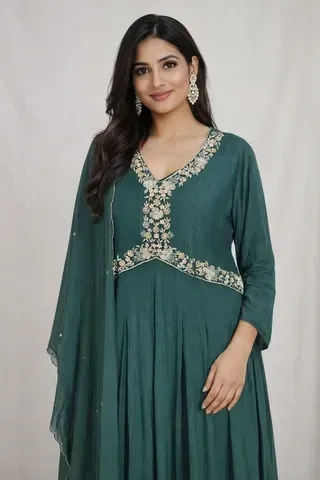
Product Spotlight: Elegant Pure Dola Silk Gown—Tradition Meets Ease
If you want the grace of a saree with the simplicity of a gown, consider the Elegant Pure Dola Silk Gown ($38.00 in 2026). Dola silk, a regional specialty from Bihar and Odisha, uses a unique warp and weft blend to achieve its signature drape and luminous finish. Unlike heavy Kanjivaram, Dola silk is airy, velvety, and adapts to movement—a boon for beginners.
Authenticity tip: Hold Dola silk against the light—authentic pieces reveal a subtle granular texture, evidence of the pit loom’s hand-finish. Avoid perfectly uniform, overly shiny fabrics, which may indicate synthetic blends.
Care tip: Always dry clean Dola silk and store folded in a cotton bag, away from direct sunlight, to prevent color fading and texture loss. Detailed care steps are available in our silk ironing guide.
Product Spotlight: Handcrafted Pure Chinon Anarkali—Effortless Draping, Festive Shine
The Pure Chinon Anarkali Gown ($48.00) is a classic for those who appreciate the flow of a saree but want a beginner-friendly fit. Chinon, originating in Varanasi, is woven from fine silk fibers on handlooms, giving it a gossamer-like drape. Hand-embellished details add festive appeal without bulk.
Authenticity tip: Gently stretch a small section—authentic Chinon will bounce back without permanent creasing, thanks to its natural silk content. Machine-made polysilks lack this resilience.
Care tip: Hand wash in cold water with mild detergent, or dry clean for longevity. Avoid wringing; instead, roll in a towel to remove excess moisture, then air dry flat.
Product Spotlight: Off-White Silk Muslin Lehenga—Heritage in Every Thread
The Off-White Pure Muslin Lehenga ($28.00) brings Bengal’s age-old muslin tradition into a modern silhouette. Hand-embroidered by artisans, its soft off-white silk muslin is light as air—ideal for warm indoor gatherings or outdoor festivities.
Authenticity tip: Rub a small section between your fingers; fine muslin should feel cool and smooth, with a visible hand-stitched selvedge (the fabric’s self-finished edge). This is a hallmark of genuine handloom muslin.
Care tip: Hand wash gently in cold water and air dry in shade. Never twist; instead, reshape while damp and store flat to preserve embroidery.
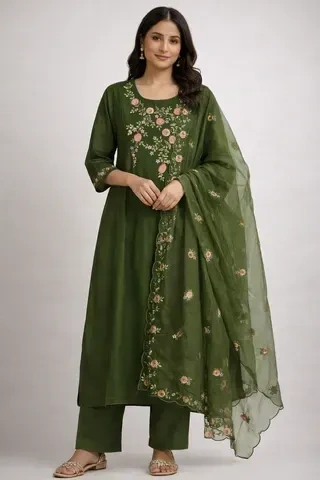
How to Spot Authentic Indian Handloom: The Real vs. Replica Test
Authentic handloom sarees and gowns bear subtle markers: a soft, uneven texture from human weaving, selvedges with tiny pinholes (from loom pins), and natural variation in motif placement. Many authentic pieces will carry a GI tag or state handloom board label—although not all traditional weaves have official certification. Swathi Design works with Indian artisan weavers, ensuring each piece honors its regional craft. For a deep dive into the weaving process, read How Is a Kanjivaram Saree Made? Step-by-Step Weaving Guide.
For more on reading authenticity labels, see our guide on GI Tag Handloom Certification Saree.
How to Care for Your First Saree or Gown: Practical Steps
- Silk & Dola Silk: Dry clean only. Fold with acid-free tissue and store in a breathable cotton bag. Avoid plastic covers, which can trap moisture.
- Chinon & Muslin: Hand wash in cold water with a gentle detergent. Air dry in shade to preserve color and minimize shrinkage.
- Ironing: Use a low-heat silk setting. Place a thin cotton cloth between iron and fabric. See detailed steps in our silk saree ironing guide.
Non-obvious tip: For muslin and Chinon, never hang heavy, wet garments—this stretches the weave. Lay flat instead.
Should Beginners Start with a Pre-Stitched Saree?
Pre-stitched sarees are ready-to-wear drapes sewn into pleats and pallu. For absolute beginners, these offer a quick, foolproof alternative to traditional wrapping—ideal for weddings, cultural events, or those on a tight schedule. However, they lack the flexibility of classic sarees for creative draping and may not fit all body types perfectly. Many first-time buyers prefer semi-stitched gowns or Anarkalis (like the Pure Chinon Anarkali Gown) as a gentle first step. For more on half sarees, read What Is a Half Saree (Langa Voni)? A Complete Guide.
What Mistakes Do First-Time Saree Buyers Make?
- Choosing heavy, stiff fabrics that are difficult to drape (e.g., pure Kanjivaram, art silk with heavy zari borders).
- Overlooking the importance of blouse fit—a poorly-fitted blouse can ruin the look and comfort.
- Not checking authenticity—falling for synthetic blends or powerloom replicas when seeking handloom.
- Ignoring care instructions—improper washing or storage can damage delicate weaves.
- Buying only for occasion, not future wear—classic colorways and simple motifs have longer style life.
For advice on budgeting for special occasions, see How Much to Spend on a Bridal Saree: US Wedding Budget Guide.
Styling Tips for Beginners: Simple Looks with Maximum Impact
- Jewelry: Pair bold statement earrings with minimal neckwear for a balanced festive look. For the Off-White Muslin Lehenga, try polki or kundan studs with a sleek bun.
- Footwear: Block heels or embroidered juttis add comfort and a dash of tradition.
- Clutch: Choose a jeweled clutch for evening events, or a metallic potli for weddings.
- Layer: Drape a lightweight dupatta or silk shawl for added elegance and warmth during cooler months.
For those blending Western and Indian styles, see our tips in Mix Western and Ethnic Wear: Fusion Outfit Formulas.
First Saree Buyer Checklist
- Pick an easy-to-drape fabric (Dola silk, Chinon, muslin)
- Choose a semi-stitched or pre-stitched option if nervous about draping
- Check for artisan or handloom sourcing
- Confirm your US size—Swathi Design’s sizing runs from US 4-12 for most gowns
- Read the care label and plan for storage
- Set a practical budget (under $100 for first-time buyers)
- Order in advance—allow time for alterations if needed
Ready to shop? Browse Dresses for more options.
FAQ for First Saree Buyers (2026)
What is the best saree for a first-time buyer?
Definition Snippet: The best saree for a first-time buyer is a lightweight, soft-finish saree made from Dola silk, Chinon, or muslin—especially in semi-stitched or pre-stitched styles. These sarees are easy to drape, comfortable for long wear, and ideal for buying sarees online as a beginner. For more on comparing options, see Saree vs Salwar Kameez.
Which saree fabric is easiest to drape?
Paragraph Snippet: Chinon and Dola silk are the easiest saree fabrics to drape for beginners. Both are lightweight, smooth, and resist creasing, making pleating and pallu arrangement simple even for first-timers. Muslin is also a top pick for warm weather due to its airy, breathable texture. These fabrics are consistently rated as the best sarees online for first-time buyers.
Should beginners start with a pre-stitched saree?
Pre-stitched sarees provide a hassle-free entry point for beginners, offering the look of a saree without the complexity of traditional draping. They’re especially useful for weddings or events where time and comfort are priorities. However, semi-stitched gowns or Anarkalis are also beginner-friendly and offer more fit flexibility. For more on different saree types, see What Is a Half Saree?
What mistakes do first-time saree buyers make?
Common pitfalls include choosing heavy, stiff fabrics, neglecting blouse fit, buying highly embellished sarees that are hard to manage, and skipping authenticity checks. For a positive first experience, pick easy fabrics and check for genuine handloom or artisan sourcing. For budgeting, read How Much to Spend on a Bridal Saree.
Which sarees online work best for first-time buyers?
The best sarees online for first-time buyers are those made from soft, lightweight fabrics like Dola silk, Chinon, or muslin, available in semi-stitched or pre-stitched formats. These are comfortable, easy to drape, and require minimal skill—making them ideal for anyone new to Indian wear. Look for trusted stores with clear sizing, care instructions, and artisan sourcing, like Swathi Design. For more on buying online, see our guides on budgeting and authenticity.
Shop the Collection
Ready to find your first saree or festive gown? Explore our full range of beginner-friendly and handloom-inspired pieces at Swathi Design. For styling help, use the WhatsApp concierge or browse Dresses to get started. Embrace your roots—one beautiful weave at a time.
Featured in this guide
Part of the Handwoven Silks: Chanderi, Tussar & Raw Mango guide collection.
Related guides
- Elevate Every Occasion: Handcrafted Indian Gowns & Frocks for Modern Celebrations in the USA
- Elevate Every Occasion: Pure Chanderi Pattu Silk Sarees for Indian-Americans in the USA
- Exquisite Russian Crape Silk Saree: Timeless Elegance for Every Occasion
- Luxurious Pure Russian Crape Saree: Timeless Elegance for Every Occasion
- Elevate Your Festive Wardrobe with Exquisite Handwoven Chanderi Sarees and Anarkali Dresses