How Is a Kanjivaram Saree Made? Step-by-Step Weaving Guide
Kanjivaram sarees are famed for their luminous silk, intricate korvai borders, and centuries-old weaving traditions from Tamil Nadu. In this detailed guide, textile specialist Priya Menon explains how a Kanjivaram saree is woven—from sourcing mulberry silk to the three-shuttle korvai technique—plus tips on spotting authentic handloom craftsmanship and caring for your heirloom piece.
How Is a Kanjivaram Saree Made? An Introduction
Kanjivaram sarees are among the world’s most revered handwoven textiles, celebrated for their radiant silk, contrast borders, and the meticulous artistry of weavers in Kanchipuram, Tamil Nadu. But how is a Kanjivaram saree made? The answer lies in the region’s unique weaving techniques, use of pure mulberry silk thread, and age-old traditions passed down through generations. This guide walks you step-by-step through the process, equipping you with knowledge to appreciate, identify, and care for these masterpieces—whether you’re investing in a heritage piece or simply admiring the craft.
What You'll Need: The Materials and Tools of Kanjivaram Weaving
- Pure mulberry silk threads (warp and weft)
- Silver zari (genuine zari is silver coated with gold)
- Natural dyes (for traditional colors)
- Pit loom or frame loom
- Three shuttles (for korvai border technique)
- Spools, bobbins, and hand tools for winding, tying, and finishing
The quality of a Kanjivaram saree begins with its raw materials: the silk, traditionally sourced from Karnataka, and pure zari made with silver and gold plating, often from Surat. Only these ensure the rich drape and signature shimmer Kanjivaram is known for.
Step 1: Sourcing and Preparing the Silk
- Sourcing Mulberry Silk: Authentic Kanjivaram sarees use pure mulberry silk filaments, prized for their long staple length, natural shine, and soft strength. Most silk is sourced from Karnataka, with weavers checking for consistency and purity.
- Degumming and Dyeing: The raw silk is degummed to remove sericin, then dyed in vibrant hues using natural or acid dyes. Traditional jewel tones—peacock blue, ruby red, temple gold—reflect the region’s temple heritage.
- Spinning the Yarn: Three-ply yarn is twisted for the warp and two-ply for the weft, giving Kanjivaram sarees their weight and drape. The silk is then sun-dried, reeled, and wound onto bobbins.
Step 2: Setting Up the Loom
- Pit Looms for Handloom Weaving: Most authentic sarees are woven on pit looms dug into the ground to maintain humidity, which keeps silk threads supple and reduces static—a subtle but critical factor in handloom weaving.
- Warping: The dyed warp threads are stretched, aligned, and tied to the loom’s beam. For a 6-yard saree, hundreds of warp threads are meticulously counted and strung.
- Preparing the Three-Shuttle System: For korvai borders, three shuttles are loaded—one for the central body, one each for left and right borders. Each shuttle carries a different color and often different material (zari for borders, silk for body).
Step 3: The Three-Shuttle Korvai Border Technique
Korvai is the hallmark of classic Kanchipuram sarees. The term refers to the labor-intensive method of weaving contrasting borders and body, accomplished with three shuttles and often two weavers working in concert.
- Contrast Borders: The border and body are woven separately, then interlocked row by row using the korvai technique. This allows for bold color and material contrast—gold zari on the border, colored silk on the body.
- Petni Pallu Join: The pallu (end piece) is sometimes joined using the petni technique, where the pallu is set on the loom after the body, allowing for intricate designs and even more dramatic contrast.
- Zari Work: Pure zari—silver thread electroplated with gold—is woven into the border and pallu motifs using supplementary weft techniques, forming iconic temple, peacock, or check patterns.
Korvai border in a Kanjivaram: A korvai border is a signature weaving technique in Kanjivaram sarees where the contrast border is interlocked with the main body using a three-shuttle method, creating a clear, strong demarcation. This is a key marker of authenticity and craftsmanship.
Step 4: Weaving the Body, Pallu, and Motifs
- Body Weave: The main body is woven in plain or figured (jacquard) weave, featuring patterns like checks, stripes, or floral motifs. The density of silk and zari threads gives Kanjivaram its renowned weight and drape.
- Pallu (End Piece): The pallu is often woven with elaborate motifs—mythological scenes, temple architecture, mango (paisley), or traditional coin designs—using extra zari and colored silk. The pallu is joined using the petni technique for visual and textural contrast.
- Motif Inspiration: Many motifs are drawn from South Indian temples, mythology, and nature, echoing the spiritual and cultural roots of Kanchipuram.
How to Spot an Authentic Kanjivaram Saree
- Three-Shuttle Korvai Join: Check the reverse side—authentic korvai borders show tiny interlocking threads, not a printed or glued join.
- GI Tag and Silk Mark: Genuine Kanchipuram silks carry a Government of India (GI) tag and/or Silk Mark label to certify region and material.
- Zari Test: Rub a small section of zari gently between your fingers; real zari will not flake or reveal a white thread core (unlike imitation).
- Weight: True Kanjivaram sarees feel substantial due to their triple-twisted silk and heavy zari—often 750g or more for a full saree.
Definition snippet: An authentic Kanjivaram saree is a handwoven silk saree from Kanchipuram, Tamil Nadu, featuring triple-twisted mulberry silk, real silver zari, and the distinctive korvai contrast border created by the three-shuttle weaving technique.
Step 5: Finishing and Quality Checks
- Cutting and Tying: After the saree is woven, loose threads are trimmed, and the ends are knotted or twisted into tassels.
- Washing and Ironing: The saree is gently washed to set the color and remove any starch, then steam pressed for the final finish.
- Quality Inspection: Each saree is checked for evenness of weave, perfection of motifs, and purity of zari before being folded and packed.
How to Care for Your Kanjivaram Saree
- Dry Clean Only: Always dry clean to preserve silk sheen and zari integrity. Never machine wash or soak.
- Proper Storage: Fold with muslin cloth to prevent friction and tarnish. Refold every 2-3 months to avoid permanent creases.
- Avoid Direct Sunlight: Keep away from direct sunlight and dampness to protect color and silk fiber.
- Usable Tip: Place a few dried neem leaves or silica gel sachets in your storage bag to prevent silverfish and moisture damage.
For more on saree maintenance and care, see our related post: How to Wear a Saree to the Office: Workwear Styling Guide.
Why Is a Kanjivaram Saree Worth the Investment?
Kanjivaram sarees command respect for their labor-intensive production, use of high-grade mulberry silk, and legacy of over 400 years. Each piece can take 10-20 days to weave, with some bridal sarees requiring up to a month. These sarees are not just garments—they are woven records of South Indian artistry, ideal for weddings, milestone celebrations, and heirloom gifting.
Kanjivaram vs Other Sarees: Quick Comparison
| Saree Type | Main Region | Material | Weave Feature |
|---|---|---|---|
| Kanjivaram | Kanchipuram, TN | Pure mulberry silk, zari | Korvai border, petni pallu |
| Banarasi | Varanasi, UP | Kora silk, tissue, zari | Brocade patterns, jangla motifs |
| Bhagalpuri | Bhagalpur, Bihar | Tussar silk | Textured weave, natural sheen |
Interested in other regional weaves? Explore the Sarees collection at Swathi Design.
How to Style a Kanjivaram Saree for a Wedding?
To style a Kanjivaram saree for a wedding, choose an embroidered or contrast blouse and traditional gold jewelry like temple jhumkas and kamarbandh. Drape the saree in the classic nivi style to showcase the korvai border and grand pallu. For footwear, metallic or brocade sandals complement the saree’s richness. Carry a beaded clutch or potli bag for a festive finish. Maintain minimal makeup with a bold lip and gajra in your hair for a complete South Indian bridal or guest look.
Kanjivaram-Inspired Looks from Swathi Design
While Swathi Design specializes in a range of Indian ethnic wear, you can appreciate the influence of Kanjivaram craftsmanship in several curated sarees and dresses:
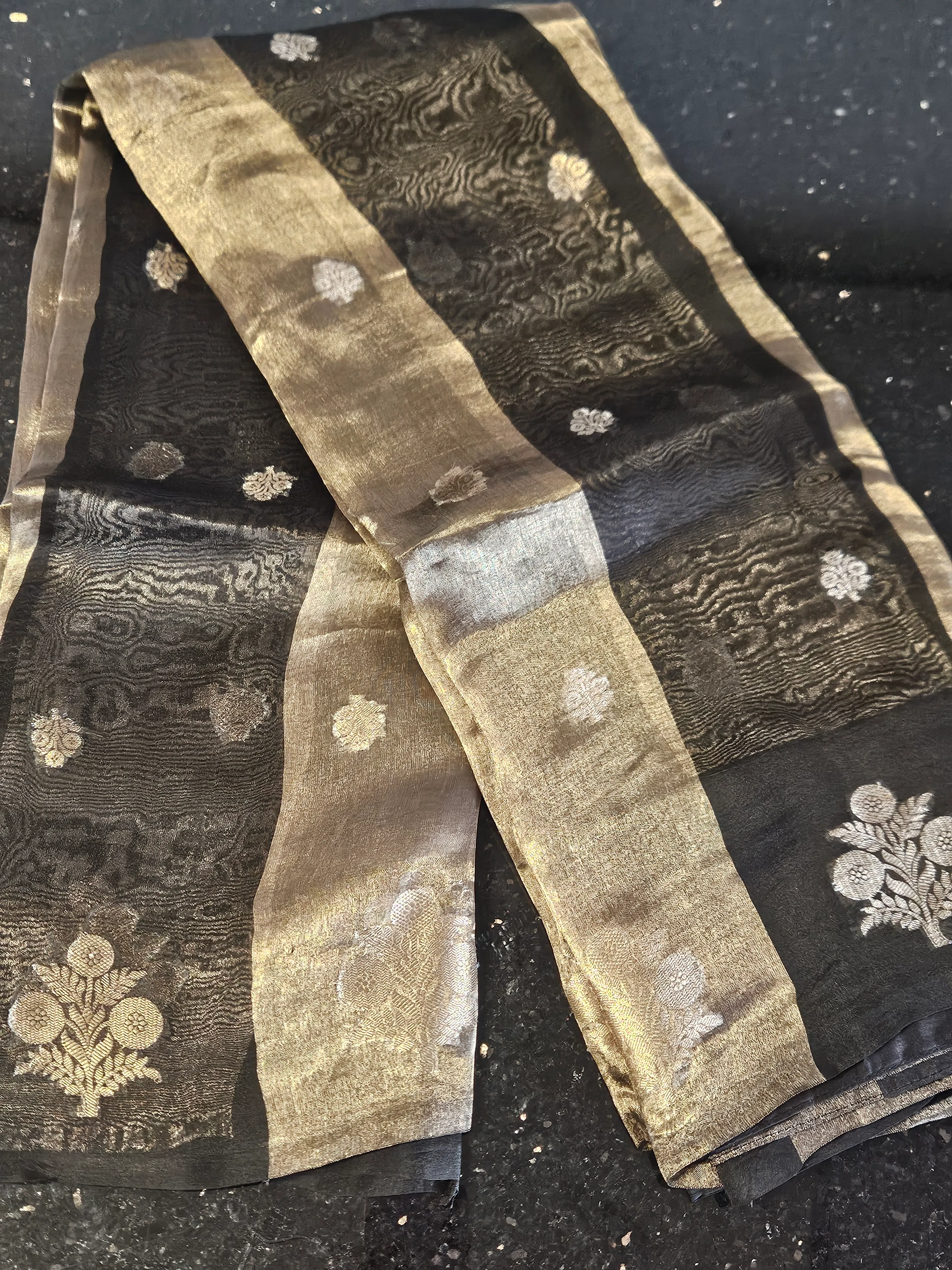
- Pure Banarasi Kora Tissue Saree with Gold and Silver Zari Detailing: This saree echoes the luminous effect of Kanjivaram silk with its sheer kora tissue and intricate zari work—ideal for festive occasions and grand celebrations.
- Pure Banarasi Kora Tissue Silk Saree for Weddings & Festivals: Featuring handwoven gold zari and pastel accents, this saree bridges North and South Indian textile traditions.
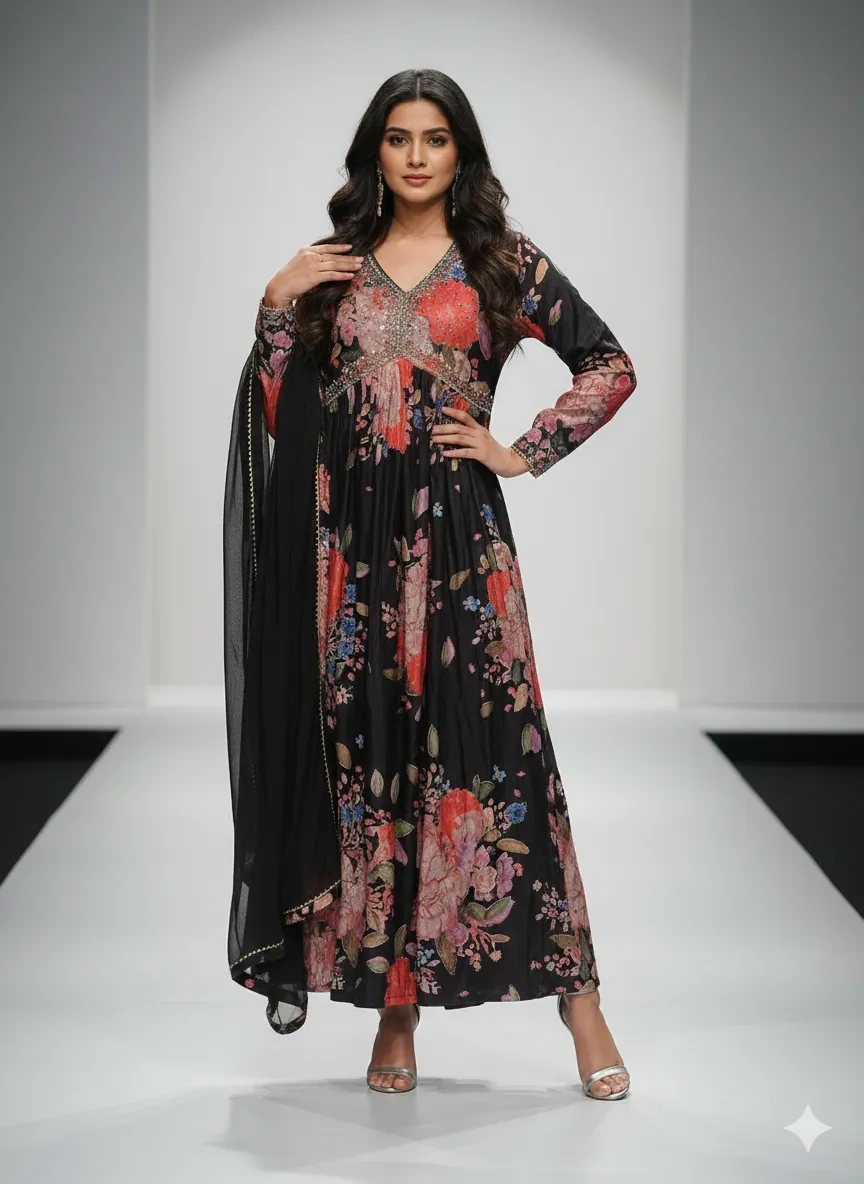
- Black Silk Anarkali Gown with Floral Embroidery: For those seeking the grandeur of silk in a contemporary form, this Anarkali offers hand-embellished artistry and a regal silhouette—perfect for receptions or festive evenings.
Browse the Dresses and Sarees categories for the latest in handloom-inspired fashion.
FAQs About Kanjivaram Sarees
How many days does it take to make a Kanjivaram saree?
It typically takes 7 to 20 days to weave a single Kanjivaram saree, depending on the complexity of the motifs, border, and pallu. Bridal sarees with heavy zari and intricate designs may require up to a month of dedicated handwork by skilled weavers.
What is the korvai border in a Kanjivaram?
Korvai border in a Kanjivaram saree is a unique weaving technique where the border and main body are woven separately and interlocked using three shuttles, creating a sharp color and texture contrast. This labor-intensive process distinguishes authentic Kanchipuram silk sarees from imitations.
Why are Kanjivaram sarees so heavy?
Kanjivaram sarees are heavy because they use triple-twisted mulberry silk yarns for the warp and weft, and incorporate pure silver zari in the border and pallu. The dense weave and high thread count contribute to their weight and luxurious drape.
What silk is used in Kanjivaram sarees?
Kanjivaram sarees are made using pure mulberry silk, renowned for its long, lustrous fibers and soft strength. This silk is primarily sourced from Karnataka, ensuring the durability and signature sheen of each saree.
Shop the Collection
Inspired to explore authentic handloom and contemporary Indian fashion? Browse our full collection of sarees, gowns, and dresses—each piece thoughtfully sourced from Indian artisan weavers and available with flat-rate US shipping. For styling help or questions, Swathi Design offers personal WhatsApp consultations and friendly support for Indian-American women seeking both tradition and modernity.
Featured in this guide
Part of the Kanjivaram & Banarasi Silk Sarees guide collection.
Related guides
- Timeless Elegance: Handwoven Chanderi & Banarasi Silk Sarees for Every Special Occasion
- Celebrate Timeless Elegance with Luxurious Raw Mango Silk and Banarasi Sarees
- Timeless Elegance Redefined: The Latest Handwoven Banarasi & Kanchipuram Sarees for Every Celebration
- Discover the Timeless Beauty of Banarasi and Mangalagiri Silk Sarees
- Timeless Elegance: Explore the Artistry of Pure Zari and Banarasi Tissue Sarees