What to Wear for Pongal: Saree Traditions, Gold Palettes & Family Festive Looks
Wondering what to wear for Pongal? Discover the meanings behind Pongal saree traditions, the special role of yellow and gold, and how to choose, style, and care for Banarasi Kora Tissue sarees for the Tamil harvest festival. Includes tips for dressing the whole family, from half-sarees for teens to regal drapes for elders.
What to Wear for Pongal: A Guide Rooted in Tamil Tradition
For Pongal, the Tamil harvest festival celebrated across South India and among diaspora families, the saree is more than an outfit—it is a symbol of prosperity, auspicious beginnings, and intergenerational connection. If you are seeking the answer to "what to wear for Pongal," the most traditional and meaningful choices are sarees in hues of gold, yellow, cream, or festive green, often paired with heritage weaves and family heirlooms. This guide explores the roots of Pongal attire, with a spotlight on Banarasi Kora Tissue sarees—a choice that bridges North-Indian artistry with Tamil festive sensibility, making them perfect for modern Indian-American celebrations in the US.
Why Pongal Saree Traditions Matter
Pongal marks the Tamil New Year and the harvest, celebrated over four days—Bhogi, Thai Pongal, Mattu Pongal, and Kaanum Pongal. Each day holds its own customs, but throughout, the colors yellow and gold are prominent, reflecting the harvest’s bounty and the sun’s renewal. Traditionally, families wear new clothes on Thai Pongal day: elders often drape pure silk or tissue sarees, while girls and younger women don half-sarees or pavadai-davani in matching festival shades. This practice is as much about honoring the season’s abundance as it is about reinforcing community bonds.
What is Banarasi Kora Tissue?
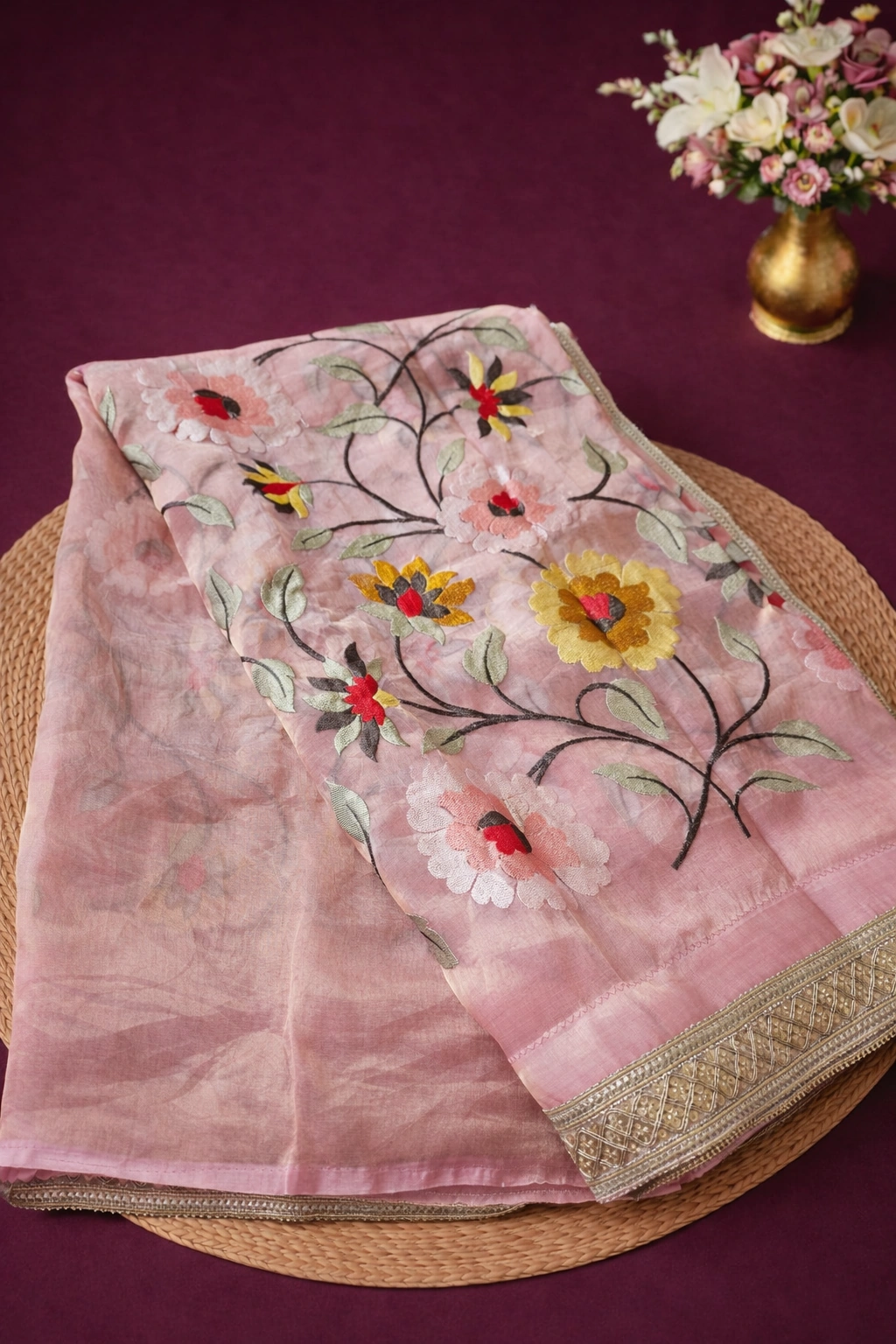
Banarasi Kora Tissue is a handwoven fabric from Varanasi (Banaras), combining translucent kora (unbleached silk organza) with metallic zari threads via a pit loom. The result is a saree that is lightweight yet structured, shimmery under light, and often reserved for special occasions. The interplay of warp (vertical) kora silk and weft (horizontal) tissue zari creates a glistening base, while intricate embroidery adds dimension. These sarees have long been prized for their ability to drape gracefully and flatter various body types, making them ideal for festival and wedding wear alike.
Banarasi vs. Kanjivaram for Pongal: A Table Comparison
| Feature | Banarasi Kora Tissue | Kanjivaram Silk |
|---|---|---|
| Region | Varanasi, Uttar Pradesh | Kanchipuram, Tamil Nadu |
| Weave | Kora silk + tissue zari on handloom | Mulberry silk with real zari, interlocked borders |
| Festive Appeal | Lightweight shimmer, ideal for daylong wear | Heavy, drapes grandly, traditional for South Indian ceremonies |
| Maintenance | Dry-clean only, store in muslin | Dry-clean or gentle hand wash, store flat |
How Banarasi Kora Tissue Embroidery Sarees Are Made
Each Handwoven Pure Banarasi Kora Tissue Embroidery Saree begins with carefully selected kora silk yarns, which are set as the warp. The weft alternates between silk and metallic zari, producing a luminous yet breathable fabric. Artisans use pit looms, spending days or even weeks meticulously weaving motifs—often inspired by Mughal or floral designs—into the saree. Embroidery is added with fine needles and real zari, sometimes incorporating resham (silk) threads for color. The process is labor-intensive and requires experienced hands; the result is a saree as much about heritage as beauty.
How to Spot Authentic Banarasi Kora Tissue Sarees
- Selvedge Test: Genuine Banarasi sarees feature a contrasting selvedge (border edge) with zari interlock, not printed or glued.
- Motif Precision: Handwoven motifs will have slight irregularities; powerloom versions are uniform and lack texture.
- Fabric Feel: Authentic kora tissue is crisp but softens with use; it is never stiff or plasticky.
- Zari Quality: Real zari is made from silver or gold-plated threads that do not flake; rub gently on white cloth—if it leaves a blackish mark, it is likely genuine.
- GI Tag: While not every artisan labels their sarees, Banarasi sarees are protected by a Geographical Indication (GI) tag since 2009 (source: Indian Patent Office)—look for this when shopping in India.
Swathi Design sources sarees directly from artisan weavers, offering the assurance of handloom origin and craft authenticity. For more on identifying true handloom sarees, see our Handloom vs Powerloom Saree Guide.
Pongal Family Dressing: Sarees, Half Sarees & Pavadai
Pongal celebrations in Tamil Nadu are synonymous with families dressing up together. Elders favor Kanjivaram or Banarasi silks; married women often drape gold or yellow sarees, sometimes with contrasting blouses in green or maroon. Teenagers and girls may wear half-sarees (pavadai-davani), a transitional outfit combining a skirt, blouse, and dupatta—traditionally in auspicious colors. For children, pavadai sets in silk or cotton are common, echoing the family’s palette.
- Day 1 (Bhogi): Old clothes are discarded, symbolizing renewal.
- Day 2 (Thai Pongal): The main festival; new sarees in gold/yellow are worn for puja and family photos.
- Day 3 (Mattu Pongal): Celebrating cattle; practical yet festive attire is chosen for outdoor rituals.
- Day 4 (Kaanum Pongal): Picnic day; lighter sarees or salwar sets are popular for comfort.
How to Style Banarasi Kora Tissue Sarees for Pongal
- Pair with Traditional Jewelry: Opt for gold jhumkas, kadas, and a temple-style necklace to echo the harvest festival’s auspiciousness.
- Blouse Selection: For a modern look, contrast the gold saree with a deep green, maroon, or magenta blouse. For elders, classic gold or cream is always appropriate.
- Generational Coordination: Dress daughters in matching half-saree sets and coordinate with elders’ sarees for family portraits.
- Hairstyle: Gajra-adorned braids or buns are traditional and practical for long festival days.
- Footwear: Kolhapuri sandals or gold-toned flats balance comfort and festivity.
Explore the Pure Banarasi Kora Tissue Embroidered Saree – Handwoven Indian Silk Elegance for a radiant Pongal look that honors tradition while feeling feather-light all day.
What Colors Are Auspicious for Pongal?
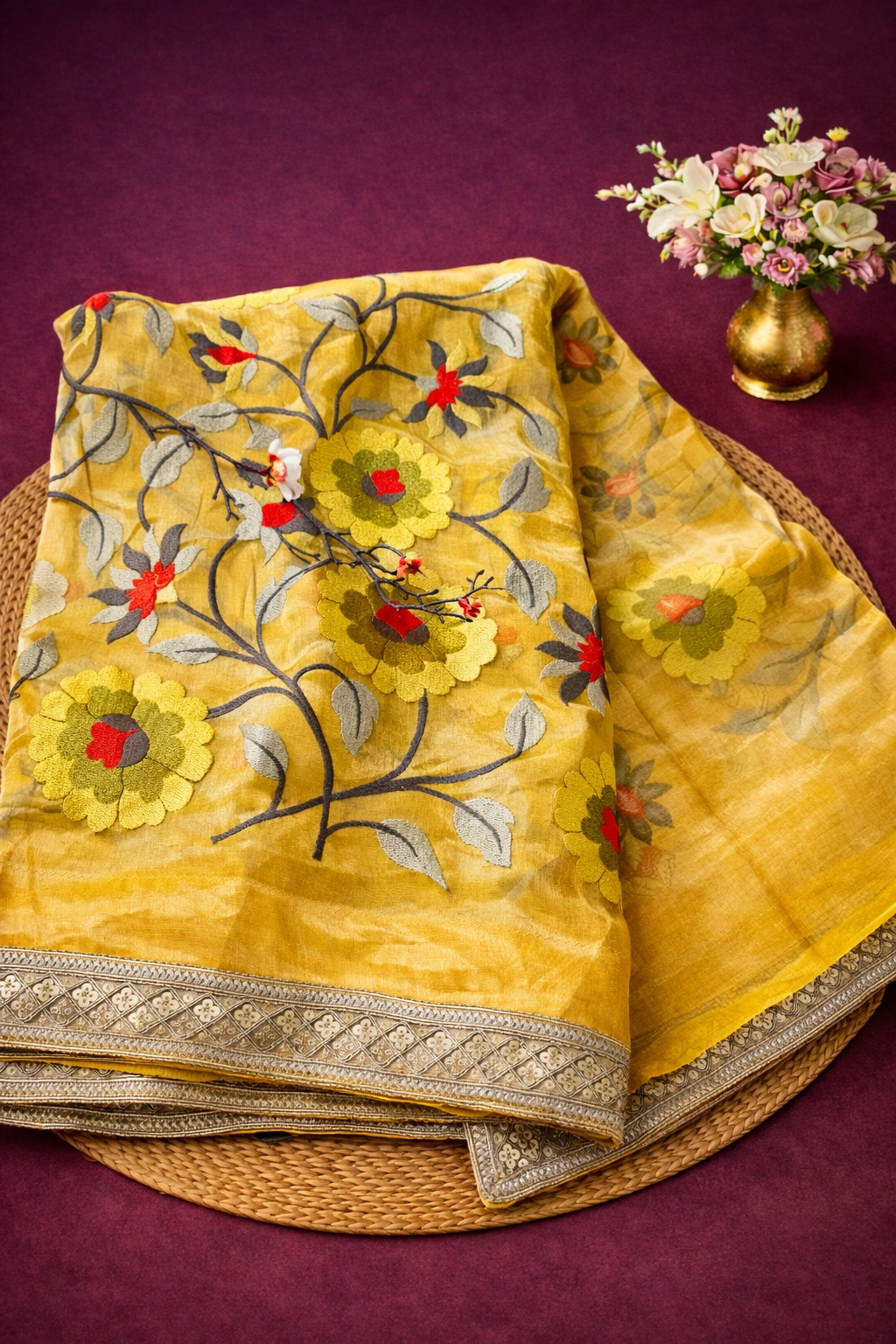
Yellow, gold, cream, and green are considered most auspicious for Pongal. These colors symbolize sunlight, prosperity, and the new rice harvest. Wearing gold or yellow on Thai Pongal day is almost universal in Tamil homes—echoing the turmeric used in rituals and the glow of the winter sun. Green is often added for contrast, representing renewal and hope. Avoid black, as it is considered inauspicious for this festival.
How to Care for Banarasi Kora Tissue Sarees
- Dry Clean Only: The metallic zari and delicate silk will dull or break if washed at home. Always use a trusted dry cleaner.
- Muslin Storage: Wrap the saree in unbleached muslin cloth, not plastic. This allows the fabric to breathe and prevents zari tarnish.
- Folding: Refold along different lines after each wear to prevent permanent creasing.
- Long-Term Tip: Store flat in a cool, dry place, and air out the saree every 6 months to avoid odor or mildew.
- Quick Fix: If the tissue gets slightly crushed, lay flat and steam from a distance—never iron directly on zari.
For generational longevity, see our detailed saree preservation guide.
Authenticity Test: Selvedge & Zari Check
Hold the saree to a light source and inspect the border (selvedge). Handwoven Banarasi sarees will have a slightly uneven, textured edge with zari threads visible on the reverse. Rub a small section of zari gently on a white cloth: genuine zari may leave a faint dark line (from silver oxidization); fake will flake or leave nothing.
Why Choose Banarasi Kora Tissue for Pongal?
Banarasi Kora Tissue sarees are worth selecting for Pongal because they combine the festive shimmer and comfort needed for daylong rituals with the artistry of Indian handlooms. Their lightness makes them suitable for multi-generational gatherings, while the intricate zari work honors the festival’s spirit of abundance. When sourced from a trusted store like Swathi Design, you benefit from real artisan craft and a saree that can become a family heirloom, linking Tamil tradition with contemporary elegance.
Pongal Saree Shopping: What to Look For
- Handloom origin and evidence of artisan weaving
- Pure kora silk and real (not imitation) zari
- Festival-appropriate shades: gold, yellow, cream, green
- Comfortable drape for long hours
- Traditional motifs—florals, paisleys, or checks are all seasonally apt
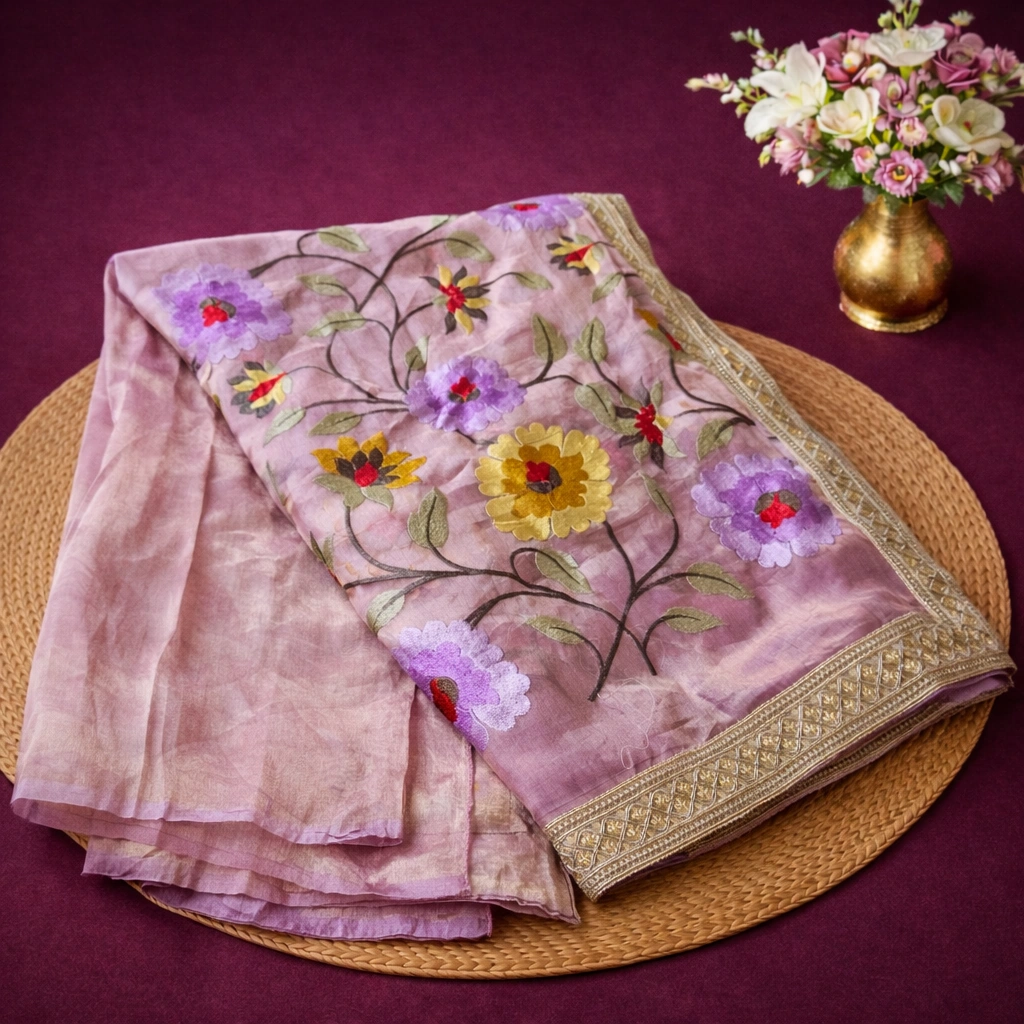
The Pure Banarasi Kora Tissue embroidery saree and the Handwoven Pure Banarasi Kora Tissue Embroidery Saree – Gold Elegance for Weddings are both excellent choices for Pongal, each priced at a price confirmed on inquiry and directly sourced from Varanasi artisans. The Pure Banarasi Kora Tissue Embroidered Saree – Handwoven Indian Silk Elegance (price confirmed on inquiry) offers a slightly different motif and finish—perfect for those who value variety within a traditional palette.
FAQ: What Do You Wear for Pongal?
The most traditional Pongal attire is a saree in shades of gold, yellow, or cream, often with zari borders or embroidery. Married women wear silk or tissue sarees, while unmarried girls and teenagers opt for half-sarees (pavadai-davani) in auspicious colors. Men typically wear veshti (dhoti) and angavastram. Family members often coordinate outfits for group photos and rituals.
FAQ: Which Saree is Traditional for Pongal?
Kanjivaram silk sarees from Tamil Nadu are considered the most traditional for Pongal, known for their rich mulberry silk, interlocked borders, and temple motifs. However, Banarasi tissue sarees are increasingly popular for their comfort and luminous drape, especially among Indian-Americans seeking a blend of tradition and ease.
FAQ: What Colors Are Auspicious for Pongal?
Yellow and gold are the most auspicious Pongal colors, symbolizing sunlight and prosperity. Cream and green are also favored for their ties to purity and the harvest. Avoid black or dull shades for main rituals.
FAQ: Do You Wear Kanjivaram for Pongal?
Yes, Kanjivaram sarees are a traditional favorite for Pongal due to their grand appearance and cultural heritage. Many families reserve their finest Kanjivarams for Thai Pongal puja. Some also choose Banarasi or soft silk sarees for a lighter, more contemporary feel.
Regional Variations: Tamil Nadu to Diaspora
While Tamil Nadu’s rural areas may favor classic Kanjivaram in deep maroons or parrot green, urban and diaspora families blend tradition with comfort. In the US, Swathi Design has seen a rise in Banarasi Kora Tissue sarees for Pongal, especially among families wanting a saree that is both festive and manageable for all-day events. Half-sarees and pavadai sets in gold and yellow remain popular for teens and preteens, continuing the family tradition.
For those interested in how other Indian festivals influence saree choices, our posts on Durga Puja and Onam offer deep dives into regional dress codes.
Shop the Collection
Ready to dress your family for Pongal in heirloom-worthy sarees? Browse our curated saree collection or reach out for personalized styling via WhatsApp. Swathi Design’s California-based team is here to help with pricing, shipping, and care questions—so your Pongal look is as meaningful as the festival itself.
Featured Products:
- Pure Banarasi Kora Tissue embroidery saree — price confirmed on inquiry
- Handwoven Pure Banarasi Kora Tissue Embroidery Saree – Gold Elegance for Weddings — price confirmed on inquiry
- Pure Banarasi Kora Tissue Embroidered Saree – Handwoven Indian Silk Elegance — price confirmed on inquiry
For more Pongal and festive saree inspiration, browse our full collection and celebrate this harvest festival with authenticity, comfort, and craft.
Featured in this guide
Part of the Indian Wedding & Festive Dressing guide collection.
Related guides
- Chanderi Silk Suits in USA: Embrace Ethnic Grace for Weddings & Festive Occasions
- Elevate Your Festive Wardrobe: Stunning Indian Dresses for US Weddings & Celebrations
- Celebrate Indian Heritage in the USA: Pure Silk Gowns for Weddings & Festive Glamour
- Elevate Your Wedding Look with Exquisite Pure Banarasi Kora Tissue Sarees
- Timeless Elegance: Discover the Pure Banarasi Kora Tissue Saree Collection for Weddings & Festivals