What to Wear for Durga Puja: Red, White & Pandal-Ready Looks
Wondering what to wear for Durga Puja? From the classic red-and-white lal paar saree to festive silk suits for pandal hopping, discover a day-by-day styling plan rooted in Bengali tradition and modern Indian-American style. Find expert tips on saree draping, accessorizing, and choosing the perfect outfit for every Pujo celebration.
What to Wear for Durga Puja: Tradition Meets Modern Style
For Durga Puja, your outfit is more than just attire—it's an expression of cultural pride and festive spirit. The classic red-and-white lal paar saree remains the icon of Pujo style, but today's Bengali festive wear invites creativity, comfort, and a nod to heritage. Whether you’re attending the anjali, hopping between pandals, or celebrating with family, this guide covers everything you need to curate a meaningful and memorable Pujo wardrobe.
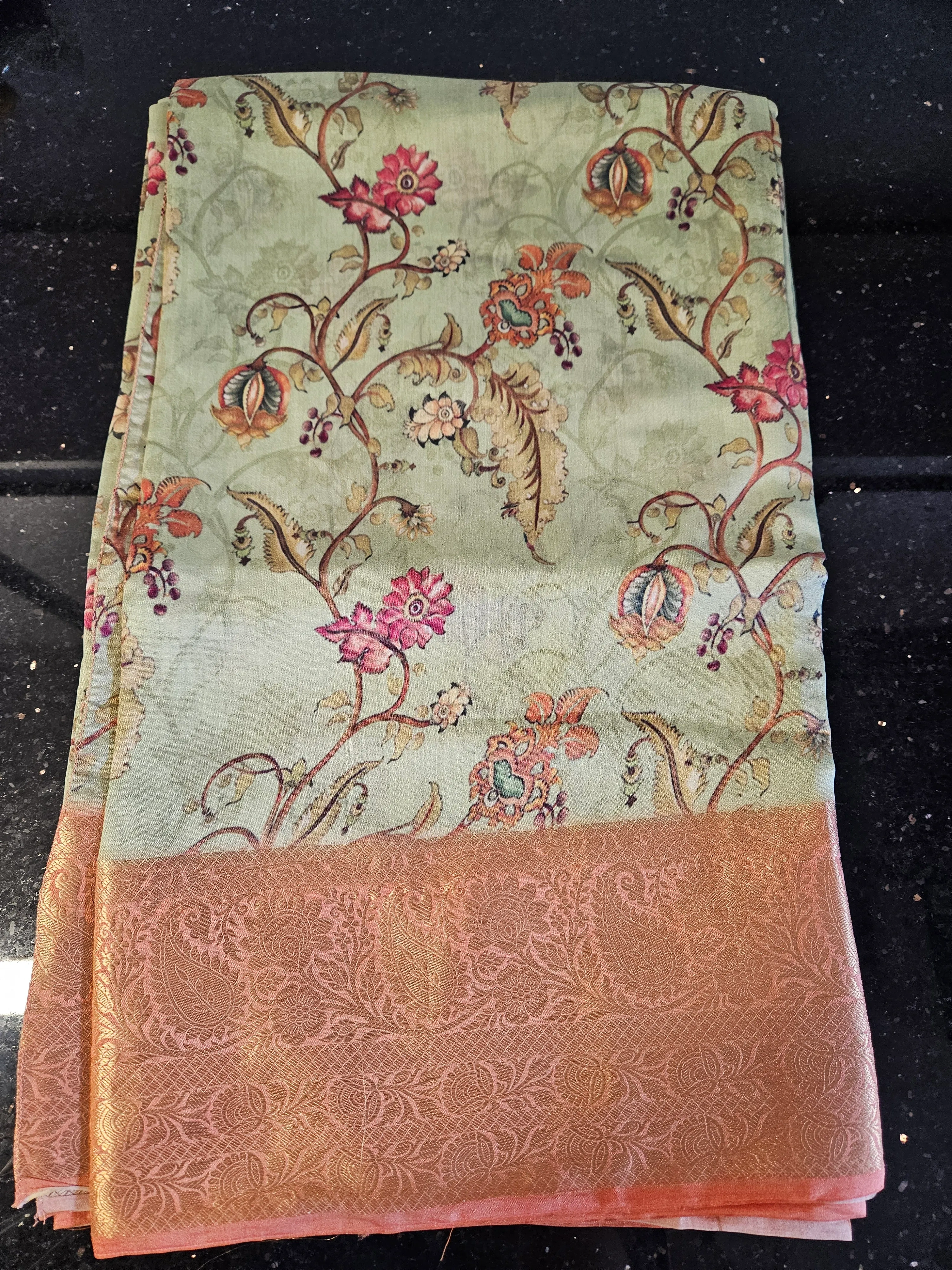
Why Your Durga Puja Outfit Matters
Durga Puja is the largest festival for Bengalis worldwide, blending devotion, art, and social gatherings. The tradition of wearing new clothes—‘nobo borsho’—is deeply rooted in Bengali culture, symbolizing prosperity and renewal. Wearing a red-and-white saree on Ashtami honors the goddess and connects you to generations of Bengali women before you. But modern Pujo celebrations in the US call for looks that balance tradition with comfort and versatility.
What is a Lal Paar Saree?
Lal paar saree is a traditional Bengali saree, typically white or cream with a striking red border (‘paar’). It is most famously worn during Durga Puja, especially on Ashtami and Dashami, symbolizing purity, strength, and auspiciousness. The red border represents the goddess Durga’s energy, while the white or cream base signifies serenity and devotion.
History and Symbolism of the Lal Paar Saree
The lal paar saree gained prominence through centuries of Bengali ritual. According to the West Bengal State Handloom Board, this color combination aligns with Shakta tradition, where red embodies Shakti (divine feminine power). In films and literature, the red-and-white saree is immortalized as the Pujo uniform, worn during sindoor khela and anjali. It’s often draped in the classic aatpoure style, with the pallu brought over both shoulders.
Day-by-Day Durga Puja Styling Plan
Planning your outfits in advance allows you to enjoy each day of Pujo with ease. Here’s a suggested guide for the five main days:
| Day | Recommended Outfit | Styling Tips |
|---|---|---|
| Sasthi | Cotton tunic or easy silk suit | Keep it light for pandal hopping; add silver jewelry |
| Saptami | Festive Chanderi or Dola silk suit | Bright colors, statement earrings, comfortable juttis |
| Ashtami | Red-and-white lal paar saree (Banarasi or pure cotton) | Gold jewelry, gajra, classic Bengali makeup |
| Navami | Kanchipuram or Banarasi silk saree | Traditional blouse, bold bindi, heirloom jewelry |
| Dashami | Lightweight silk or festive suit | Sindoor khela look; red bangles and a fresh saree |
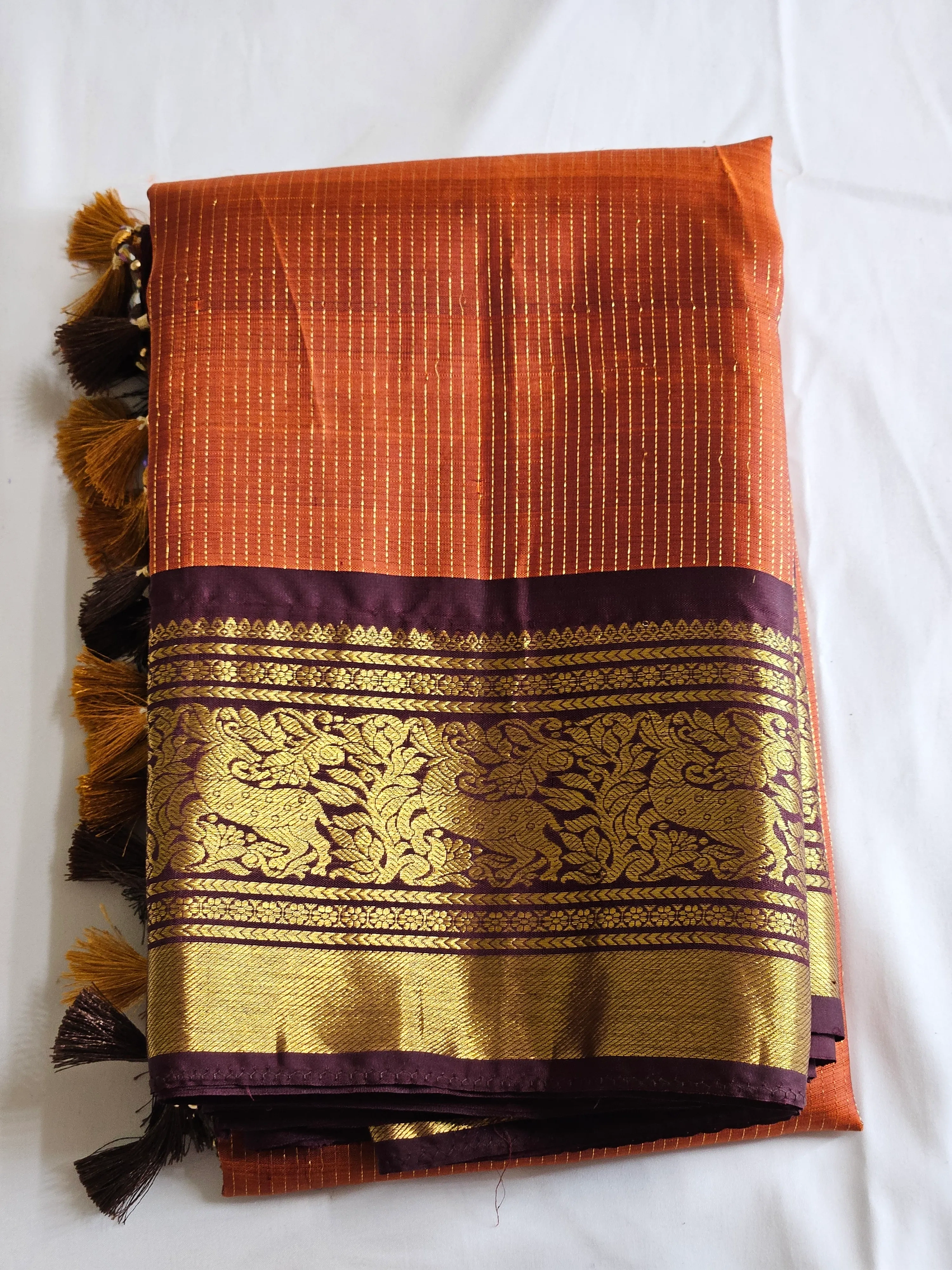
What to Wear for Durga Puja?
For Durga Puja, choose outfits that blend tradition, comfort, and festive flair. The red-and-white lal paar saree is essential for Ashtami, while lightweight silk suits and tunics are perfect for pandal hopping and day events. Modern Indian-American women often pair classic sarees with contemporary blouses or style suits with ethnic accessories for a fresh take on Pujo fashion.
The Bengali Red-and-White Lal Paar Saree: How to Choose & Drape
- Fabric: For authenticity, opt for cotton, Chanderi, or silk. The Handwoven Banarasi Silk Floral Wedding Saree offers a luminous sheen and intricate floral motifs, making it ideal for Ashtami and Dashami rituals.
- Drape: Try the Bengali aatpoure style for a nod to tradition. This drape leaves the pallu free on both shoulders for comfort during anjali and sindoor khela.
- Accessories: Layer with gold or imitation temple jewelry, a red bindi, and fresh jasmine flowers.
- Blouse: Experiment with elbow-length sleeves or contemporary cut blouses for a modern twist.
Useful Tip: If you’re new to the saree, pre-pleat your pallu and pin it discreetly for all-day comfort during long Pujo events.
What do Bengalis wear for Durga Puja?
Bengalis traditionally wear new clothes during Durga Puja, with women favoring the iconic red-and-white lal paar saree, especially on Ashtami and Dashami. Men wear kurta-pajamas or dhotis. Modern interpretations include silk sarees, designer suits, and fusion outfits, all paired with ethnic jewelry and festive accessories.
What to Wear for Pandal Hopping?
- Comfort First: Opt for breathable fabrics like cotton or Chanderi for long walks.
- Layering: Bring a lightweight shawl or dupatta for changing temperatures.
- Footwear: Choose comfortable flats or embellished juttis to keep up with the crowds.
- Practical Accessories: Crossbody bags, small clutches, and minimal jewelry keep your look functional yet festive.
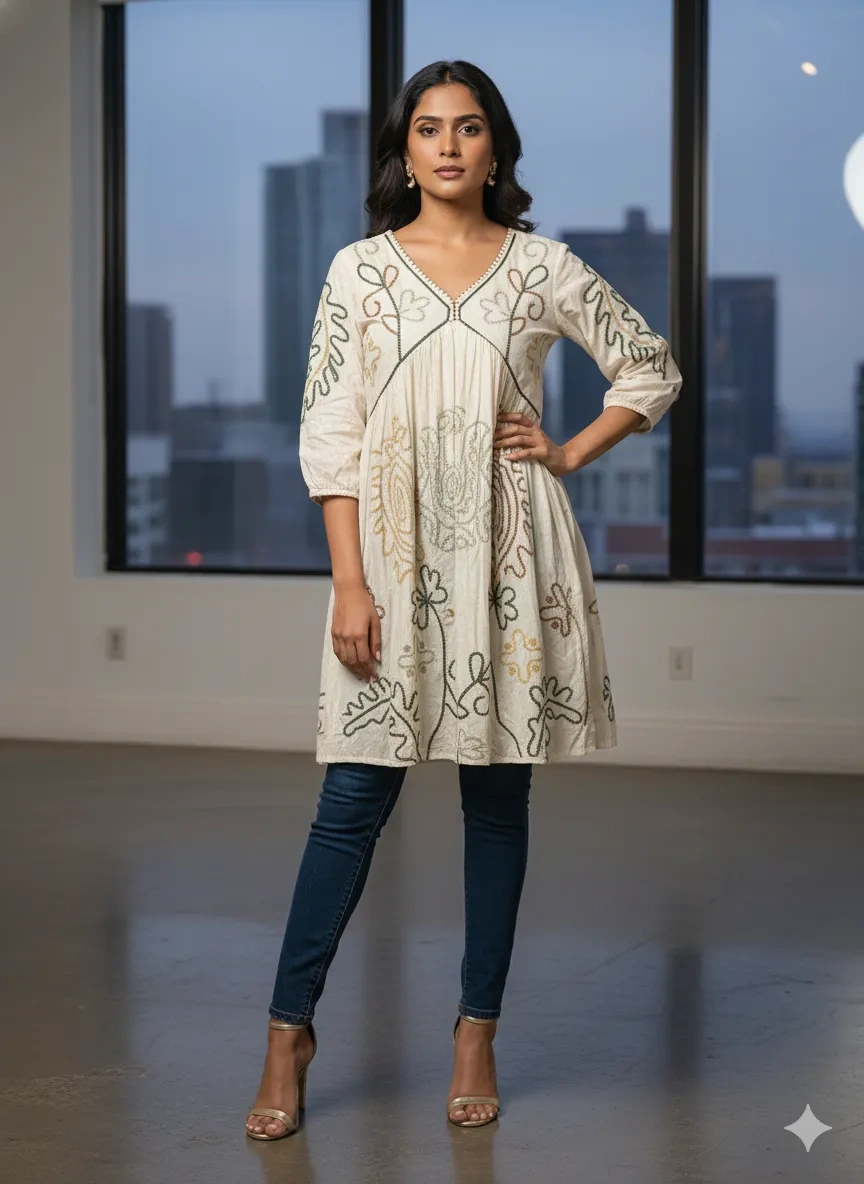
- Mix & Match: Pair the Cream Cotton Tunic with Embroidery with palazzos or jeans for a modern pandal-hopping outfit that’s elegant and effortless.
Modern Pujo Outfits: Silk Sarees and Suits for Every Occasion
While the lal paar saree is iconic, Bengali festive wear today includes a range of silk sarees and suits that honor tradition without sacrificing comfort. Here are some standout options from Swathi Design:
- Handwoven Banarasi Silk Floral Wedding Saree ($140): Crafted in Varanasi, this saree features handwoven floral motifs and a luminous sheen. The lightweight silk is perfect for long celebrations, and the regal drape works beautifully for Ashtami or Navami pujas. Tip: Banarasi silk’s crisp texture holds pleats well, making it easier to maintain your look all day.
- Handwoven Kanchipuram Silk Saree with Zari Work ($365): Woven in Kanchipuram, Tamil Nadu, these sarees are known for their durability and ornate zari borders. The rich colors and intricate patterns make them a standout for evening aarti or family gatherings. Kanchipuram sarees have been prized since the Pallava dynasty—over 400 years of weaving heritage.
- Mustard Yellow Chanderi Silk Suit with Gold Embroidery ($50): Lightweight, breathable, and adorned with a hot pink yoke and gold floral embroidery, this suit is perfect for Saptami or casual daytime events. Chanderi’s sheer texture and gentle sheen offer a refined, festive look.
- Royal Blue Dola Silk Suit with Zari Embroidery & Heritage Dupatta ($45): The velvety smooth Dola silk paired with antique gold and silver embroidery delivers a regal look for Navami or evening aarti. The geometric dupatta and playful tassels add a modern twist.
- Cream Cotton Tunic with Embroidery ($25): For Sasthi or casual gatherings, this tunic stands out with its earthy embroidery and lace-trimmed neckline. Pair it with denim or leggings for an Indo-Western vibe.
Accessory Pairing: Do’s and Don’ts for Durga Puja
- Do: Choose gold or imitation temple jewelry for sarees; pair suits with statement earrings and delicate bangles.
- Don’t: Overload with heavy necklaces if you’ll be outdoors or walking between pandals.
- Do: Add a gajra (flower garland) to your hair for morning pujas.
- Don’t: Wear heels for pandal hopping—opt for comfortable flats or kolhapuris instead.
- Do: Use a small clutch or potli bag to carry essentials, keeping your hands free for rituals and prasad.
How to Style a Banarasi Saree for Durga Puja?
To style a Banarasi saree for Durga Puja, select a bright or classic color such as red, gold, or cream. Drape the saree in the Bengali aatpoure style for authenticity. Pair with a traditional blouse, gold jewelry, and a red bindi. For added comfort, wear a cotton or silk petticoat and pre-pleat the pallu for easy movement during rituals.
Caring for Your Ethnic Wear: Preservation Tips
- Silk Sarees: Always dry clean Banarasi and Kanchipuram silks. Store in a cool, dry place, ideally in a muslin or silk pouch to prevent snagging.
- Cotton Tunics: Hand wash separately in cold water with mild detergent; dry flat in the shade to preserve embroidery.
- Chanderi & Dola Suits: Dry clean to maintain sheen and embroidery. Avoid direct sunlight to prevent discoloration.
Insider Tip: For long-term storage, wrap sarees in unbleached cotton and air them out every few months to prevent musty odors and color transfer.
Durga Puja Outfit FAQs
What do Bengalis wear for Durga Puja?
Bengali women traditionally wear a red-and-white lal paar saree on Ashtami and Dashami, often in handwoven cotton or silk. Men wear dhoti or kurta-pajama sets. Today, festive silk sarees, suits, and tunics are popular choices, paired with ethnic jewelry and accessories for a modern yet respectful Pujo look.
Why is red and white worn for Pujo?
Red and white are considered auspicious in Bengali culture, symbolizing purity and the divine feminine energy of Durga. The tradition of wearing these colors during Pujo rituals, especially for anjali and sindoor khela, honors the goddess and expresses joy and spiritual renewal.
What is a lal paar saree?
Lal paar saree is a white or cream saree with a red border, iconic to Bengali festive wear. It is usually woven from cotton or silk, and is draped in the aatpoure style during Durga Puja, especially for Ashtami and Dashami rituals.
What to wear for pandal hopping?
For pandal hopping, prioritize breathable fabrics and easy movement. Cotton tunics, Chanderi or lightweight silk suits, and flats are ideal. Pair with minimal jewelry and a practical bag. The Cream Cotton Tunic with Embroidery is a stylish, comfortable choice for busy Pujo days.
Saree Fabrics for Durga Puja: Silk vs Cotton Quick Comparison
| Fabric | Best For | Pros | Care |
|---|---|---|---|
| Banarasi Silk | Navami, Ashtami, Evening Events | Regal sheen, holds pleats, handwoven motifs | Dry clean, store in silk pouch |
| Kanchipuram Silk | Navami, Dashami, Weddings | Durable, ornate zari, rich colors | Dry clean, avoid sunlight |
| Chanderi Silk | Saptami, Daytime Puja | Lightweight, sheer, subtle sheen | Dry clean, gentle handling |
| Cotton | Sasthi, Pandal Hopping | Breathable, traditional, easy to drape | Hand wash, dry flat |
For more on fabric choices, see our detailed post on Silk vs Cotton Saree for Summer.
Shop the Collection
Ready to refresh your Pujo wardrobe? Explore Swathi Design’s full range of sarees, suits, and artisanal tunics—expertly sourced from Indian artisan weavers. Enjoy flat-rate US shipping, concierge price confirmation, and WhatsApp styling help for the perfect fit. Don’t forget: damaged items can be reported within 48 hours with a video for easy resolution.
Browse our full collection and celebrate Durga Puja in timeless style.
Featured in this guide
- Handwoven Banarasi Silk Floral Wedding Saree - Luxury Ethnic Wear
- Handwoven Kanchipuram Silk Saree with Zari Work
- Cream Cotton Tunic with Embroidery for Festive Elegance
- Royal Blue Dola Silk Suit with Zari Embroidery & Heritage Dupatta
- Mustard Yellow Chanderi Silk Suit with Gold Embroidery - Festive & Wedding Wear
Part of the Indian Wedding & Festive Dressing guide collection.
Related guides
- Chanderi Silk Suits in USA: Embrace Ethnic Grace for Weddings & Festive Occasions
- Elevate Your Festive Wardrobe: Stunning Indian Dresses for US Weddings & Celebrations
- Celebrate Indian Heritage in the USA: Pure Silk Gowns for Weddings & Festive Glamour
- Elevate Your Wedding Look with Exquisite Pure Banarasi Kora Tissue Sarees
- Timeless Elegance: Discover the Pure Banarasi Kora Tissue Saree Collection for Weddings & Festivals