Handloom vs Powerloom Saree: Authenticity Tests, Price & Durability Guide
Not all sarees are woven alike. This in-depth guide from a textile specialist explains the differences between handloom and powerloom sarees—how to spot them, why it matters, and what to look for when buying. Includes care tips, authenticity checks, and Swathi Design’s premium handloom-inspired picks for US-based Indian-American women.
Handloom vs Powerloom Saree: The Essential Difference
If you’ve shopped for sarees or ethnic wear, you’ve seen 'handloom' and 'powerloom' labels—but what do they mean for quality, authenticity, and price? Here’s the truth: handloom sarees are woven manually by skilled artisans, often on traditional pit looms or frame looms, while powerloom sarees are produced on mechanized looms for speed and uniformity. This fundamental difference shapes everything from the texture and drape to the cultural value and cost of your garment. Understanding handloom vs powerloom saree is the key to investing wisely in Indian fashion, whether you’re in California or Chennai.
Origins: Where and Why the Difference Matters
Handloom weaving has a lineage stretching back centuries, rooted in Indian towns like Kanchipuram (renowned for Kanjivaram silk sarees), Varanasi (Banarasi brocades), and Bhagalpur (Tussar silks and linen). Each region’s weaving community—often families working together—passes down patterns, motifs, and techniques unique to its geography and history. Powerloom weaving, by contrast, emerged during the Industrial Revolution and gained traction in India in the 20th century to meet mass-market demand. While handloom prioritizes craft and variation, powerloom delivers speed and consistency, often mimicking handwoven motifs at a lower cost.
How Handloom and Powerloom Sarees Are Made
Handloom sarees are crafted on manually operated looms, typically pit looms or frame looms. The artisan controls the warp (lengthwise yarns) and weft (crosswise yarns) by hand, inserting each thread individually. This allows for intricate patterns and subtle irregularities—the hallmark of artisan weaving. Powerloom sarees are woven on electric or mechanical looms, where the shuttle and warp/weft movement are automated. The result is a uniform, often flawless-looking fabric, but one that lacks the 'soul' of a handwoven piece.
Handloom vs Powerloom Authenticity Checklist
Spotting a true handloom saree isn’t always easy—especially with the rise of powerloom replicas. Here’s a practical step-by-step checklist to help you identify the real thing:
- Selvedge test: A handloom saree usually has a tightly woven, slightly uneven selvedge (the finished edge that runs along the length). Powerloom edges are often machine-perfect and sometimes have visible tiny pinholes from automated weaving.
- Weave irregularities: Handloom fabric shows minor thread thickness variations and 'floating' threads at the reverse of motifs—evidence of manual intervention. Powerloom fabric is almost too perfect, with identical repeats and no loose threads.
- Zari work: In genuine handloom, zari (metallic thread) is woven into the fabric, not glued or embroidered on the surface. For sarees with borders or pallu designs, gently separate the threads at the border to check integration.
- Handloom Mark: Look for India's official 'Handloom Mark' label, issued by the Textile Committee, Ministry of Textiles. It’s not foolproof (counterfeits exist), but it’s a good indicator.
- Reverse side: Flip the saree. Authentic handloom motifs often show 'bleed-through' or small knots; powerloom designs are usually flat and identical front and back.
- Ask about origin: Sellers who can name the region, weaving community, or technique (e.g., Kanchipuram korvai, Maheshwari checks) are more likely to offer authentic handloom sarees.
For a more detailed comparison of soft silk and pattu sarees—two categories often debated for their weave—see our guide on Soft Silk vs Pattu Saree.
Handloom vs Powerloom Saree: Price, Durability & Craft Table
| Criteria | Handloom Saree | Powerloom Saree |
|---|---|---|
| Price Range (USD) | $80–$3000+ | $15–$200 |
| Durability | High (with care) | Medium |
| Weave Irregularities | Present (unique, manual) | Absent (uniform, machine-made) |
| Artisan Value | Supports craftspeople | Supports mass production |
| Resale Value | Often appreciates | Depreciates quickly |
Budget Tiers: What to Expect Under $100, $100–$300, $300+
Under $100: Most sarees in this price band are powerloom, machine-embroidered, or faux-silk blends. You may find genuine cotton handlooms (Mul cotton, Bengal tant) from artisan cooperatives at the top end. For festive wear, Swathi Design’s Pure Chinon Anarkali Gown ($48) and Off-White Silk Muslin Lehenga ($28) are excellent value, crafted with artisan-inspired techniques and hand-finished details, though not strictly sarees.
$100–$300: Here’s where you’ll find entry-level handloom silks (Bhagalpuri, Chanderi, Maheshwari) and some regional cottons. Look for the Handloom Mark and ask for GI-tagged varieties for authenticity. For a comparison of regional handlooms, see our post on Chanderi vs Maheshwari.
$300+: Premium handloom sarees—Kanjivarams, Banarasis, and Paithanis—dominate this tier. Expect unique motifs, temple borders, and natural dyes. These sarees are heirloom investments.
Handcrafted Styles: Swathi Design’s Artisan-Inspired Picks
For Indian-American women seeking the essence of handloom tradition in contemporary, wearable forms, Swathi Design offers several standout options:
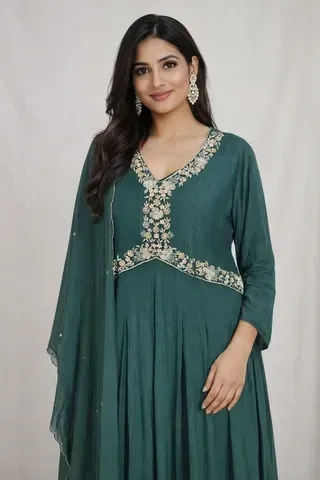
- Pure Chinon Anarkali Gown ($48): Crafted from premium chinon, a modern, lightweight cousin of classic silk, this Anarkali gown bridges artisan tradition with comfort. Each gown is hand-embellished, reflecting careful craftsmanship. Available in Maroon, Navy Blue, and Emerald Green, it adapts to US sizes 4–12 for all-day wear at weddings and festivals. Chinon, though not handloom in the strict sense, is prized for its soft drape and subtle sheen. See the full details here.
- Off-White Silk Muslin Lehenga ($28): Pure muslin, once reserved for royalty in Bengal and Lucknow, is hand-embroidered for a subtle yet regal look. Its airy feel and flowing silhouette flatter all body types, and the handwork is visible on close inspection—a sign of genuine craft. Pair with polki jewelry for a classic ensemble. Shop the lehenga here.
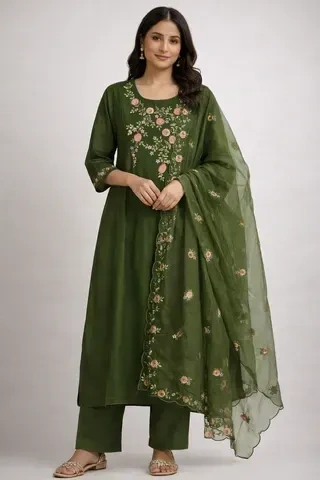
- Handcrafted Pastel Mul Cotton Kurta Set ($38): Mul cotton is famed for its softness and breathability, ideal for long celebrations or summer events. Each set features hand-embroidery and comes in pastel hues, suitable for both traditional brunches and modern gatherings. Mul cotton’s origins are in West Bengal and Madhya Pradesh, where skilled weavers use a fine-count warp and weft for feather-light fabric. Explore this mul cotton set.
Factors to Consider When Buying: Handloom vs Powerloom Saree
- Occasion: For weddings, handloom silks or artisanal cottons make a statement. Powerloom sarees serve well for everyday wear or when budget is primary.
- Texture: Handloom sarees have a tactile, slightly uneven finish; powerloom is smooth and slick.
- Care: Handloom sarees need gentle hand washing or professional dry cleaning; powerloom can sometimes be machine washed (always check the label).
- Resale and Heirloom Value: Handloom sarees, especially GI-tagged or from known clusters (like Kanchipuram), often appreciate in sentimental and monetary value.
- Environmental Impact: Handloom weaving is low-energy and supports rural livelihoods.
How to Identify a Genuine Handloom Saree?
Handloom saree is a garment woven on a manually operated loom by an artisan, resulting in unique weave irregularities, natural thread variations, and motifs that may show minor asymmetries or knots on the fabric’s reverse. To identify one, look for uneven selvedges, floating threads in motif areas, the Handloom Mark label, and ask for region or technique details. Authentic handloom sarees often display a slightly heavier drape due to denser weaving.
- Inspect the selvedge for unevenness.
- Check for floating threads or small knots on the reverse of motifs.
- Look for the official Handloom Mark label.
- Ask about the saree’s weaving region and technique.
- Price: Genuine handlooms rarely cost under $80 for silk or $40 for cotton.
How to Care for Handloom and Powerloom Sarees
Proper care extends the life of both handloom and powerloom sarees. For handloom silk or muslin, always use a mild detergent and cold water. Never wring—gently squeeze and air dry in shade. Fold along the original creases and store in breathable cotton bags, away from direct sunlight to prevent color fading. For Swathi Design’s Chinon Anarkali Gown and Muslin Lehenga, a gentle hand wash or dry clean preserves the finish. Pro tip: Refold handloom sarees every 4-6 months to prevent permanent creases and zari breakage.
How to Style Indian Ethnic Wear for US Weddings & Festivals?
Styling Indian ethnic wear for US-based occasions combines traditional craft with modern sensibilities. For a festive or wedding look, pair the Pure Chinon Anarkali Gown with bold statement jewelry such as jadau earrings or a kundan choker, metallic heels, and a box clutch. For a subtle, day-event look, the Pastel Mul Cotton Kurta Set works beautifully with antique gold studs and embroidered juttis. Muslin lehengas, with their understated embroidery, suit both classic and minimalist styling—think polki or pearl jewelry and embroidered mojaris. Remember, lighter weaves and breathable fabrics are especially suited for outdoor US celebrations or temple events.
FAQ: Handloom vs Powerloom Saree
How can you tell handloom from powerloom?
To distinguish a handloom saree from a powerloom replica, examine the selvedge for slight unevenness, look for floating threads on the reverse of woven motifs, and check for minor color variations across the fabric. Handloom sarees may also carry India's official Handloom Mark label. Powerloom sarees are machine-perfect, with identical repeats and no irregularities.
Is handloom better than powerloom?
Handloom sarees offer unique artistry, superior drape, and cultural value, supporting artisan livelihoods and using minimal energy. Powerloom sarees are budget-friendly and uniform, but lack the individual character of handwoven fabric. The choice depends on your priorities—craft and heritage versus price and convenience.
Why are handloom sarees more expensive?
Handloom sarees command higher prices because they are labor-intensive, requiring days or weeks to complete, and often use high-quality natural fibers and dyes. Each piece is unique, reflecting the artisan’s skill and regional tradition. Powerloom sarees, made quickly and in bulk, cost less but lack this cultural and material value.
What is the Handloom Mark?
The Handloom Mark is India's official certification, issued by the Ministry of Textiles, to authenticate genuine handloom products. It assures buyers that the fabric is woven by hand, not machine. The mark is typically found on a label or tag attached to the saree and is a useful, though not foolproof, authenticity check.
Shop the Collection
Ready to experience the artistry of handloom-inspired Indian fashion? Browse our full collection for sarees, lehengas, and festive wear suited to every occasion and budget. For personalized advice, try our WhatsApp styling help or explore Dresses for hand-finished, artisan-quality gowns and sets. Remember: your choice supports craft, culture, and conscious fashion.
Featured in this guide
Part of the Handwoven Silks: Chanderi, Tussar & Raw Mango guide collection.
Related guides
- Elevate Every Occasion: Handcrafted Indian Gowns & Frocks for Modern Celebrations in the USA
- Elevate Every Occasion: Pure Chanderi Pattu Silk Sarees for Indian-Americans in the USA
- Exquisite Russian Crape Silk Saree: Timeless Elegance for Every Occasion
- Luxurious Pure Russian Crape Saree: Timeless Elegance for Every Occasion
- Elevate Your Festive Wardrobe with Exquisite Handwoven Chanderi Sarees and Anarkali Dresses