Sustainable Handloom Sarees: A Slow Fashion Revolution for Indian-Americans
Discover how sustainable handloom sarees and slow-fashion sarees from Maharashtra and beyond are redefining eco-friendly ethnic wear for Indian-Americans. Explore artisan authenticity, GI tag handloom, and Swathi Design’s curated collection—plus expert styling and care tips for 2026.
Why Sustainable Handloom Sarees Matter
Sustainable handloom sarees represent the heart of slow fashion. Unlike fast-fashion alternatives, each handloom saree is meticulously woven by artisans—often from families with generations of expertise—using time-honored techniques, natural fibers, and eco-friendly dyes. For Indian-American women, choosing handloom is more than a style choice; it’s a statement of cultural pride and environmental responsibility. After decades in textile curation, I’ve seen firsthand how handloom supports both the earth and the artisan: fewer chemicals, less water, and a direct livelihood for India’s weaving communities.
Swathi Design’s curated sarees and gowns uphold this tradition, offering the richness of handwoven silk, chinon, and other artisan textiles for US celebrations. These garments are living history—resilient for family gatherings and refined for modern events—bridging heritage and contemporary style.
What is a Handloom Saree?
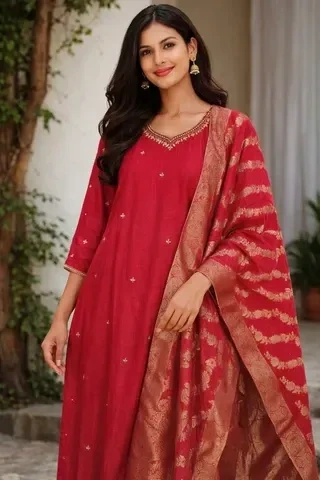
A handloom saree is a length of fabric woven on a manually operated loom by a skilled artisan. Unlike powerloom textiles, every handloom saree features subtle irregularities that reflect the human touch and artistry behind its creation. Regions like Kanchipuram, Varanasi, Bhagalpur, and Maharashtra—renowned for their slow-fashion sarees—offer distinct weaving styles and motifs, with Maharashtra’s Paithani sarees standing out for their heritage and sustainability.
| Feature | Handloom Saree | Powerloom Saree |
|---|---|---|
| Production | Artisan-woven, slow process | Machine-woven, fast process |
| Material | Natural fibers, often silk/cotton | Often synthetic blends |
| Feel | Soft, breathable, unique texture | Uniform, less breathable |
| Environmental Impact | Low (minimal chemicals, water) | High (chemicals, energy use) |
For a deep dive into the making of iconic handloom sarees, see our guide: How Is a Kanjivaram Saree Made? Step-by-Step Weaving Guide.
The Artisan Process: Origin to Finish
Every handloom saree starts with careful yarn selection—mulberry silk for Kanchipuram, tussar for Bhagalpur, fine cotton for Chanderi, and lustrous silk for slow-fashion sarees from Maharashtra. Artisans stretch the warp threads on a pit or frame loom, then interlace the weft by hand, often incorporating traditional motifs like peacocks, temple borders, and floral vines with natural dyes. Wedding sarees may feature real zari (gold or silver thread) for added opulence.
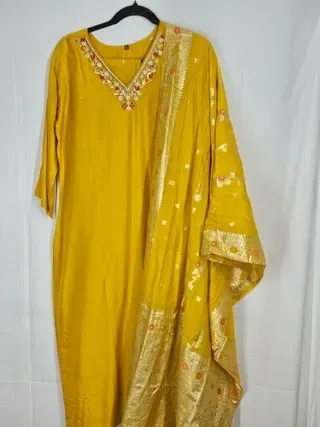
For example, the Gold Pure Dola Silk Ethnic Gown from Swathi Design uses 100% pure Dola silk—a fabric celebrated for its luminous sheen and soft drape, historically woven in Varanasi and Surat. Dola silk’s signature texture comes from the unique twisting and weaving of its yarns, creating a fabric that is both durable and luxurious.
How to Spot Authentic Handloom Sarees: A Practical Checklist
Recognizing a genuine handloom saree or gown is essential for conscious shoppers. Here’s what to look for in 2026:
- Handloom Mark or GI Tag: India’s Handloom Mark and regional GI (Geographical Indication) tags are the gold standard for authenticity. Swathi Design partners directly with artisan weavers who carry these certifications.
- Weft Inconsistencies: Slight irregularities—tiny thread knots, uneven selvedges—signal true handweaving, not machine uniformity.
- Reverse Motif Visibility: On handlooms, motifs are gently shadowed on the reverse; powerloom sarees often feel plasticky or overly smooth.
- Touch and Feel: Handloom sarees are cooler, softer, and more breathable than synthetic or powerloom versions.
- Natural Light Test: Hold the saree to sunlight. Authentic handwoven fabric reveals subtle variations in weave density, never perfect uniformity.
Want to decode handloom certifications? Read our updated GI Tag Handloom Certification Guide.
Regional Weaves and Eco-Friendly Ethnic Wear
India’s handloom legacy is regionally rich. Kanchipuram sarees from Tamil Nadu, woven for over 400 years, feature mulberry silk and real zari from Surat. Paithani sarees from Maharashtra—standout examples of slow-fashion sarees Maharashtra is known for—are famous for peacock pallus and natural dyeing. Newer favorites like Dola silk gowns, as in Swathi Design’s Elegant Pure Dola Silk Gown, draw inspiration from these regional traditions in both color and weave.
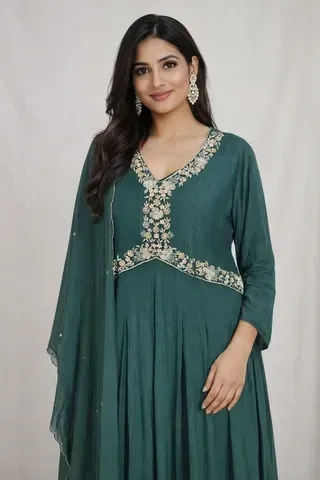
Natural dyes—such as indigo, turmeric, and madder—minimize water and chemical use, making these sarees truly eco-friendly ethnic wear. Handwoven pure chinon, showcased in the Pure Chinon Anarkali Gown, offers lightweight comfort and a lustrous finish—ideal for festive US gatherings where breathability and drape matter.
Curious about other saree styles? Compare comfort and occasion in our recent post: Saree vs Salwar Kameez: Comfort, Occasion & Styling Compared.
What is the Handloom Mark?
The Handloom Mark is a government-certified label from India’s Development Commissioner for Handlooms. It confirms that a textile was woven on a manual loom by an artisan, not by machine. Always look for this mark on sarees and ethnic gowns to ensure you’re supporting genuine handloom craftsmanship, not mass-produced imitations.
How to Style Sustainable Handloom Sarees for Weddings?
Styling sustainable handloom sarees or gowns for US weddings means blending tradition with modern flair. Opt for jewel tones or gold hues—like Swathi Design’s Gold Pure Dola Silk Ethnic Gown—and pair with handcrafted gold jewelry, metallic heels, and a silk or beaded clutch. For daytime events, softer palettes or floral motifs shine; for evenings, deep emeralds, maroons, or navy are perfect. Minimalist accessories let the intricate weave stand out, while bold pieces highlight the gown’s cultural richness. Balance is key: let the handwoven fabric be the star.
- Pick a color that suits the occasion and your skin tone (e.g., gold for evening, emerald for day).
- Choose heritage jewelry—temple, kundan, or meenakari—to echo the saree’s artistry.
- Select a clutch in silk or metallic threadwork to complement the weave.
- For gowns, opt for minimalist heels for natural drape.
- Layer with a shawl or dupatta if needed; handloom variants add authenticity.
For more inspiration, browse our Dresses collection or explore how to wear a saree to the office for versatile styling tips.
How to Care for Handloom Sarees and Ethnic Gowns
- Dry Clean First: For silk, Dola silk, and chinon, always dry clean initially to set dyes and preserve the finish.
- Gentle Hand Wash: For pure chinon and cotton, use mild detergent in cold water after initial dry cleans. Never wring; dry flat in shade.
- Folding Tip: Refold along different creases after use to prevent permanent lines.
- Storage: Wrap in muslin or pure cotton. Avoid plastic covers; they trap moisture and harm natural fibers. Store in a cool, dry place away from sunlight.
- Ironing: Low-heat setting on the reverse side, or cover with thin cotton to protect zari and sheen. Never spray water directly on silk or Dola silk.
For heirloom care, insert dried neem leaves or silica gel packets to deter insects without chemicals. See our heirloom care guide for more preservation tips.
Why Choose Handloom Over Fast Fashion?
Handloom sarees and ethnic gowns outlast trends, age beautifully, and support artisan families. Each piece is unique, allowing personal expression while reducing environmental impact—unlike fast fashion, which prioritizes quantity over quality and tradition. Handloom’s durability and repairability mean these garments can be cherished and passed down, embodying true slow-fashion values for 2026 and beyond.
Budgeting for a special saree? See our US Wedding Budget Guide for tips.
Featured Collection: Handloom Gowns for Festive Occasions
Swathi Design’s latest collection brings timeless handloom artistry to contemporary Indian-American celebrations. Here are three standouts for weddings, Diwali, and formal events in 2026:
- Gold Pure Dola Silk Ethnic Gown: 100% pure Dola silk, radiant gold hue, hand-finished details, $45. Perfect for upscale receptions and formal galas.
- Elegant Pure Dola Silk Gown: Available in Ruby Red, Emerald Green, Royal Blue, and Golden Beige, $38. Velvet-like texture, luminous finish—ideal for Diwali and cocktail parties.
- Pure Chinon Anarkali Gown: Hand-embellished, maroon/navy/emerald, $48. Free size (US 4-12), designed for all-day comfort and festive dancing. Easy-care: hand wash or dry clean.
Each piece is crafted for comfort, authenticity, and celebration—no synthetic imitations, only genuine handwoven luxury. Browse our full collection. Need help choosing? Swathi Design offers concierge price confirmation and WhatsApp styling advice for US customers.
FAQ: Sustainable Handloom Sarees
Is handloom fabric eco-friendly in 2026?
Yes, handloom fabric remains one of the most eco-friendly textile options in 2026. It uses minimal electricity, relies on natural fibers like silk or cotton, and often incorporates plant-based dyes. The manual weaving process reduces water consumption and chemical runoff, making handloom sarees and gowns far more sustainable than fast-fashion or powerloom alternatives.
How can you tell a handloom saree from powerloom?
- Look for uneven selvedges and minor motif irregularities—hallmarks of handweaving.
- Check for the Handloom Mark or GI tag, especially for slow-fashion sarees from Maharashtra and other regions.
- Handloom fabrics are soft, breathable, and never stiff like powerloom synthetics.
- Inspect the reverse; handwoven motifs are visible as a gentle shadow, not printed or glued.
Why are handwoven sarees more expensive?
Handwoven sarees cost more because each piece is crafted over days or weeks by skilled artisans, using premium natural yarns and dyes. The price reflects fair wages, traditional techniques, and the garment’s durability—making them an investment in culture, sustainability, and slow fashion values.
What is the Handloom Mark in 2026?
The Handloom Mark is India’s government-issued certification in 2026, guaranteeing a textile is handwoven by an artisan on a manual loom. It assures authenticity, ethical sourcing, and support for traditional weaving communities. Always look for this mark or a GI tag when shopping for sustainable handloom sarees.
What are slow-fashion sarees from Maharashtra?
Slow-fashion sarees from Maharashtra, such as Paithani sarees, are handwoven using traditional methods, natural dyes, and real zari. These sarees are recognized by their intricate peacock motifs and vibrant pallus, and are celebrated for their sustainability, artisan authenticity, and GI tag certification. They are a top choice for eco-conscious shoppers seeking genuine regional craftsmanship.
Styling Tips for Modern Indian-American Occasions
Handloom isn’t just for traditional events. A gold or jewel-toned Dola silk gown pairs beautifully with diamond studs or temple jewelry. For a Diwali party, try the Elegant Pure Dola Silk Gown in emerald, styled with silver sandals and a minimalist clutch. The Pure Chinon Anarkali Gown transitions seamlessly from grand weddings to intimate gatherings—its hand embellishments catch the light without overwhelming the silhouette.
For summer styling and breathable ethnic wear, see our summer edit.
Shop the Collection
Ready to embrace slow fashion over fleeting trends? Explore Swathi Design’s handloom sarees, Dola silk gowns, and pure chinon Anarkalis—each ethically sourced and US-ready for your next celebration. Browse our full collection and experience the difference of sustainable handloom sarees for yourself.
Looking for more guides? Learn about half sarees in our complete guide.
Featured in this guide
Part of the Handwoven Silks: Chanderi, Tussar & Raw Mango guide collection.
Related guides
- Elevate Every Occasion: Handcrafted Indian Gowns & Frocks for Modern Celebrations in the USA
- Elevate Every Occasion: Pure Chanderi Pattu Silk Sarees for Indian-Americans in the USA
- Exquisite Russian Crape Silk Saree: Timeless Elegance for Every Occasion
- Luxurious Pure Russian Crape Saree: Timeless Elegance for Every Occasion
- Elevate Your Festive Wardrobe with Exquisite Handwoven Chanderi Sarees and Anarkali Dresses