Summer Ethnic Wear Edit: Breathable Sarees, Cotton Dresses & Gowns for Warm Weather
Explore our summer ethnic wear edit focused on breathable fabrics and lightweight drapes for Indian-American women. Learn the craft behind mul cotton, pure tissue silk, and discover authentic styling tips for weddings, festivals, and day events. This guide compares summer-friendly saree and dress fabrics—so you stay cool, comfortable, and elegant.
Your Summer Ethnic Wear Edit: Fabric, Craft & Comfort
Looking for the best summer ethnic wear edit? The answer is: prioritize breathable, artisan-made fabrics like mul cotton and pure tissue silk, paired with construction that encourages airflow and comfort. Well-chosen summer wedding outfits and festive pieces combine tradition with technical know-how, keeping you cool and elegant—no matter the temperature.
As a textile specialist, I believe fabric is never just a backdrop—it’s the main character in Indian fashion, especially during hot months. This season’s edit from Swathi Design spotlights the rare craft of mul cotton and tissue silk, guided by centuries-old weaving wisdom from India’s artisan communities. Let’s break down the origin, making, authenticity, and care tips for three versatile pieces, plus a fabric comparison for your summer needs.
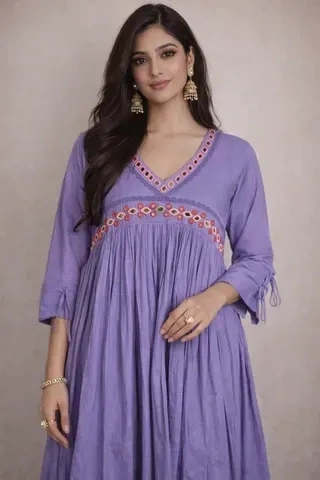
Why Choose Breathable Saree Fabrics for Summer?
Breathable saree fabrics are essential for summer because they allow heat and moisture to escape, preventing discomfort and overheating during long celebrations. Mul cotton, linen, and organza are favored for their lightweight weaves, airy drape, and natural fibers that keep the skin cool even in humid conditions.
Indian-American occasions—Sangeets, pujas, brunches, and weddings—often require all-day attire. Fabrics matter more than ever: a good drape isn’t just about beauty, but well-being. Let’s see how mul cotton and tissue silk stack up for summer events.
Summer Saree & Dress Fabric Comparison Table
| Fabric | Origin | Breathability | Best For |
|---|---|---|---|
| Mul Cotton | West Bengal, India | Excellent | Daytime, all-day events, outdoor gatherings |
| Linen | Bihar, Kerala | Very Good | Workwear, formal events, humid weather |
| Chanderi Silk-Cotton | Madhya Pradesh | Good | Festivals, evening wear, semi-formal occasions |
| Pure Tissue Silk | Varanasi, Kanchipuram | Moderate | Weddings, evenings, special celebrations |
| Organza | Benares, Surat | Excellent | Layered sarees, modern drapes, day-to-night |
Handcrafted Mul Cotton Ethnic Saree Dress: The Origin & Craft
Mul cotton—sometimes called “mulmul”—is a fine, loosely woven cotton from West Bengal, prized for its soft handfeel and featherlight drape. Artisans in Bengal’s weaving districts (notably Shantipur and Phulia) have perfected the mulmul weave since the Mughal era, using handlooms to create airy, delicate fabrics suited to India’s humid summers. The Handcrafted Mul Cotton Ethnic Frock from Swathi Design is inspired by this tradition—an evolution of the saree’s comfort, recast as a modern dress.
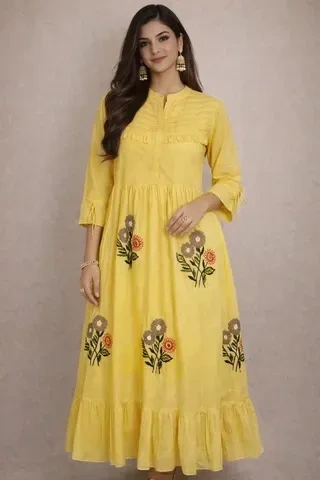
Each dress is hand-cut and sewn by skilled artisans, with heritage-inspired motifs rendered in radiant color. The secret is in the weave: mul cotton’s warp and weft are spaced for maximum airflow, making it astonishingly cool against the skin. No synthetic blends—just pure, breathable cotton.
How to Spot Authentic Mul Cotton?
- Hold the fabric up to the light. Authentic mul cotton reveals a faint grid of warp and weft, never a tight, opaque sheet.
- Gently scrunch the fabric in your palm—real mul cotton rebounds softly and feels cool, not papery.
- Check the selvage: handloom mul cotton often has tiny, uneven finish at the edge, proof of artisan weaving.
How to Care for Mul Cotton Ethnic Wear?
- Always hand wash gently in cold water with mild detergent.
- Air dry in shade; avoid harsh sunlight, which can fade natural dyes.
- Fold carefully along natural creases—never hang, as this can stretch the weave over time.
- Store with a muslin cloth to allow the fabric to breathe.
Usable tip: For the first few washes, add a teaspoon of salt to preserve color vibrancy—a method used by Kolkata textile merchants for generations.
Soft Beige Mul Cotton A-Line Dress: Subtlety Meets Craft
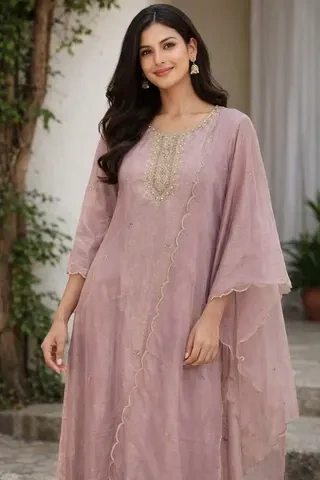
If you prefer understated elegance, the Soft Beige Pure Mul Cotton A-Line Dress offers a neutral palette with the same technical mastery. Crafted from 100% pure mul cotton, its A-line silhouette is a nod to both comfort and figure-flattery. The beige tone is achieved using eco-friendly, non-toxic dyes, making this dress gentle on skin and the environment.
Mul cotton’s loose weave ensures the fabric remains cool even during long ceremonies. This dress is especially suitable for summer weddings or office celebrations, where you want breathability with a touch of formality. Pair with a contrasting silk dupatta or oxidized silver jewelry to add personality.
Authenticity Test: Mul Cotton vs Synthetic Blends
Rub a small section briskly: pure mul cotton will not build static and will cool quickly, while poly-cotton blends feel sticky and warm to touch. The test is simple but effective for avoiding imitations.
Care Tip: Storing Mul Cotton A-Line Dresses
Always fold rather than hang mul cotton dresses; prolonged hanging can create shoulder stretching, especially on lighter weaves. Use acid-free tissue between folds if storing for long periods.
Pure Tissue Silk Gown: A Summer-Friendly Silk for Evening
Tissue silk—a specialty of Varanasi and Kanchipuram—is a gossamer, semi-transparent silk incorporating metallic zari threads for a delicate shimmer. Unlike heavy brocade, tissue silk is renowned for its feather-light drape and subtle shine. The Pure Tissue Silk Gown from Swathi Design uses authentic 100% tissue silk, cut in a contemporary silhouette for special occasions.
Artisans weave tissue silk using fine mulberry silk warp, metallic zari weft, and traditional pit looms. The result: a fabric that breathes better than most silks, making it suitable for summer evenings. Available in gold, maroon, emerald, and royal blue, each color is carefully selected for maximum radiance under evening lights.
How to Spot Authentic Pure Tissue Silk?
- Look for the signature shimmer—genuine tissue silk is lustrous but never garish; the zari reflects light in a subtle, diffused manner.
- Tissue silk is semi-sheer: hold up to light and you should see a faint outline of your hand.
- Rub gently—authentic tissue silk feels crisp, not slippery.
- Check the label or ask the brand for sourcing details; true tissue silk is always woven, not printed.
How to Care for Tissue Silk Gowns?
- Professional dry cleaning is strongly recommended. Home washing can damage zari and distort the weave.
- After each wear, air out the gown in shade before storing.
- Fold along original lines and store in a soft muslin bag—avoid plastic covers, which can trap moisture and promote tarnishing of zari.
Usable tip: Insert a small pouch of dried neem leaves in your storage bag; neem is a natural insect deterrent used by textile conservators across India.
How to Choose the Best Summer Ethnic Wear? Criteria & Buying Guide
- Breathability: Opt for natural fibers (cotton, silk, linen) with loose, open weaves. Avoid synthetic blends for day events.
- Weight: Lighter fabrics drape better and reduce heat retention—mul cotton and tissue silk excel here.
- Occasion: For outdoor daytime, pick mul cotton or linen; for evening, tissue silk or Chanderi.
- Maintenance: Consider easy-care pieces if you prefer low fuss—mul cotton is hand-washable, while tissue silk demands more attention.
- Budget: Under $100: pure mul cotton; $100-300: Chanderi and linen; $300+: heirloom silk and specialty tissue pieces.
Summer Ethnic Wear Edit: Day vs Evening Picks
| Time | Fabric | Product Example | Styling Tips |
|---|---|---|---|
| Day | Mul Cotton | Handcrafted Mul Cotton Ethnic Frock | Jhumkas, Kolhapuri sandals, minimal makeup |
| Day | Mul Cotton | Soft Beige Mul Cotton A-Line Dress | Colorful dupatta, oxidized silver necklace, embroidered juttis |
| Evening | Tissue Silk | Pure Tissue Silk Gown | Kundan jewelry, metallic heels, silk clutch |
FAQ: Summer Ethnic Wear Edit for Indian-American Women
Which saree fabric is best for summer?
Mul cotton is the best saree fabric for summer due to its ultra-light, open weave and high breathability. Originating in West Bengal, mul cotton allows heat and moisture to escape, keeping the wearer cool during long, warm days. Linen and organza are also excellent, but mul cotton’s softness and comfort make it a perennial summer favorite.
What should I wear to a summer Indian wedding?
The ideal summer Indian wedding outfit combines breathability with festive appeal—mul cotton dresses and Chanderi sarees are excellent for day events, while tissue silk gowns suit evening functions. Pair light colors with comfortable footwear and statement jewelry for a balanced, celebratory look. See our Dresses category for more options.
Is silk too hot for summer events?
Not all silks are heavy—pure tissue silk is woven to be lightweight and semi-sheer, making it suitable for summer evenings. However, heavier brocade or Kanjivaram silks can trap heat. Always check the weight and weave; opt for tissue, organza, or Chanderi silk blends for warm-weather celebrations. Learn more in our guide on Mysore Silk Saree History.
Are cotton sarees good for warm weather?
Yes, cotton sarees—especially mul cotton—are ideal for warm weather due to their natural breathability, moisture absorption, and lightweight drape. Handloom cottons from Bengal and Andhra Pradesh are especially well-suited for humid climates, providing comfort and elegance through long summer days. For more on cotton’s versatility, see our post on Chanderi fabric.
How to Style Summer Ethnic Wear for Day & Evening?
To style summer ethnic wear, choose light, breathable fabrics like mul cotton or tissue silk and pair them with seasonal accessories. For day, keep jewelry minimal and opt for open sandals or juttis; for evening, layer with statement pieces and metallic accents. Always balance color intensity with event formality to stay comfortable and festive.
- Day: Mul cotton dresses with jhumkas, fabric belts, and sneakers for fusion looks
- Evening: Tissue silk gowns with kundan or diamond jewelry, silk pouches, and metallic heels
- Festive: Add a vibrant dupatta or embroidered stole for extra flair
Budget Tiers: Finding the Right Summer Ethnic Wear
- Under $100: Handcrafted Mul Cotton Ethnic Frock ($35), Soft Beige Mul Cotton A-Line Dress ($35) – day events, fuss-free
- $100-300: Look for Chanderi silk-cotton blends, linen sarees for formal and semi-formal wear
- $300+: Pure tissue silk gowns and specialty weaves for weddings and milestone occasions
All products featured are sourced directly from artisan weavers, ensuring fair pricing and authentic craftsmanship.
Shop the Collection
Ready for your summer ethnic wear edit? Explore Swathi Design’s full collection of breathable sarees, mul cotton dresses, and tissue silk gowns—crafted for warm-weather comfort and elegance. Personalized styling help is available via WhatsApp, and all items ship from California with a 48-hour damage claim policy.
Celebrate summer’s beauty with authenticity, care, and comfort—one weave at a time.
Featured in this guide
Part of the Indian Wedding & Festive Dressing guide collection.
Related guides
- Chanderi Silk Suits in USA: Embrace Ethnic Grace for Weddings & Festive Occasions
- Elevate Your Festive Wardrobe: Stunning Indian Dresses for US Weddings & Celebrations
- Celebrate Indian Heritage in the USA: Pure Silk Gowns for Weddings & Festive Glamour
- Elevate Your Wedding Look with Exquisite Pure Banarasi Kora Tissue Sarees
- Timeless Elegance: Discover the Pure Banarasi Kora Tissue Saree Collection for Weddings & Festivals