What to Wear to a Naming Ceremony Namkaran: Saree & Outfit Ideas for New Moms and Guests
Selecting what to wear to a naming ceremony namkaran is all about comfort, tradition, and subtle glamour—especially for new mothers and close family. Discover light tissue Banarasi sarees, jewel-toned Dola silk gowns, and serene ivory muslin Anarkalis styled for holding baby, auspicious color palettes, and guest-friendly accessorizing.
What to Wear to a Naming Ceremony Namkaran?
TL;DR: For a naming ceremony (namkaran), choose light, festive traditional wear in auspicious shades—think tissue Banarasi sarees, jewel tones, or soft ivory muslin gowns. Prioritize comfort (especially for new moms), easy drape, and subtle but celebratory detail. Pair with minimal jewelry, practical footwear, and accessories that work for a daytime home function where you may be holding or feeding the baby.
Picture this: It's a sunlit California morning, the living room humming with the scent of sandalwood, laughter, and the gentle coo of your baby. As a new mother—swaddling your little one for her first formal introduction—or as a close guest, what you wear isn't just about beauty. It's about honoring tradition without sacrificing comfort or mobility. Here's your trusted styling guide for what to wear to a naming ceremony namkaran, with a focus on new parents and family guests.
Why Naming Ceremony Outfits Matter
Namkaran (naming ceremony) is a deeply symbolic rite for many Indian families, marking your child’s formal entry into the family and community. It’s typically a daytime, at-home function—intimate, auspicious, and rich in tradition. The right outfit balances cultural significance with practicality: you’ll want to look polished for photos, but also feel free to sit cross-legged, move gracefully, or nurse discreetly. Light silk sarees, soft muslin, and unrestrictive gowns are perennial favorites for their comfort and elegance during such milestone events.
What is a Naming Ceremony Namkaran?
Namkaran is the traditional Hindu naming ceremony performed to formally name a newborn, usually within the first few months of life. The ritual, rooted in Vedic tradition, involves prayers, blessings, and the whispering of the chosen name into the baby’s ear, often by grandparents or a priest. Families across India observe it with regional variations—called barsa in Maharashtra, annaprasana in Bengal, cradle ceremony in South India—but always with a focus on auspicious beginnings. Outfits worn are typically light, celebratory, and respectful of family customs.
Best Outfit Ideas for a Naming Ceremony Namkaran
- Handwoven tissue or light silk sarees with subtle zari work
- Soft, jewel-toned silk or muslin gowns for ease of movement
- Ivory or pastel Anarkalis with minimal embroidery
- Comfortable, breathable fabrics to help new moms manage the day
- Minimal, baby-friendly jewelry; avoid sharp edges or heavy pieces
- Flat or low-heeled sandals for standing and mingling
How to Style a Banarasi Tissue Saree for a Naming Ceremony
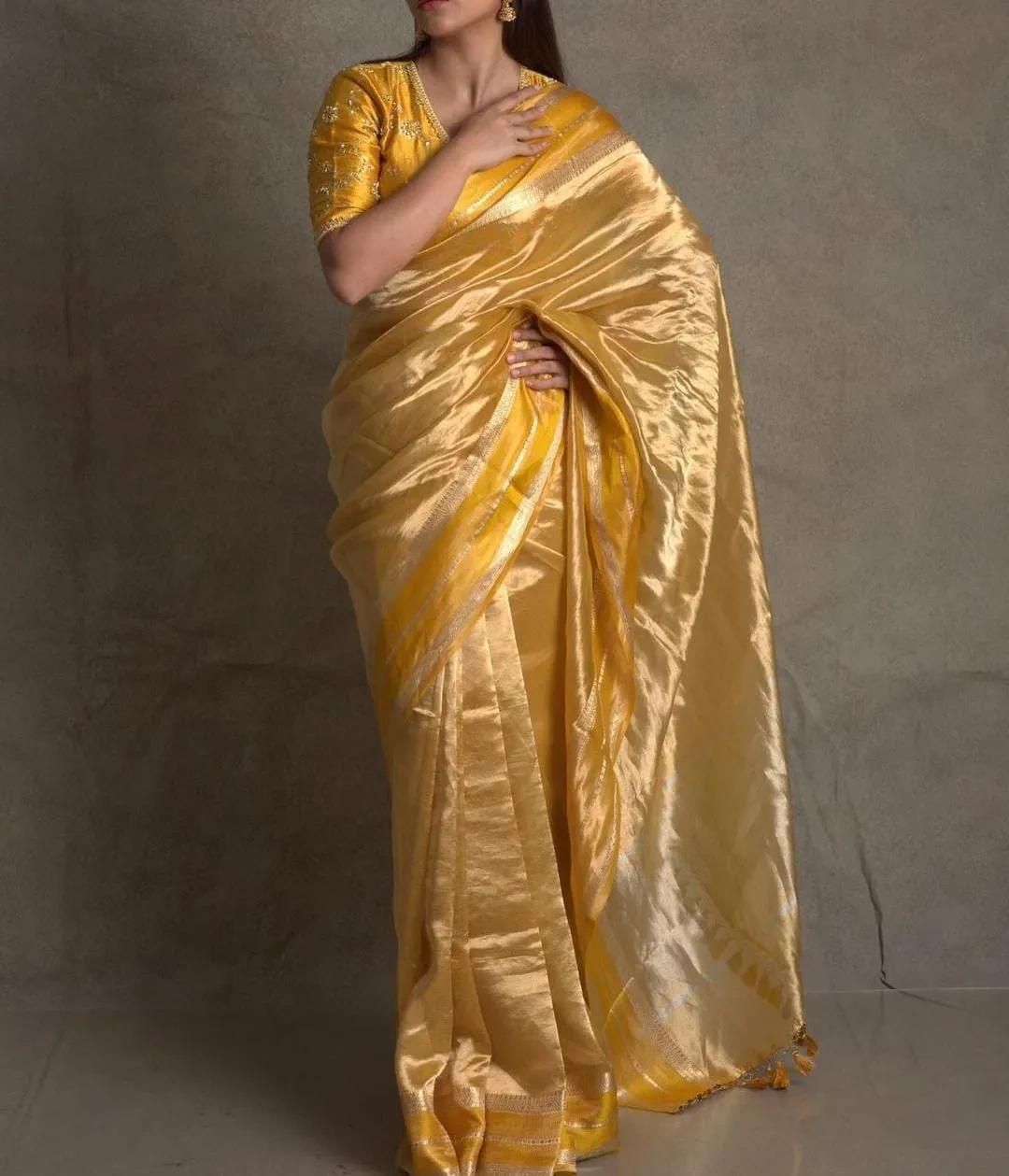
The Luxurious Handwoven Pure Banarasi Tissue Saree with Zari Detailing ($195.00) is my top pick for new mothers and hosts. Handwoven in Banaras by artisan weavers, this saree’s featherlight tissue fabric and luminous zari edges catch the morning light, bringing just the right amount of shine to the occasion—without overwhelming your frame or the baby.
- Blouse pairing: Opt for a simple, elbow-sleeve silk blouse in matching gold, ivory, or blush. For nursing mothers, a front-closure or zip blouse is a smart, discreet choice.
- Jewelry: Choose delicate gold studs or kundan earrings (avoid hoops or danglers that could catch tiny hands). A slender gold chain or a minimal mangalsutra completes the look.
- Footwear: Soft, flat mojaris or block-heeled sandals in metallic tones.
- Hair & Accessories: A low bun adorned with jasmine or a silk scrunchie, and a lightweight embroidered potli bag for essentials.
Pro Tip: If you’ll be holding the baby for long stretches, secure the saree pallu with a tasteful brooch at your shoulder. This prevents accidental slips and looks polished in photos.
Why Choose a Banarasi Tissue Saree?
The Banarasi tissue saree is a contemporary reinterpretation of a centuries-old weaving tradition. Banaras (Varanasi) is famous for its intricate zari work and opulent patterns, but tissue sarees reimagine this heritage in a lighter, more wearable form. The result: a saree that moves with you, drapes effortlessly, and stays comfortable throughout rituals, photos, and feeding breaks. The subtle shimmer of gold and silver zari is considered auspicious—ideal for a naming ceremony. Tissue fabric’s airy weave helps regulate temperature, perfect for crowded living rooms or backyard parties.
| Feature | Benefit |
|---|---|
| Lightweight Tissue Weave | Comfortable for all-day wear, easy to drape |
| Handwoven Zari Detailing | Celebratory shimmer, artisanal heritage |
| Subtle Color Options | Works for both main hosts and guests |
| Effortless Drape | Ideal for new mothers holding baby |
How to Style a Dola Silk Gown for Naming Ceremony Guests
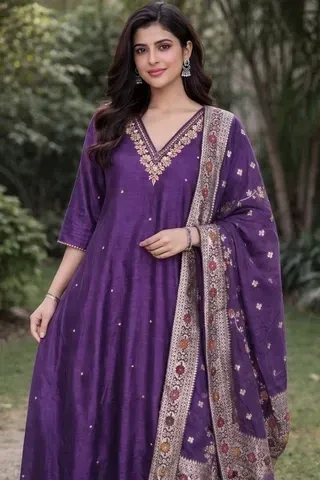
If you’re a guest, aunt, or close friend, the Exquisite Jewel-Toned Dola Silk Gown ($38.00) is a showstopper that lets you participate fully—without fuss. Dola silk is prized for its buttery softness and jewel-like luster, draping beautifully across all sizes and shapes. The gown’s tailored-yet-fluid silhouette means you can sit, stand, or help with rituals comfortably.
- Color choice: Jewel tones (emerald, ruby, sapphire) are considered auspicious and photograph well in natural light.
- Jewelry: Pair with a statement cocktail ring or kundan studs—leave the heavy necklaces for evening weddings.
- Footwear: Embellished juttis or soft block heels.
- Pro tip: Add a sheer organza dupatta for a festive layer, or a waist belt for modern definition.
This gown is also a smart choice for new mothers who find sarees too fussy post-partum, offering freedom of movement and discreet feeding access if needed. For a deeper dive on Dola silk’s properties, see our Dola Silk vs Raw Mango Silk guide.
How to Style the Ivory Muslin Anarkali Gown for New Moms
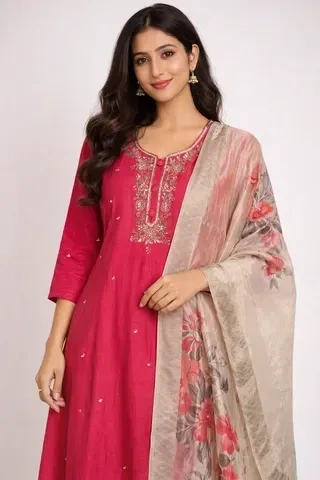
The Ivory Muslin Anarkali Gown ($30.00) is a favorite for mothers or aunts who want a serene, elegant look that’s entirely fuss-free. Muslin, renowned for its breathability (famously used for royal infants’ clothing in Mughal India), is gentle on the skin and flows gracefully from shoulder to ankle—ideal for those early postpartum weeks.
- Fit: The silhouette works across US sizes 4-12 and is forgiving for fluctuating body shapes.
- Jewelry: Minimal gold bangles, pearl studs, or a simple kundan tikka for an auspicious touch.
- Accessories: Neutral-toned clutch or kolhapuri sandals.
- Care: Hand wash gently or dry clean to keep muslin’s sheen and drape intact.
The ivory color symbolizes new beginnings in many Indian cultures, making it especially meaningful for a cradle ceremony or annaprasana. Add a pastel dupatta if you want extra coverage for feeding or rituals.
Auspicious Colors and Fabrics: What Works Best?
For a naming ceremony, tradition favors light, festive shades—ivory, gold, blush, soft greens, and jewel tones. These hues evoke purity, prosperity, and joy. Avoid deep reds and stark blacks, which are generally reserved for weddings or formal events. Fabrics like tissue silk, muslin, and Dola silk offer comfort, breathability, and a hint of celebration without overpowering the occasion. Handwoven pieces from artisan regions—like Banaras for tissue sarees or Bengal for muslin—carry the added blessing of supporting traditional crafts.
FAQs: What to Wear to a Naming Ceremony Namkaran
What do you wear to a naming ceremony?
For a naming ceremony, choose traditional Indian wear in light, auspicious colors. Women often select tissue Banarasi sarees, silk gowns, or muslin Anarkalis, while men opt for cotton or silk kurtas. Comfort, ease of movement, and subtle festive detail are key, especially for at-home daytime events. Avoid heavy bridal wear or deep, somber colors.
What should a new mother wear to a namkaran?
New mothers attending a namkaran should prioritize comfort and practicality alongside tradition. Soft, lightweight sarees like Banarasi tissue or breathable muslin Anarkalis are ideal—easy to drape, gentle on the skin, and photo-ready. Nursing-friendly blouses, minimal jewelry, and flat sandals help you care for your baby while looking festive.
What colors are worn at a cradle ceremony?
Cradle ceremonies favor light, auspicious colors such as ivory, gold, pastel pinks, soft greens, and jewel tones. These shades represent purity and new beginnings. Avoid black or deep reds, which may be seen as inauspicious for daytime family rituals.
Is traditional wear expected at a naming ceremony?
Traditional wear is generally expected at a naming ceremony. For women, sarees, Anarkali gowns, or ethnic dresses are preferred; men often wear kurtas or semi-formal Indian attire. The mood is more relaxed than a wedding, so comfort and simplicity are valued, but tradition is honored through fabric and color choices.
3 Ways to Style Your Naming Ceremony Look
- Classic Host Look:
Drape the Banarasi Tissue Saree with a minimal blouse; secure pallu with a brooch. Pair with gold studs, a sleek bun, and a potli bag. Ideal for the new mom or grandmother. - Effortless Guest Chic:
Slip into the Jewel-Toned Dola Silk Gown in emerald or sapphire. Add a statement ring, light juttis, and a sheer dupatta for a festive spin. - Modern Minimalist:
Choose the Ivory Muslin Anarkali Gown with pearl jewelry and nude pumps. Drape a pastel silk dupatta for extra coverage or feeding ease.
For more on festive family event dressing, see our Griha Pravesh Styling Guide.
Do's and Don'ts: Naming Ceremony Outfit Edition
- Do prioritize comfort and breathable fabrics—especially for new mothers and those handling the baby.
- Do choose auspicious, light, or jewel-toned colors; match with the family’s tradition if you’re the host.
- Do keep jewelry minimal and baby-safe. Stick to studs, bangles, and avoid heavy necklaces.
- Don’t wear deep reds, all-black, or heavy bridal lehengas—save these for weddings.
- Don’t pick stiff, synthetic fabrics that restrict movement or make you overheat during rituals.
- Don’t forget a matching mask or scarf if the host requests—safety is still stylish.
Styling Tips for New Moms and Guests
- New moms: Arrange your pallu or dupatta to double as a nursing cover if needed. Choose a front-closure blouse for ease.
- Guests: If you’re unsure of dress code, ask the host or opt for universally festive sarees or gowns in pastel or jewel tones.
- All: Use light, non-greasy makeup—think creamy blush, tinted lip balm, and a dusting of highlighter for a fresh daytime glow.
Naming Ceremony Outfit Comparison Table
| Outfit | Best For | Comfort | Price |
|---|---|---|---|
| Banarasi Tissue Saree | Host / New Mom | Lightweight, airy | $195.00 |
| Jewel-Toned Dola Silk Gown | Guest / Aunt | Buttery-soft, unrestrictive | $38.00 |
| Ivory Muslin Anarkali Gown | New Mom / Guest | Breathable, flowing | $30.00 |
Shop the Collection
Curating your naming ceremony look is about honoring tradition with a modern sensibility—light, auspicious colors in beautifully handwoven fabrics. Explore the full range of sarees, gowns, and ethnic dresses at Swathi Design’s collection. For more options, check our Sarees and Dresses sections, or reach out to our WhatsApp styling concierge for personalized advice.
One last word: The best naming ceremony outfit is one that lets you celebrate in comfort and confidence—whether you’re holding your baby close or capturing memories with family. For more inspiration on festive and family event dressing, don’t miss our guides on housewarming saree styling and couple’s outfit ideas. Shop the look, and make your child’s first milestone as beautiful as your heritage.
Featured in this guide
Part of the Handwoven Silks: Chanderi, Tussar & Raw Mango guide collection.
Related guides
- Elevate Every Occasion: Handcrafted Indian Gowns & Frocks for Modern Celebrations in the USA
- Elevate Every Occasion: Pure Chanderi Pattu Silk Sarees for Indian-Americans in the USA
- Exquisite Russian Crape Silk Saree: Timeless Elegance for Every Occasion
- Luxurious Pure Russian Crape Saree: Timeless Elegance for Every Occasion
- Elevate Your Festive Wardrobe with Exquisite Handwoven Chanderi Sarees and Anarkali Dresses