What Is Chanderi Fabric? Sheer Silk-Cotton Weaves from Madhya Pradesh
What is Chanderi fabric? This famed handloom from Madhya Pradesh is prized for its translucent texture, silk-cotton blend, and delicate buti motifs. Learn how Chanderi’s unique weaving structure creates its glassy sheerness—and how to recognize, style, and care for this iconic textile.
What is Chanderi Fabric?
Chanderi fabric is a traditional Indian handloom textile woven in the town of Chanderi, Madhya Pradesh. Known for its sheer transparency, lightweight drape, and subtle lustre, Chanderi is crafted from a unique blend of silk and cotton, often highlighted with zari borders and buti motifs. Its signature glassy texture is achieved through a specific warp and weft structure, resulting in a fabric that is both breathable and elegant—making it a favorite for sarees and festive wear among Indian-American communities seeking a blend of comfort and heritage.
Origin of Chanderi: A Town Woven Into Fabric
Chanderi’s weaving heritage dates back at least to the 11th century. The town sits at the boundary of Malwa and Bundelkhand in Madhya Pradesh, a crossroads that influenced its textile culture. According to the Madhya Pradesh State Handloom Development Corporation, Chanderi’s earliest weavers were said to be descendants of the Koshti community, who migrated here from Jhansi and Rajasthan. By the Mughal era, Chanderi’s translucent sarees had become prized in royal courts for their diaphanous quality and subtle ornamentation. Today, Chanderi enjoys Geographical Indication (GI) status, protecting its traditional techniques and regional identity.
How Chanderi Fabric Is Made: The Silk-Cotton-Zari Structure
Chanderi fabric’s defining characteristics come from its blend of fine silk (often mulberry silk), mercerized cotton, and metallic zari. The warp (vertical threads) is typically silk, lending sheen and strength, while the weft (horizontal threads) is cotton or silk, depending on the desired finish. This combination gives Chanderi its signature semi-sheer, “glass-like” look—lighter than pure silk and softer than pure cotton.
- Silk Warp: Mulberry silk threads form the base, providing shine and durability.
- Cotton/Silk Weft: Fine, high-twist cotton or silk is woven across, adding softness and breathability.
- Zari Borders & Butis: Gold or silver zari, traditionally real metallic thread, is handwoven as borders (nakshi) or scattered as buti motifs.
Weaving is performed on traditional pit looms, which help keep the fabric taut and allow nuanced manipulation of motifs. Unlike power-loom imitations, authentic Chanderi reveals minute irregularities—proof of the artisan’s hand.
Why Is Chanderi Fabric So Sheer?
Chanderi’s sheerness results from its unique use of extra-fine, high-twist yarns—especially in the silk warp—and the open, balanced weave structure. This allows light to pass through the fabric, creating its famed “glass-like” transparency, while still maintaining enough body for graceful draping. The absence of heavy sizing or starch further enhances its feather-light touch.
Motifs and Borders: Butis & Nakshi in Chanderi Sarees
Traditional Chanderi sarees are instantly recognizable by their motifs and border work:
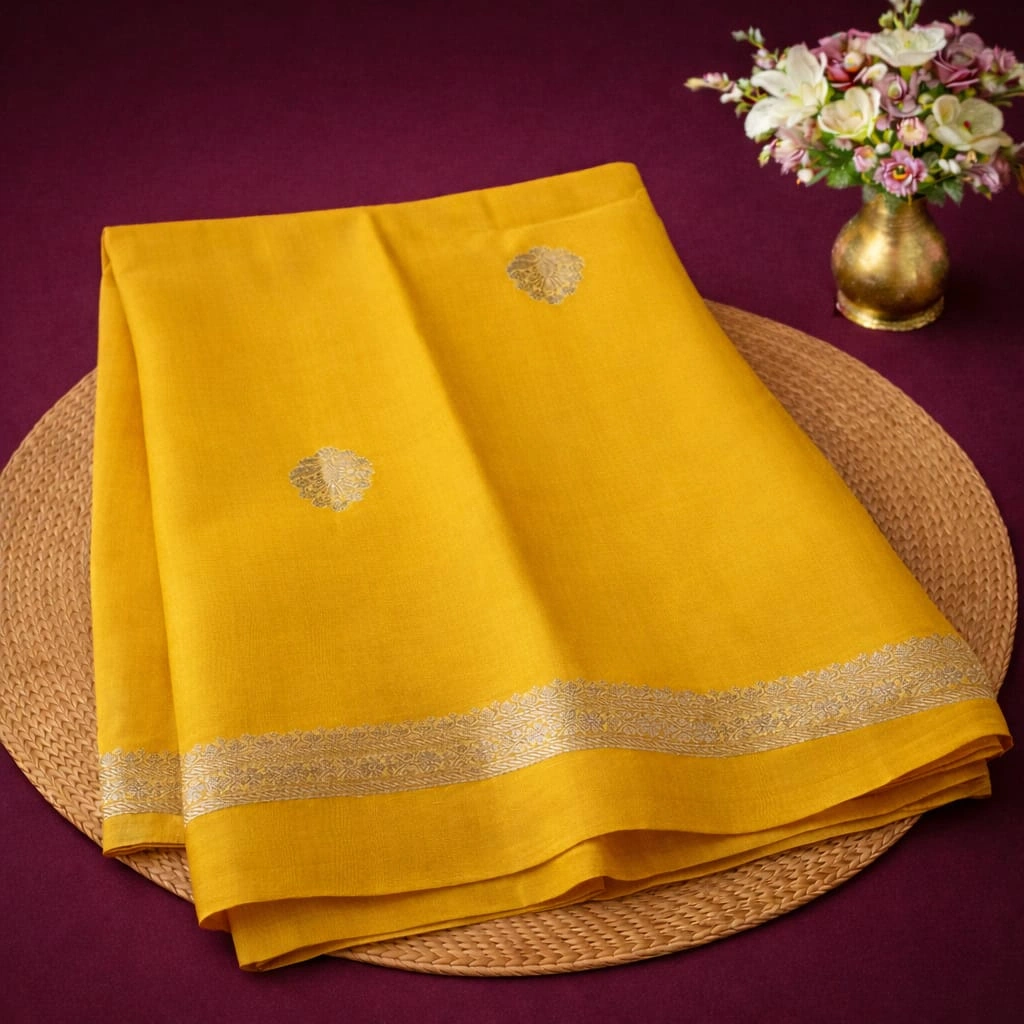
- Buti Motifs: Small, repeated patterns—such as coin (asharfi), floral (phul-patti), peacock, or geometric shapes—are woven using extra weft technique.
- Nakshi Borders: Intricate zari borders featuring temple (mandir), wave (leheriya), or vine (bel) patterns lend structure and subtle opulence.
These motifs are never printed but inserted into the weave itself, often taking hours for a single saree. Each region and family of weavers may have signature designs, passed down through generations.
How to Identify Authentic Chanderi Fabric
To spot real Chanderi, examine both structure and surface:
- Transparency Test: Hold the fabric up to light—authentic Chanderi will appear translucent, not opaque, but still feel crisp and strong.
- Motif Placement: Butis and zari are woven, not printed. Flip the saree: the motif should mirror on the reverse, albeit less crisp.
- Irregularities: Tiny slubs or variations in weave are signs of handloom work, not flaws.
- Touch: Chanderi feels cool, with a slight granularity from fine silk-cotton threads.
- GI Tag: Look for a GI handloom certification label for proof of region and technique. Learn how to read these in our GI tag handloom guide.
Beware of power-loom versions: these are often slicker, heavier, and lack the nuanced transparency and motif sharpness of real Chanderi.
Authenticity Test: The Water Drop
Gently drop a bead of water on the saree. In real Chanderi, the drop should bead up and roll off, thanks to the fine silk warp and tight weave. On synthetic or power-loom imitations, water tends to soak in immediately.
How to Care for Chanderi Fabric: Cleaning, Folding, and Storage
Chanderi sarees are delicate, but with proper care, they last generations. Here’s how:
- Washing: Always dry clean. Chanderi’s fine silk and zari are prone to color bleeding and damage from water or detergent.
- Folding: Refold every few months to avoid permanent creases. Place acid-free tissue between folds to protect zari.
- Storage: Wrap in a soft cotton cloth and store in a cool, dry place. Avoid plastic covers—they can trap moisture and yellow the silk.
Care Tip: To revive crushed zari, place a thin cotton cloth over the motif and press gently with a cool iron. Never iron directly on silk or zari.
Why Choose Chanderi Fabric?
Chanderi offers a rare combination of breathability, lustre, and cultural significance. Its silk-cotton blend makes it ideal for festive wear in varied climates, especially for Indian-American women seeking heritage without heaviness. The region’s centuries-old craft ensures each piece is unique, and the GI tag means you’re supporting protected artisan livelihoods. Chanderi’s motifs and borders also pair beautifully with both traditional and contemporary accessories, making it versatile for weddings, Diwali, or elegant gatherings.
FAQ: What is Chanderi fabric made of?
Chanderi fabric is made from a blend of fine mulberry silk, high-twist cotton, and metallic zari. The silk warp provides lustre and strength, the cotton or silk weft adds softness and breathability, and zari threads are woven in for borders and motifs. This unique structure gives Chanderi its signature glassy finish and light drape.
FAQ: Why is Chanderi fabric so sheer?
Chanderi fabric’s sheer transparency is due to the use of extra-fine, loosely twisted silk warp and a balanced open weave. This allows light to pass through, creating a diaphanous appearance while still maintaining durability. The absence of heavy sizing or starch enhances its feather-light quality.
FAQ: Where is Chanderi fabric from?
Chanderi fabric originates from the town of Chanderi in Ashoknagar district, Madhya Pradesh, India. The region is renowned for its centuries-old handloom tradition, blending influences from Malwa and Bundelkhand. The Chanderi weaving community is recognized for producing some of India’s most iconic sheer silks and cottons, now protected by GI status.
FAQ: Is Chanderi suitable for summer?
Yes, Chanderi sarees are highly suitable for summer. The silk-cotton blend and open weave structure make the fabric breathable and lightweight, allowing air circulation and comfort in warm weather. Its translucency and soft drape also help prevent overheating, making it a preferred choice for daytime festive wear and outdoor events.
Chanderi vs Other Indian Handlooms: A Quick Comparison
| Feature | Chanderi | Kanjivaram | Banarasi |
|---|---|---|---|
| Region | Madhya Pradesh | Tamil Nadu | Uttar Pradesh |
| Material | Silk-cotton-zari | Pure silk-zari | Silk-zari |
| Weight | Light | Heavy | Medium-heavy |
| Motifs | Buti, nakshi | Temple, checks | Floral, jangla |
| Sheerness | Glassy-sheer | Opaque | Semi-sheer |
Each handloom tells a region’s story. Learn how to identify authentic sarees and read GI tags in our handloom certification guide.
How to Style Chanderi Sarees for US Occasions
Chanderi’s versatility shines in the diaspora context. For Indian-American weddings or Diwali parties, pair a Chanderi saree with heritage gold or silver jewelry and a handloom blouse. To modernize, opt for minimalist earrings and a silk clutch. The fabric’s muted glow also complements pastel or jewel-tone palettes—ideal for blending with American or Indo-Western silhouettes.
- For a statement look, contrast a Chanderi saree with a contemporary metallic blouse.
- Lighter Chanderi drapes are perfect for daytime events or summer outings.
- Layer with a silk stole or shawl for evening gatherings.
Explore more on Sarees for inspiration and styling tips.
Chanderi Influence: See the Craft Reflected in Other Sarees
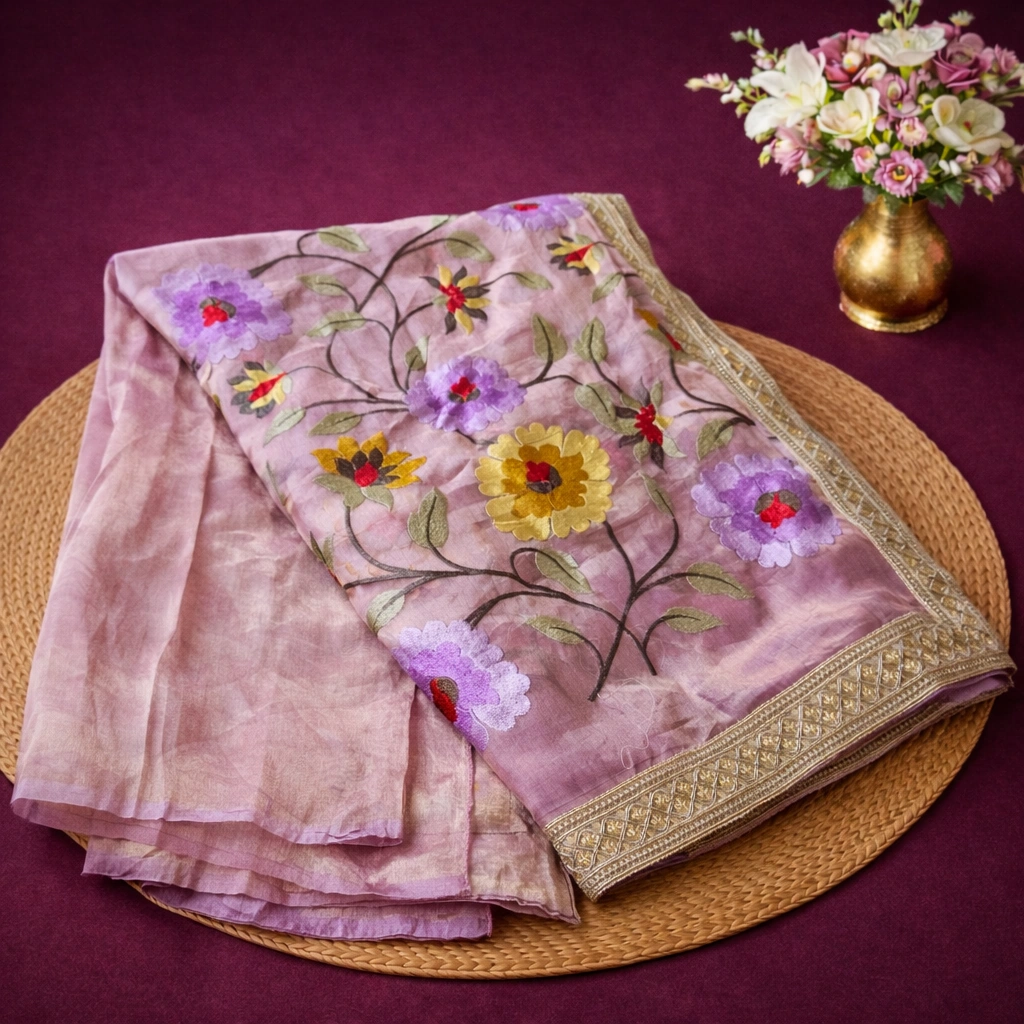
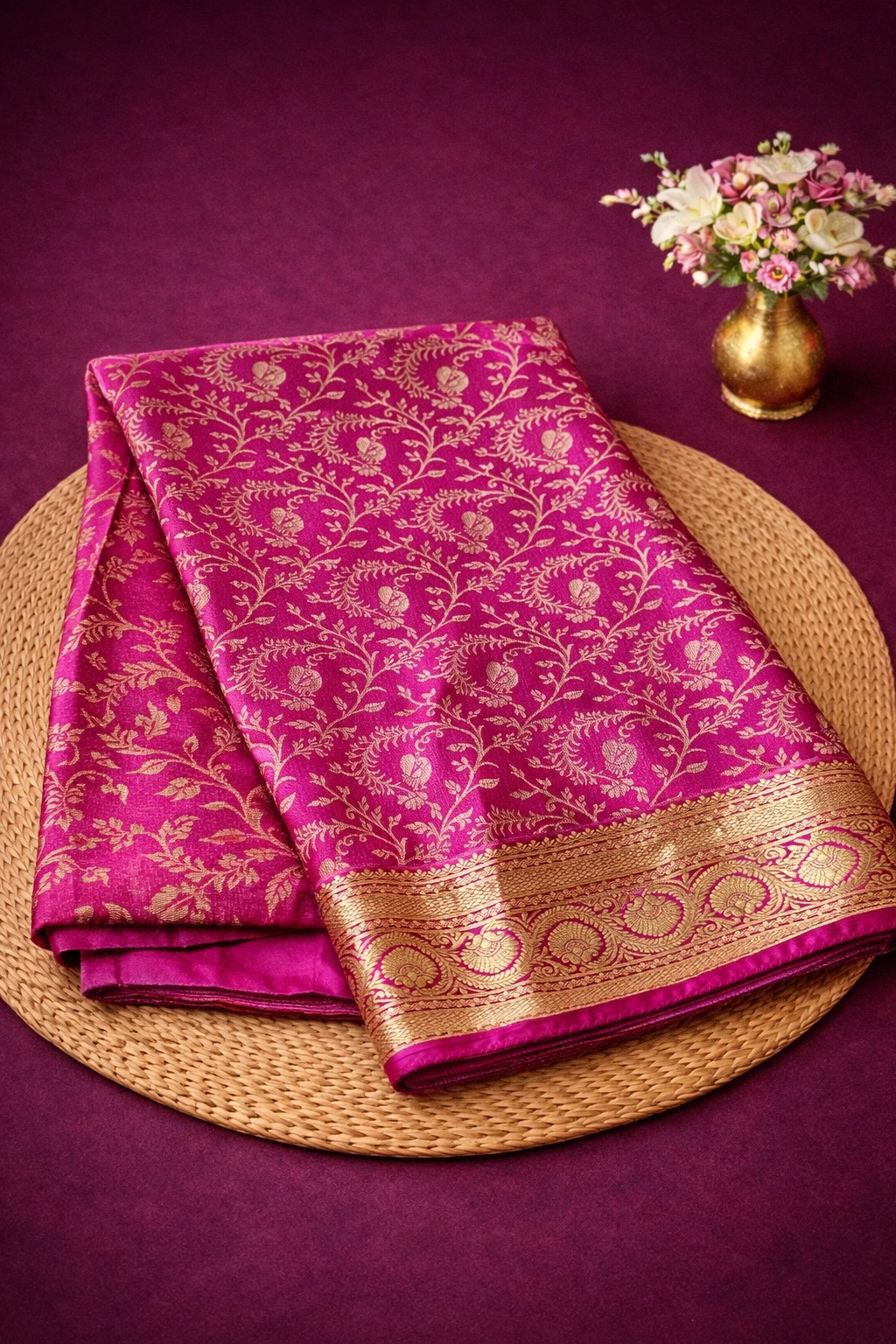
While Swathi Design currently highlights Banarasi and Mysore silks, the handloom artistry of Chanderi inspires many premium sarees in our collection. For instance, the Pure Banarasi Kora Tissue Embroidered Saree (price confirmed on inquiry) features ethereal shimmer and intricate embroidery reminiscent of Chanderi’s airy drape and delicate motifs. Its lightweight kora tissue and luminous zari threads make it a sophisticated choice for celebrations. Similarly, the Luxurious Pure Banarasi Raw Mango Handloom Saree (price confirmed on inquiry) draws on the same tradition of handwoven finesse and vibrant color, suited for modern festivities.
For those who prefer a regal finish, the Pure Brocade Mysore Silk Saree 120gms (price confirmed on inquiry) offers a buttery texture and ornate zari work, echoing the grandeur of India’s handloom legacy.
Related Guides for US-Based Saree Shoppers
New to buying handloom sarees in the US? Learn about returns and US sizing policies, or see our first-time saree buyer guide for fabric tips and shopping checklists. If gifting, our saree gifting guide covers color and etiquette choices.
Shop the Collection
Chanderi fabric stands at the intersection of artistry, comfort, and cultural identity. For Indian-Americans seeking authentic handloom sarees that honor tradition yet fit modern occasions, its silk-cotton blend and sheer finish remain unmatched. Explore the Chanderi-inspired and other artisan sarees in our curated lineup—browse our full collection and experience the joy of authentic Indian craftsmanship, shipped direct from California with concierge support. For style help or product questions, connect with Swathi Design’s WhatsApp styling experts.
Featured in this guide
Part of the Handwoven Silks: Chanderi, Tussar & Raw Mango guide collection.
Related guides
- Elevate Every Occasion: Handcrafted Indian Gowns & Frocks for Modern Celebrations in the USA
- Elevate Every Occasion: Pure Chanderi Pattu Silk Sarees for Indian-Americans in the USA
- Exquisite Russian Crape Silk Saree: Timeless Elegance for Every Occasion
- Luxurious Pure Russian Crape Saree: Timeless Elegance for Every Occasion
- Elevate Your Festive Wardrobe with Exquisite Handwoven Chanderi Sarees and Anarkali Dresses