History of Banarasi Saree: Weaving, Motifs & Mughal Legacy
The Banarasi saree, a masterpiece from Varanasi, is renowned for its Mughal-influenced motifs, real zari brocade, and generations-old weaving traditions. Explore how this iconic silk saree became a symbol of Indian bridal heritage, and how modern designers like Swathi Design preserve its legacy for new generations.
History of Banarasi Saree: The Legacy of Varanasi Handloom
The history of Banarasi saree is woven into the very fabric of Indian culture. Originating from Varanasi (Banaras), on the banks of the Ganges, Banarasi sarees trace their roots back to the Mughal period, when Persian aesthetics met Indian textile mastery. Today, these sarees continue to be prized for their luxurious feel, intricate motifs, and real zari (gold and silver thread) work — making them a preferred choice for Indian weddings and festive occasions in the US and beyond.
At Swathi Design, authentic Banarasi tissue silk sarees, such as the Handwoven Pure Banarasi Tissue Silk Saree with Golden Zari Motifs, offer a direct connection to this living tradition. Let’s explore the cultural journey, artisan skills, and signature elements that make Banarasi sarees enduring symbols of elegance.
Mughal Influence: Banarasi Saree’s Persian Roots
The Banarasi saree’s distinctive motifs and weaving techniques are deeply influenced by Mughal art and Persian design. When Mughal emperors established their courts in India during the 16th and 17th centuries, they brought with them artisans skilled in luxurious brocades, intricate embroidery, and naturalistic motifs.
Banaras weavers, known as Bunkars, began incorporating Persian motifs such as the kalga (paisley), bel (creeper), and floral jaal (web). These motifs, often woven with real zari, became signatures of the Banarasi style. The sarees were further enriched by the Mughal penchant for symmetry, detailed patterning, and opulent color palettes, resulting in textiles that mirrored courtly grandeur.
What is a Banarasi Saree?
Banarasi saree is a traditional silk garment handwoven in Varanasi, India, characterized by luxurious silk fabric, intricate brocade work using real gold and silver threads (zari), and elaborate Mughal-inspired motifs such as floral vines, paisleys, and geometric patterns. These sarees are celebrated for their craftsmanship, heritage, and association with special occasions like weddings.
The Varanasi Weaving Community: Masters of Kadhua Brocade
Varanasi’s weaving community, primarily Muslim Bunkars, has preserved Banarasi craftsmanship for centuries. The hallmark of an authentic Banarasi saree is the kadhua technique — an intensive handweaving method where motifs are individually woven into the fabric, not embroidered or printed. This makes each saree unique and exceptionally durable, with motifs appearing crisp and raised.
Weaving a single Banarasi saree can take anywhere from 15 days to six months, depending on complexity. The process involves:
- Designing patterns on graph paper
- Setting up the jacquard loom
- Handweaving motifs using kadhua brocade or cutwork techniques
- Incorporating real zari threads for a shimmering finish
This artisanal process is often a family craft, passed down for generations. The city’s weavers are supported by organizations such as the Banaras Hindu University’s textile department and the Uttar Pradesh Handloom Board, which help document and promote the region’s unique textile heritage.
Banarasi Motifs: Symbolism and Vocabulary
Banarasi sarees are celebrated for their extensive motif vocabulary, many of which carry deep cultural symbolism:
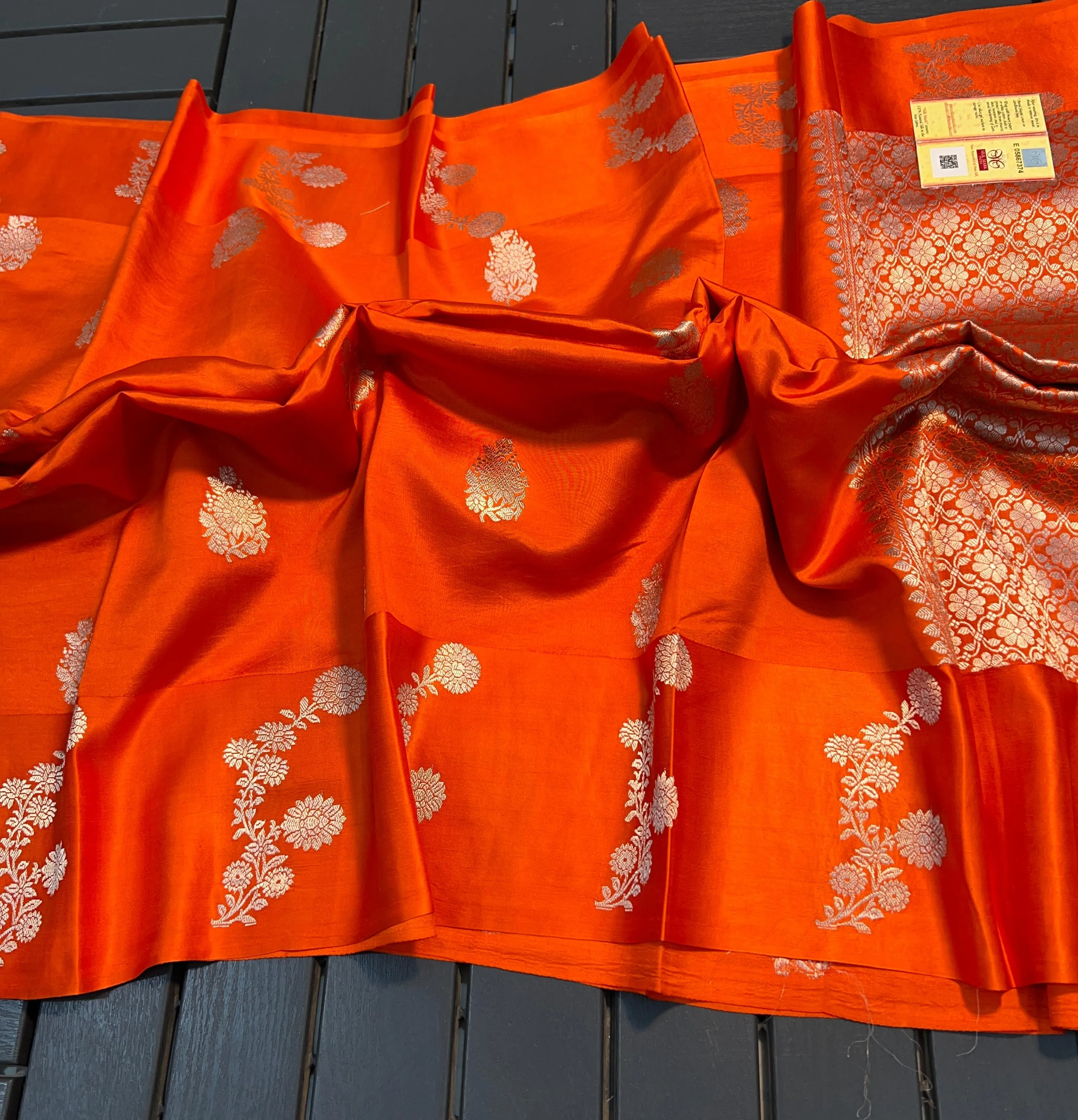
- Kalka (Paisley): Symbolizes fertility and prosperity. The paisley motif has Persian origins but is now a staple in Indian textiles.
- Jaal (Web): An all-over pattern of interlacing vines and flowers, reminiscent of Mughal gardens.
- Butidar: Small, scattered motifs of leaves, flowers, or geometric shapes, typically woven with gold and silver zari.
- Shikargah: Depicts hunting scenes, animals, and birds, reflecting royal pastimes.
- Bel: Flowing creeper motifs, often seen on saree borders and pallus.
- Angoor Bail: Grape vine patterns, a nod to abundance and festivity.
These motifs are woven using traditional techniques such as kadhua (for detailed, separated patterns), tanchoi (for intricate weaving without zari), and jangla (for ornate, large-scale designs). The Handwoven Pure Banarasi Tissue Silk Saree from Swathi Design showcases classic golden zari floral and paisley motifs, staying true to this artistic legacy.
Popular Banarasi Saree Motifs (List Snippet)
- Kalka (Paisley)
- Jaal (Floral Web)
- Butidar (Small Motifs)
- Shikargah (Hunting Scene)
- Bel (Creeper)
- Angoor Bail (Grape Vine)
Zari Art: Real Gold and Silver Threads in Banarasi Weaving
Zari work is integral to the Banarasi saree’s splendor. Traditionally, zari is made by winding fine strips of silver or gold around a silk core, then weaving it into the fabric. The resulting shimmer and durability are unmatched by synthetic alternatives. Today, real zari is still used in luxury sarees, while semi-pure and imitation variants offer more affordable options.
To check for real zari, gently rub the zari area: pure gold or silver zari remains lustrous, while synthetics may feel plasticky or lose shine. Swathi Design’s Handwoven Pure Banarasi Tissue Silk Saree features authentic zari, giving every drape a regal gleam.
What are the Four Main Styles of Banarasi Sarees?
The four main styles of Banarasi sarees are:
- Katan: Pure silk sarees with firm, lustrous texture and elaborate brocade work.
- Organza (Kora): Lightweight, sheer silk with zari and silk patterns.
- Georgette: Soft, flowing weave ideal for contemporary drapes, often with subtle zari or resham embroidery.
- Shattir: A rare and less expensive variety, used for innovative patterns and contemporary Banarasi designs.
Each style adapts the Banarasi tradition for different tastes and occasions, from formal weddings to festive gatherings. For a detailed price and fabric comparison across silk sarees, see our Silk Saree Price Guide.
Modern Banarasi Saree: Bridal Heritage in the US
For Indian-American women, the Banarasi saree is more than a festive garment — it’s a bridge to heritage. Brides frequently choose Banarasi silk for wedding ceremonies, receptions, and milestone events. Its versatility is celebrated by stylists, who pair it with contemporary blouses or minimal diamond jewelry for an updated look.
Swathi Design’s curated saree collection includes the Handwoven Pure Banarasi Tissue Silk Saree (US $155.00), crafted in Varanasi and featuring intricate golden zari motifs. For those seeking a different silk tradition, explore options like the Handloom Raw Mango Pattu Silk Saree or the Exquisite Handwoven Pure Raw Mango Silk Saree for earthy, contemporary palettes.
How to Style a Banarasi Saree for a Wedding?
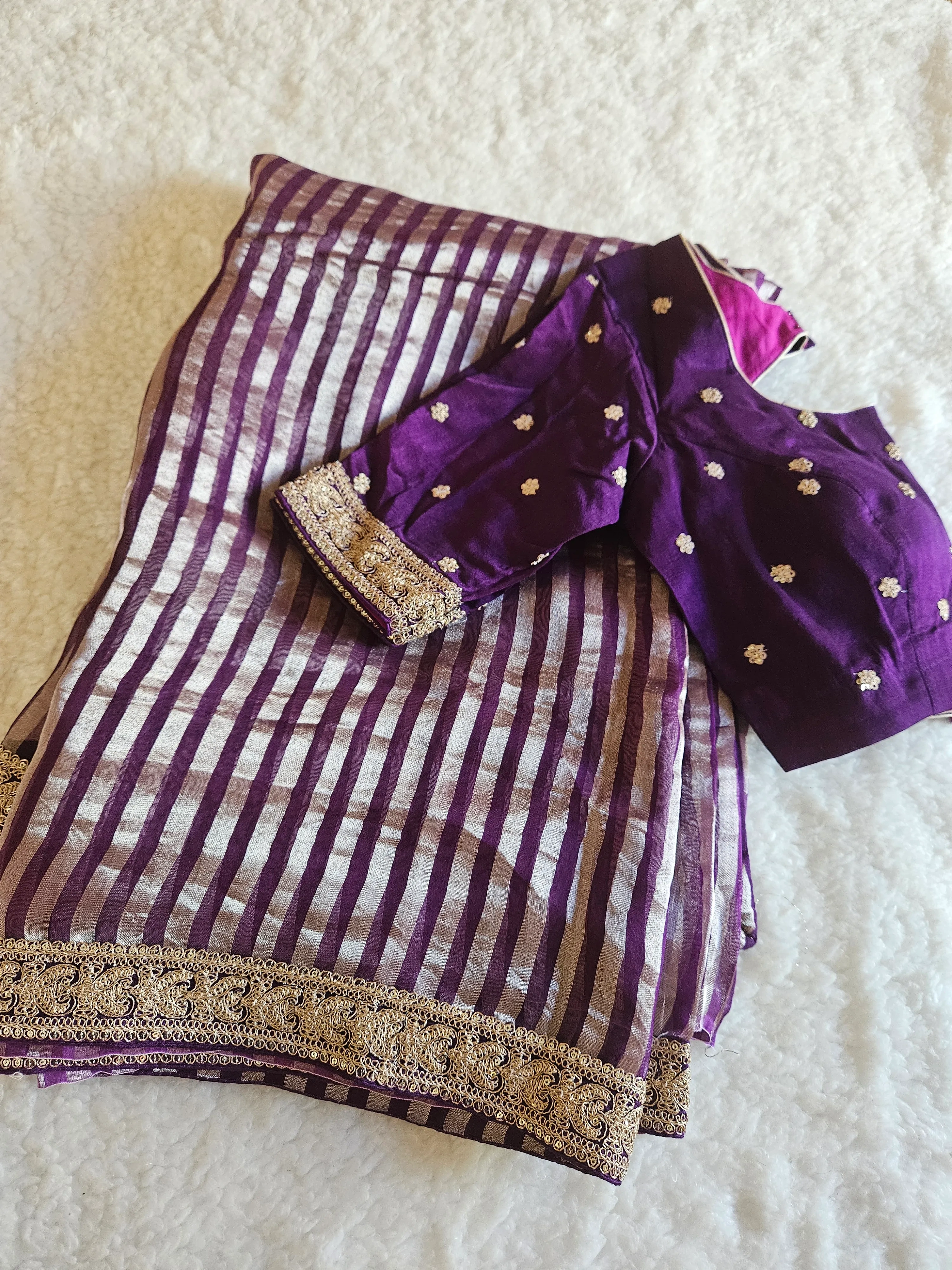
To style a Banarasi saree for a wedding, choose a silk saree with rich zari work and pair it with a well-fitted blouse in a complementary color. Add traditional gold jewelry, such as jhumkas and chokers, and opt for a sleek bun adorned with fresh flowers. Complete the look with embroidered juttis or metallic sandals for comfort and style.
- Pick a vivid Banarasi saree (red, magenta, or royal blue for classic bridal impact).
- Tailor your blouse with contemporary necklines — see our blouse neck design guide for inspiration.
- Layer on temple jewelry or kundan sets.
- For a fusion touch, style with a belt or statement earrings.
- Opt for subtle makeup and a bold lip to balance the ornate saree.
How Can You Tell a Real Banarasi from a Powerloom Copy?
| Feature | Handloom Banarasi | Powerloom Copy |
|---|---|---|
| Motif Clarity | Sharp, raised, intricate | Flat, repetitive |
| Reverse Weave | Floats and threads visible | Uniform, neat back |
| Zari Quality | Real gold/silver, soft | Synthetic, stiff |
| Time to Weave | Weeks to months | Hours |
Examine the saree’s reverse side: handwoven Banarasi sarees will show uneven threads and intricate floats, while powerloom versions appear too perfect and flat. Always confirm authenticity with a trusted retailer like Swathi Design, which sources directly from Indian artisan weavers.
Care Tips: Preserving Your Banarasi Saree
Banarasi sarees are heirloom investments. To maintain their beauty:
- Dry clean only to protect zari and silk fibers.
- Store in a muslin cloth, never plastic, to allow the fabric to breathe.
- Avoid direct sunlight when storing to prevent color fading.
- Refold the saree every few months to avoid permanent creases.
For more detailed silk care, see our silk saree care guide.
Best Occasions for Banarasi Sarees in the US
- Indian weddings (bridal, bridesmaid, guest)
- Festivals: Diwali, Navratri, Eid
- Milestone birthdays and anniversaries
- Cultural galas and formal dinners
For event-specific styling, read our Diwali saree styling guide or compare sarees and lehengas in our wedding comfort and style guide.
Banarasi Saree FAQ
Why is the Banarasi saree so famous?
The Banarasi saree is famous for its luxurious silk, intricate Mughal-inspired motifs, and authentic zari brocade, all handwoven by skilled artisans in Varanasi. Its association with Indian bridal wear and centuries-old heritage make it a globally recognized symbol of elegance and craftsmanship.
What are the four main styles of Banarasi sarees?
The four main styles are Katan (pure silk brocade), Organza/Kora (sheer silk), Georgette (light, drapey), and Shattir (innovative, affordable). Each style offers unique textures and draping possibilities, adapting Banarasi tradition for modern tastes.
How can you tell a real Banarasi from a powerloom copy?
Look for handwoven motifs with crisp, raised details, visible thread floats on the reverse, and authentic zari (which is soft and lustrous, not stiff or plastic-feeling). Trusted retailers like Swathi Design source directly from artisan weavers, ensuring authenticity.
Shop the Collection
Ready to experience the artistry of Banaras? Explore Swathi Design’s Banarasi sarees and other heritage Indian ensembles — each crafted by master weavers and available for US-based customers with flat-rate shipping and personalized styling help via WhatsApp. Invest in a piece of history and celebrate your heritage with elegance.
Featured in this guide
Part of the Kanjivaram & Banarasi Silk Sarees guide collection.
Related guides
- Timeless Elegance: Handwoven Chanderi & Banarasi Silk Sarees for Every Special Occasion
- Celebrate Timeless Elegance with Luxurious Raw Mango Silk and Banarasi Sarees
- Timeless Elegance Redefined: The Latest Handwoven Banarasi & Kanchipuram Sarees for Every Celebration
- Discover the Timeless Beauty of Banarasi and Mangalagiri Silk Sarees
- Timeless Elegance: Explore the Artistry of Pure Zari and Banarasi Tissue Sarees