Chanderi vs Maheshwari: How to Identify Madhya Pradesh’s Signature Handlooms
Chanderi vs Maheshwari compares two of Madhya Pradesh’s most iconic handloom sarees, breaking down their weave, border, sheen, and summer suitability. Textile specialist Priya Menon explains exactly how to spot each, with care tips, authenticity tests, and buying advice for Indian-American women.
Chanderi vs Maheshwari: The Definitive Comparison
If you’re searching for a saree that balances tradition, lightness, and elegant drape, two names rise above all others from Madhya Pradesh: Chanderi and Maheshwari. Chanderi vs Maheshwari is a classic handloom debate, especially among Indian-Americans who want authenticity and comfort for festive wear, summer weddings, or formal gatherings. Here’s a direct, side-by-side look at their key distinctions:
| Feature | Chanderi | Maheshwari |
|---|---|---|
| Weave Structure | Fine transparent silk warp, cotton weft | Silk-cotton blend, distinctive border & reversible pallu |
| Sheen | High natural sheen (from silk) | Subdued, matte-finish with soft glow |
| Weight | Ultra-light, airy drape | Slightly crisper, but still lightweight |
| Border | Narrow, delicate zari or resham borders | Bold, reversible borders (often ‘Narmada’ or ‘Bugdi’) |
| Occasion | Summer events, daywear, poojas | Festive evenings, formal gatherings |
| Price Band (US) | $90–$250 (pure handloom) | $80–$200 (pure handloom) |
TL;DR: Chanderi sarees are prized for their sheer, ‘woven air’ effect and subtle shimmer, while Maheshwari sarees stand out for their crisp structure, bold borders, and reversible pallus—making each best suited to different moods and occasions.
Origins: Weaving History into Every Inch
Chanderi weaving dates back to the 11th century in the eponymous town, renowned for its proximity to the Malwa plateau and Bundelkhand hills. This region’s unique micro-climate, combined with Malwa’s soft river water, gives Chanderi its legendary fineness. The craft received a royal boost under the Scindias and Mughal patronage, producing sarees for queens and courtesans alike.
Maheshwari sarees trace their roots to Maheshwar, the erstwhile capital of Queen Ahilyabai Holkar in the 18th century. Legend holds that the queen herself designed the first Maheshwari saree, instructing local weavers to create a fabric both dignified and comfortable for the hot central Indian climate. Today, both are protected under India’s GI tag system, safeguarding their regional authenticity.
What is the difference between Chanderi and Maheshwari sarees?
Chanderi sarees are woven from a fine silk warp and cotton weft, resulting in a translucent, glossy fabric known for its featherlight drape and subtle sheen. Maheshwari sarees, by contrast, use a silk-cotton blend throughout and are defined by bold, reversible borders and a crisper texture. The most visible difference is the border: Chanderi has delicate, narrow borders, while Maheshwari features wide, geometric borders and a pallu that looks identical on both sides.
How Chanderi Sarees Are Made
Authentic Chanderi is woven on pit looms using an extra-fine silk warp and mercerized cotton weft. The magic lies in the mesh-like weave (locally called ‘Butti’ for motifs), which allows light to pass through, giving it a ‘woven air’ effect. Artisans painstakingly insert zari or resham threads to create minimalistic motifs—peacocks, coins, or floral patterns—with a mastery that’s hard to replicate by machine.
I often point out that a real Chanderi, when held up to the light, glows softly and feels almost weightless in the hand—this is the result of high-twist silk and the absence of starch or heavy sizing. Look for the hallmark ‘water mark’ effect (sometimes called ‘kora’ Chanderi) as a sign of authenticity.
How Maheshwari Sarees Are Made
Maheshwari sarees use a silk-cotton blend for both warp and weft, lending a firmer, yet still airy, handfeel. The signature element is the border: traditional patterns like ‘Narmada Leher’ (wave) and ‘Bugdi’ (coin) are woven in contrasting colors using mercerized cotton and silk. Most distinctive is the reversible pallu—a technical achievement where both sides show the same pattern and finish, achieved by a careful double-sided weave.
Weavers in Maheshwar typically use fly shuttle looms and pay special attention to the border’s alignment. Pure Maheshwari will always have a soft, yet crisp structure, with very little surface fuzziness or pilling. The best pieces come from families who have passed down their looms for generations—many of whom are now recognized by the All India Handloom Board.
How to Tell Chanderi From Maheshwari at a Glance
- Border style: Chanderi: narrow, delicate; Maheshwari: bold, geometric, reversible
- Sheen: Chanderi: glossy, light-reflective; Maheshwari: matte with soft luster
- Motif density: Chanderi: smaller, spaced motifs; Maheshwari: larger, often striped or checked body
- Pallu: Chanderi: usually one-sided; Maheshwari: identical on both sides
- Touch: Chanderi: featherlight, smooth; Maheshwari: slightly crisper, holds pleats well
A simple authenticity test: Gently pinch the border and pallu. If the border and pallu look and feel the same on both sides, it’s likely a Maheshwari. If the border is finer, with a shimmery face and less defined reverse, it’s Chanderi.
Chanderi Saree: Pros & Cons
- Pros: Exceptionally lightweight, ideal for humid climates; luminous sheen; subtle motifs suit both traditional & contemporary styling; easy to pleat and drape
- Cons: Delicate weave can snag on jewelry; needs gentle care; less structured—may feel too soft for some
Maheshwari Saree: Pros & Cons
- Pros: Reversible pallu for versatile draping; bold, statement borders; holds shape well; strong enough for everyday and festive use
- Cons: Slightly crisper feel; subdued sheen may not appeal to those seeking a glossy look; heavier than Chanderi, but still summer-friendly
Which is lighter, Chanderi or Maheshwari?
Chanderi sarees are generally lighter than Maheshwari sarees. Chanderi uses a fine silk warp and cotton weft, resulting in a fabric so airy it has been called ‘woven air.’ Maheshwari, though lightweight, uses a silk-cotton blend throughout, giving it a slightly crisper and heavier feel compared to the ethereal Chanderi.
How to Spot Authentic Handloom & Care for Your Saree
For Chanderi: Look for the mesh-like transparency when held to the light, and inspect for tiny, irregular butti motifs—a sign of hand-placed thread. A genuine handloom Chanderi will have minor slubs (tiny thread knots) but never a plasticky shine. Care tip: Always hand wash separately in cold water with mild detergent, avoid wringing, and dry flat in shade. Do not starch or iron on high heat.
For Maheshwari: Check for the reversible border and pallu. The motif work should be crisp, with no loose threads at the reverse. Authentic Maheshwari will feel smooth but structured. Care tip: Gently fold along border lines and store with acid-free tissue to maintain the crisp pleats. Occasional light steam ironing (never direct hot iron) preserves shape.
Are Maheshwari sarees reversible?
Maheshwari sarees are known for their reversible borders and pallus. The unique double-sided weave creates a pallu pattern that appears identical on both sides, allowing the saree to be draped with either side facing out. This feature distinguishes Maheshwari from most other Indian handlooms.
Styling Madhya Pradesh Handlooms for US Occasions
Both Chanderi and Maheshwari sarees transition beautifully from Indian family gatherings to American formal events. Here’s how to style each for maximum impact:
- Chanderi: Pair with a sleeveless blouse and delicate pearl jewelry for a California garden wedding, or add a gold belt for Diwali. Minimalist heels and a box clutch complete the look.
- Maheshwari: Let the border shine—choose a solid silk blouse, bold jhumkas, and metallic kolhapuris. For festive dinners, drape the pallu front-facing to showcase the reversible design.
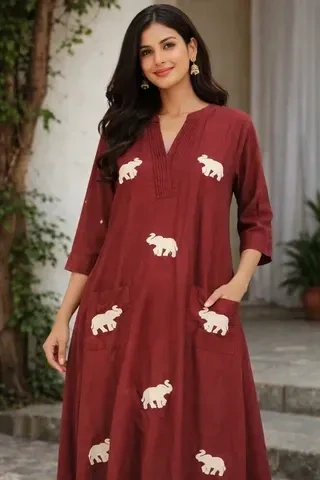
For those who love contemporary shapes with ethnic roots, Swathi Design’s Ivory Muslin Anarkali Gown channels similar lightness and hand-crafted detailing, perfect for Diwali or weddings when you want the Chanderi look without a saree’s pleats. The Handcrafted Georgette Lehenga Gown and Mul Cotton Frock also offer breathable, artisan-woven options for formal and family events.
Browse our Dresses section for more Madhya Pradesh-inspired silhouettes.
Which saree is better for summer weddings?
Chanderi sarees are ideal for summer weddings due to their ultra-lightweight, breathable weave. The fine silk-cotton structure allows air to pass freely, preventing overheating during long ceremonies. Maheshwari sarees, while slightly crisper and heavier, are still suitable for summer but excel in evening or air-conditioned events with their structured drape.
Beyond Sarees: Madhya Pradesh Weaving in Modern Dresses
For Indian-American women who value the story behind a weave but prefer western or Indo-fusion silhouettes, contemporary designers are translating Chanderi and Maheshwari techniques into dresses, gowns, and kurtas. Swathi Design’s Ivory Muslin Anarkali Gown (crafted from premium muslin, a cousin of Chanderi’s fine cotton), and Handcrafted Mul Cotton Frock reflect this trend—combining Indian artisanal fabric with silhouettes perfect for the US. The Handcrafted Georgette Lehenga Gown offers a festive, breathable option that’s ideal for both Indian and American wedding circuits.
Learn more about pairing these dresses with the right jewelry and footwear in our post on Sari Choices for a US Courthouse Wedding vs Temple Wedding.
Shop the Collection
If you appreciate the subtle art of Madhya Pradesh handlooms—whether in saree or modern dress form—explore our curated range at Swathi Design. Browse our full collection for authentic, artisan-crafted options that honor your heritage and suit every US occasion.
FAQ: Chanderi vs Maheshwari
- What is the difference between Chanderi and Maheshwari sarees?
Chanderi uses a sheer silk-cotton weave with subtle shimmer and delicate borders; Maheshwari employs a crisper silk-cotton blend with bold, reversible borders and pallu. - Which is lighter, Chanderi or Maheshwari?
Chanderi is lighter due to its fine warp and weft; Maheshwari is lightweight but slightly denser. - Are Maheshwari sarees reversible?
Yes, authentic Maheshwari sarees feature a reversible pallu and border, a hallmark of their unique weaving technique. - Which saree is better for summer weddings?
Chanderi, for its featherlight texture and breathability, though Maheshwari works beautifully for evening events or when you need a more structured drape.
For more on identifying authentic handlooms, see our post Kanjivaram Silk vs Art Silk: How to Identify Authentic Sarees.
Featured in this guide
Part of the Handwoven Silks: Chanderi, Tussar & Raw Mango guide collection.
Related guides
- Elevate Every Occasion: Handcrafted Indian Gowns & Frocks for Modern Celebrations in the USA
- Elevate Every Occasion: Pure Chanderi Pattu Silk Sarees for Indian-Americans in the USA
- Exquisite Russian Crape Silk Saree: Timeless Elegance for Every Occasion
- Luxurious Pure Russian Crape Saree: Timeless Elegance for Every Occasion
- Elevate Your Festive Wardrobe with Exquisite Handwoven Chanderi Sarees and Anarkali Dresses