Why Some Sarees Show No Price — And How to Buy
Some sarees show no price online because they're handwoven, limited, or need concierge confirmation. Learn what 'price on request' means, how Swathi Design's inquiry process works, and which questions help you buy with confidence—especially when shopping for authentic Banarasi Kora Tissue sarees.
What You'll Need Before Shopping Sarees with No Price
When a saree online shows no price, it signals a different buying experience—one rooted in artisan craft, limited editions, and personal service. At Swathi Design, US-based shoppers will encounter both instantly-priced sarees and others listed as price-on-request or 'inquire to buy.' This post explains exactly why, and how to navigate the process confidently.
- Interest in high-craft or handloom sarees (e.g., Banarasi Kora Tissue, Kanjivaram, Patola)
- Willingness to engage with a concierge or WhatsApp stylist
- Questions prepared—about fabric, weaving, delivery, and aftercare
- Email or WhatsApp for inquiries
- Understanding of payment and delivery timelines
Let's break down, step by step, why these sarees are listed this way, how to buy them, and what to expect after you inquire.
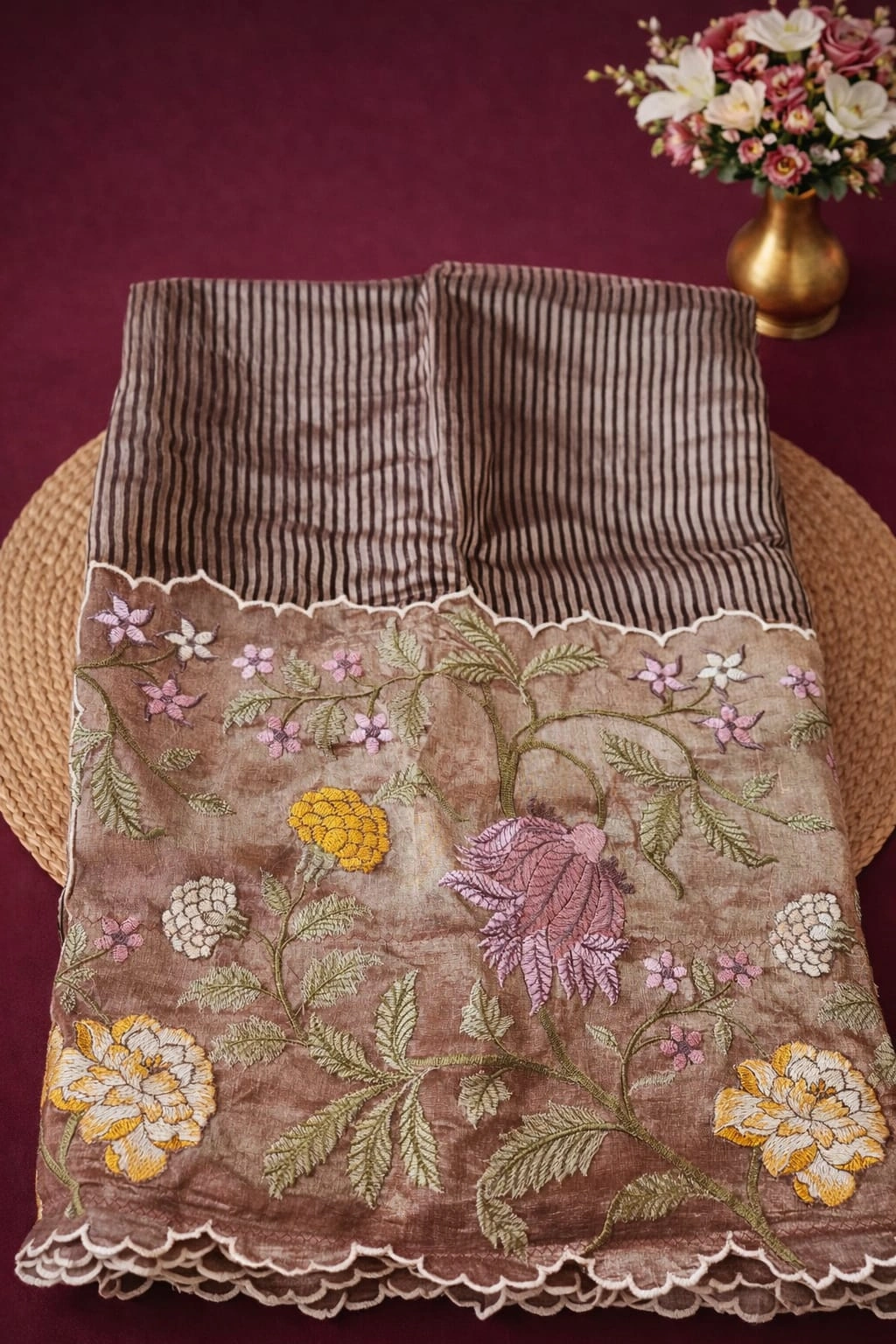
Step 1: Why Do Sarees Show No Price?
Sarees show no price when each piece is a limited, handwoven, or high-value item requiring personal confirmation. At Swathi Design, you'll see this on select sarees—especially those sourced directly from artisan weavers in Varanasi (Banaras), Kanchipuram, or Bhagalpur, where prices can fluctuate based on raw silk costs, exchange rates, and the weaver's labor.
Most handloom sarees with complex techniques—like the Exquisite Pure Banarasi Kora Tissue Saree – Golden Elegance—are not mass-produced. Their price can change between shipments or even saree to saree, depending on the level of zari (real gold/silver thread), the intricacy of the motifs, and the weight of the kora (organza) silk used. Swathi Design lists 24 such pieces as 'concierge-confirmation' against 169 ready-to-ship, pre-priced sarees.
Definition snippet: Price-on-request saree is a saree where the price is not shown online, requiring buyers to send an inquiry for a personalized quote. This model is used for limited, handwoven, or high-value pieces subject to market and artisan fluctuations.
Why Would a Boutique Not List a Price?
- Price varies—artisan costs, raw material rates, exchange rates fluctuate
- Some weavers produce only 1–2 pieces per design; after one sells, the next may cost more
- Prevents price undercutting by low-quality imitators
- Allows for a detailed conversation about authenticity, width, length, and customization
- Protects exclusive or limited-edition designs
This protects both the artisan's value and your ability to buy an authentic, up-to-date piece.
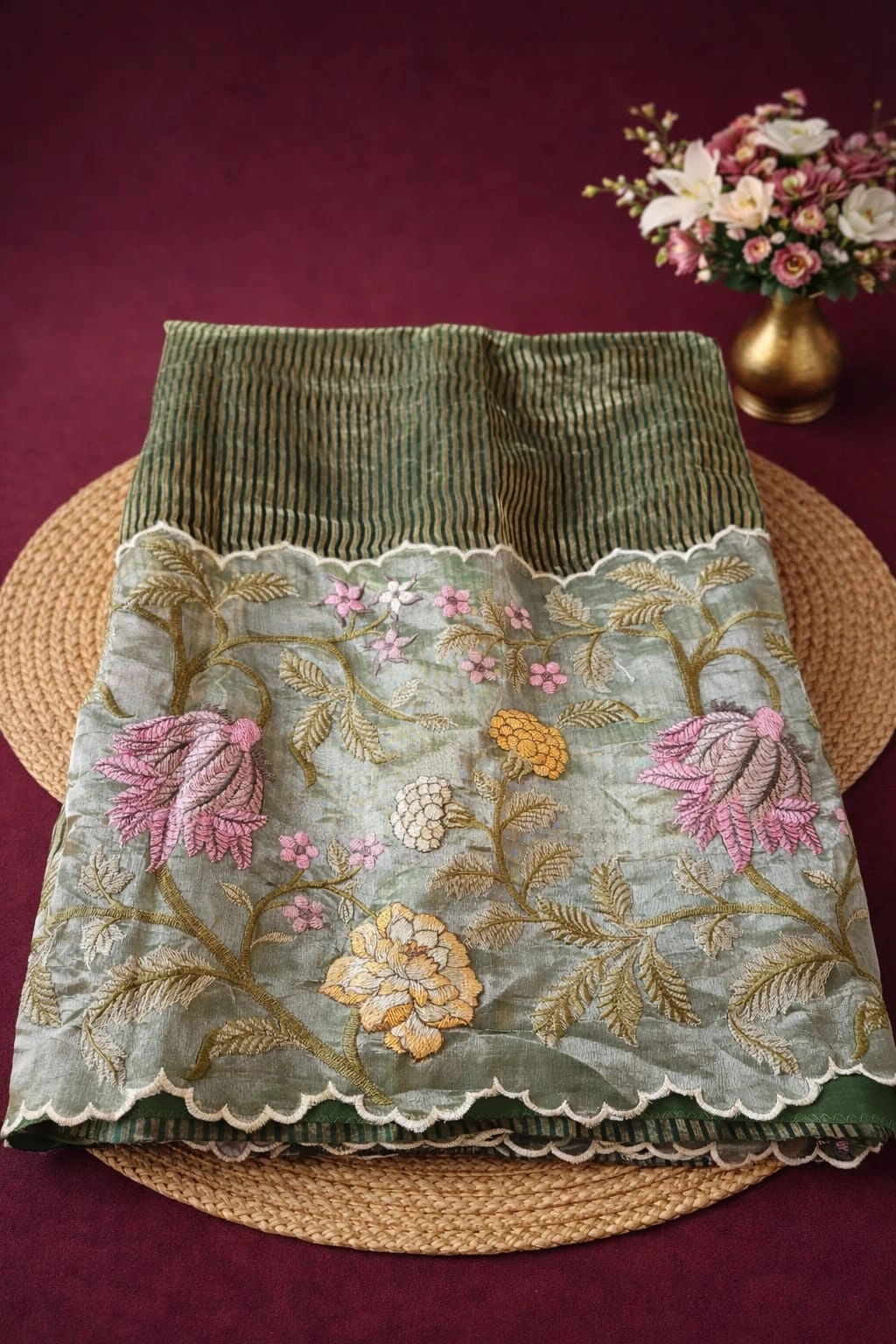
Step 2: How to Inquire for a Saree with No Price
- Find the saree you love, such as the Pure Banarasi Kora Tissue Saree for Weddings & Festive Wear.
- Click 'Inquire' or use the WhatsApp/Email listed on the product page.
- Send your inquiry with the product name or URL—be as specific as possible.
- Ask about price, availability, fabric (e.g., kora tissue, zari content), and delivery time.
- Request additional photos or videos, especially of the pallu and borders (these sections showcase true handloom detail).
- Wait for a personal response—often within 24 hours—from Swathi Design’s US-based team.
This direct inquiry ensures you get up-to-date pricing and personalized support, including styling recommendations and US fit advice. Learn more in our guide to saree petticoat & shapewear sizing for the US.
What Should I Ask When I Send an Inquiry?
When inquiring about a price-on-request saree, ask about the following:
- Current price and any recent changes
- Handloom vs. power-loom origin (ask for pit loom or GI tag details)
- Fabric content (e.g., percent silk/organza, zari type)
- Care instructions—does the saree include a blouse piece?
- Shipping timelines and return policy
- Authenticity—ask for a close-up of the reverse side (see authenticity test below)
Being specific helps you buy confidently, especially for high-value pieces like Banarasi sarees.
Step 3: What Happens After You Inquire
After you send a request for a saree with no price, the Swathi Design team will:
- Confirm availability and lock in the current price
- Share additional images or videos on request
- Offer styling advice (e.g., which blouses, petticoats, or jewelry to pair)
- Explain US shipping (flat-rate, tracked, and insured)
- Guide you through secure payment—usually via invoice or link
- Confirm your shipping address and answer any sizing or care questions
For concierge-confirmation sarees, payment is made only after you’ve received all requested info and confirmed your intent to buy. This model reduces buyer risk, especially for those new to handloom shopping from the US.
When Do I Pay for a Concierge Order?
With Swathi Design, payment for a price-on-request saree is made after your inquiry has been answered and you confirm you wish to purchase. The team sends a payment link or invoice once all your questions are addressed and you have seen any requested images or videos. You are never obligated to pay until you have received all the details you need to decide.
Step 4: How to Spot an Authentic Banarasi Kora Tissue Saree
Banarasi Kora Tissue sarees originate in Varanasi, Uttar Pradesh—one of India’s oldest weaving centers. Authentic versions are handwoven using a blend of silk organza (kora) and metallic zari threads on a pit loom. The motifs—often floral, paisley, or geometric—are woven, not printed, and the pallu (end-piece) features the densest work.
- Look for soft, lightweight drape with a subtle sheen (from the tissue blend)
- Motifs should show clean, continuous edges on both front and reverse
- Handloom sarees show minor irregularities in weave (these are a mark of authenticity, not a flaw)
- Zari work should not flake or feel plasticky—ask if it is tested real zari (silver/gold) or tested copper alloy
- Ask for the reverse side photo: in true handloom, the design appears as a mirror image without loose threads everywhere
- Check for mention of a GI (Geographical Indication) tag—Banarasi sarees have GI status since 2009
To see examples, explore Swathi Design’s Elegant Banarasi Kora Tissue Wedding Saree and compare its motif clarity and pallu detailing to power-loom or mass-market alternatives.
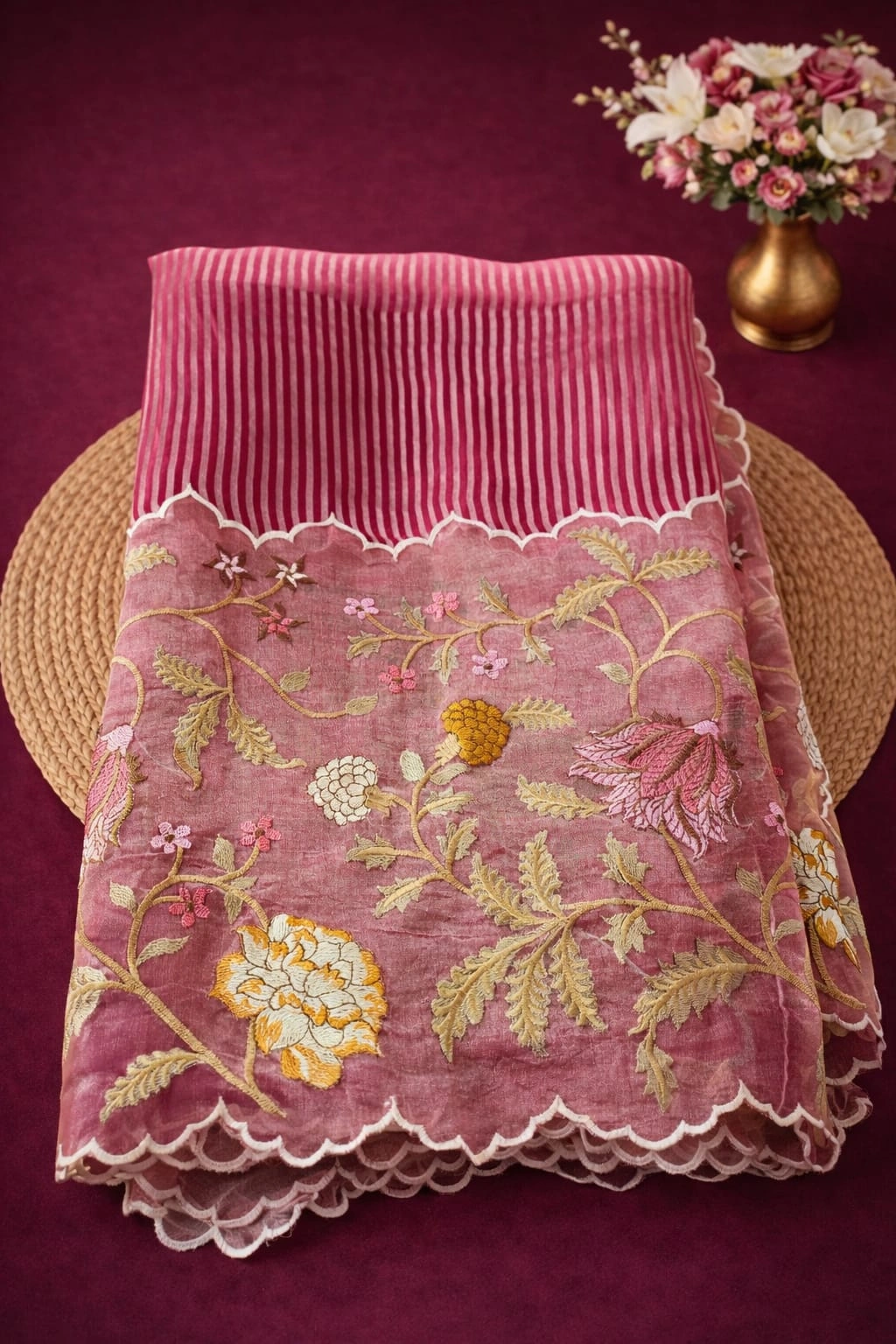
Can I See More Photos Before Committing?
Yes. Swathi Design offers additional photos or videos via WhatsApp or email before you pay for a price-on-request saree. You can request close-ups of the border, pallu, blouse piece, and reverse side to check weave quality and authenticity. This service is part of the concierge experience and is encouraged for US-based buyers seeking assurance before purchase.
Step 5: How to Care for Banarasi Kora Tissue Sarees
These sarees are delicate due to the mix of fine kora silk and metallic zari. To preserve your investment, follow these steps:
- Dry clean only—water and heat can dull zari and damage silk tissue
- After wearing, air the saree flat in the shade before folding
- Store in a muslin or pure cotton saree bag, away from direct sunlight or humidity
- Refold every 3–4 months to prevent creasing along the same lines
- Never hang for long-term storage—this can stretch the weave
- For minor wrinkles, use a low-heat iron with a cotton cloth on top (but avoid direct contact with zari)
Care tip: Always check for colorfastness of blouse fabrics before storing them with the saree to prevent color transfer—especially with Banarasi silks that use natural dyes.
Get more aftercare tips in our returns and care expectations guide.
Step 6: How to Style a Banarasi Kora Tissue Saree for Weddings
To style a Banarasi Kora Tissue saree for a wedding, start with a tailored blouse in raw silk or brocade—these highlight the saree's sheen. Choose gold or antique-finish jewelry to echo the zari work, and opt for a low or mid bun adorned with fresh jasmine for a classic touch. A statement clutch in muted metallics completes the ensemble, while traditional juttis or sandals with subtle embroidery anchor the look. For US events, consider a petticoat with shapewear support for modern comfort. Explore more in our US saree underlayer guide.
- Pick a blouse that matches or contrasts the saree’s motifs (brocade, raw silk, or velvet for winter weddings)
- Pair with gold, kundan, or temple jewelry
- Style hair in a bun or braid with fresh flowers
- Accessorize with a metallic or embroidered clutch
- Choose comfortable, supportive footwear—especially for US venues with lots of walking
Banarasi Kora Tissue Saree Comparison Table
| Saree | Color | Price | Motifs/Features |
|---|---|---|---|
| Pure Banarasi Kora Tissue Saree for Weddings & Festive Wear | Golden with Banarasi Motifs | price confirmed on inquiry | Lightweight kora tissue, detailed zari work, regal pallu |
| Elegant Banarasi Kora Tissue Wedding Saree | Soft Golden | price confirmed on inquiry | Zari motifs, subtle sheen, versatile for weddings/parties |
| Exquisite Pure Banarasi Kora Tissue Saree – Golden Elegance | Various (Golden base) | price confirmed on inquiry | Handwoven in Banaras, premium kora silk, legacy piece |
FAQs on Sarees Show No Price, Inquiry & Concierge Orders
Why would a boutique not list a price?
Boutiques often hide prices for sarees that are limited, handwoven, or subject to raw material and artisan cost fluctuations. This prevents outdated pricing, protects exclusive designs, and enables a more personalized, consultative sale—especially for high-value Banarasi, Kanjivaram, and Patola sarees.
What should I ask when I send an inquiry?
Ask about handloom origin, price, delivery time, care instructions, and request extra photos of the pallu, border, and reverse side. Confirm if the saree includes a blouse piece, and inquire about the return policy. These questions ensure you understand the saree’s value and suitability.
When do I pay for a concierge order?
You pay only after Swathi Design responds to your inquiry, provides all requested details and images, and you confirm your intention to buy. Payment is typically collected via a secure link or invoice, never before your questions are answered.
Can I see more photos before committing?
Yes. Swathi Design will send additional photos or videos—including close-ups of motifs, borders, and the reverse side—via WhatsApp or email before you pay for any price-on-request saree. This ensures authenticity and helps you make an informed decision.
Shop the Collection
If you’re ready to explore sarees with price on request, visit the Sarees section at Swathi Design. For a curated look at all available styles—including handwoven Banarasis, Kanjivarams, and more—browse our full collection or connect with a stylist for personalized help.
TL;DR: When a saree shows no price, it means it’s a premium, often handwoven piece requiring inquiry to buy. Swathi Design’s concierge model lets you confirm price, authenticity, and styling before payment. Ask for photos and details, and enjoy the confidence of a personalized, US-based shopping experience.
Featured in this guide
Part of the Handwoven Silks: Chanderi, Tussar & Raw Mango guide collection.
Related guides
- Elevate Every Occasion: Handcrafted Indian Gowns & Frocks for Modern Celebrations in the USA
- Elevate Every Occasion: Pure Chanderi Pattu Silk Sarees for Indian-Americans in the USA
- Exquisite Russian Crape Silk Saree: Timeless Elegance for Every Occasion
- Luxurious Pure Russian Crape Saree: Timeless Elegance for Every Occasion
- Elevate Your Festive Wardrobe with Exquisite Handwoven Chanderi Sarees and Anarkali Dresses