Silk vs Cotton Saree for Summer: Comfort, Look & Care Compared
Wondering which saree fabric is best for summer—silk or cotton? This guide compares breathability, comfort, drape, and style, with expert tips and Swathi Design’s handpicked wedding- and party-ready sarees. Find out which fabric keeps you cool and elegant during US summer celebrations.
Silk vs Cotton Saree for Summer: The Essential Comparison
If you're planning your summer wardrobe, choosing between a silk saree and a cotton saree can shape your comfort and style for every event. Read on for a practical, side-by-side look at silk vs cotton saree for summer—covering breathability, drape, look, and care—plus expert styling ideas with Swathi Design’s artisanal collection.
| Feature | Silk Saree | Cotton Saree |
|---|---|---|
| Breathability | Moderate (varies by weave; lighter silks like Kora and Chanderi breathe better) | Excellent (mul cotton and Chanderi cotton are highly breathable) |
| Comfort in Heat | Good for indoor/AC events, can feel warm outdoors | Superior comfort, stays cool even in high humidity |
| Drape & Look | Rich, lustrous, formal—ideal for weddings and evening | Soft, crisp, elegant—great for day events and casual wear |
| Care | Dry clean only; silk is delicate, avoid sun exposure | Hand wash or dry clean; easier upkeep |
| Price Range | $$–$$$ (specialty silks like Banarasi, Raw Mango Silk start at $140+) | $–$$ (fine cottons vary by weave and handwork) |
What is the Difference Between Silk and Cotton Saree?
Silk saree is a traditional Indian garment woven from natural silk fibers produced by silkworms, famed for its sheen, drape, and luxurious feel. Cotton saree is made from spun cotton fibers, prized for lightweight comfort, breathability, and crisp texture, making it ideal for warm climates and daily wear.
Pros and Cons of Silk Saree for Summer
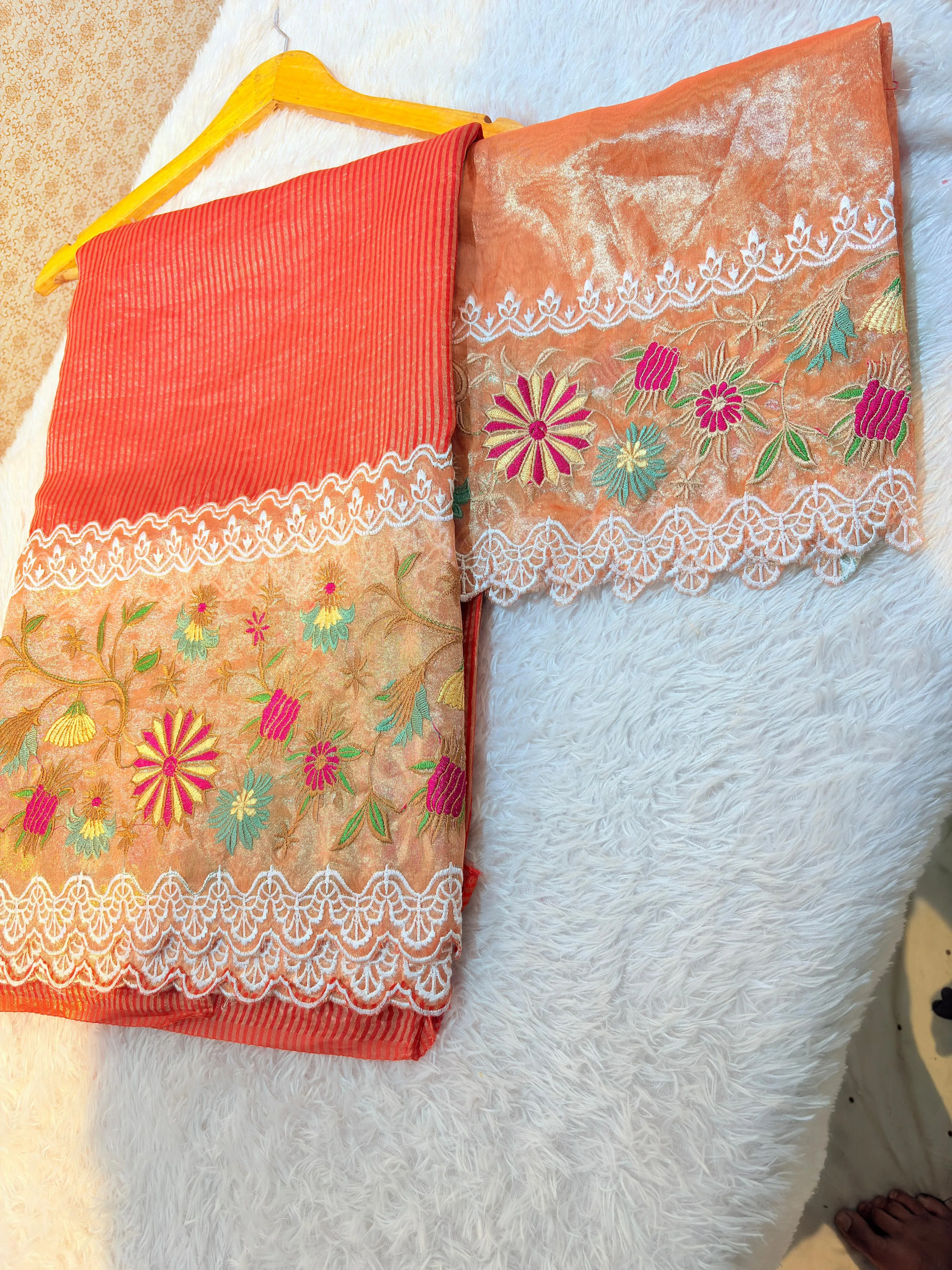
- Pros: Lustrous finish for formal occasions; holds intricate weaving like zari and brocade beautifully; drapes elegantly. Sarees like the Luxurious Handwoven Banarasi Kora Tissue Saree remain light and airy despite their grandeur.
- Cons: Heavier silks (e.g., pure Banarasi, Kanjivaram) may feel warm during peak summer, especially outdoors. Silk also requires careful handling and dry cleaning to preserve the fabric and embellishments.
Pros and Cons of Cotton Saree for Summer
- Pros: Naturally cool, highly breathable, ideal for hot weather. Absorbs sweat and dries quickly. Mul cottons and Chanderi cottons drape beautifully without clinging to the skin, making them perfect for daytime events or casual summer gatherings.
- Cons: Cotton wrinkles more easily and may lack the luster of silk, making it feel less formal for weddings or big celebrations. However, blends like Mul Chanderi add a subtle sheen and flow.
Fabric Spotlight: Banarasi Kora Tissue, Raw Mango Silk, Dola Silk, and Chanderi
Indian sarees come in a dazzling spectrum of fabrics, each with unique summer suitability. Here’s how Swathi Design’s featured pieces compare for warm-weather occasions:
Banarasi Kora Tissue Saree
Kora silk, also called organza silk, is known for its sheer, feather-light texture. When handwoven with tissue threads and adorned with zari, as in the Luxurious Handwoven Banarasi Kora Tissue Saree ($185), you get the luminous shimmer of silk with a surprisingly airy feel—making it wedding-worthy even in summer.
- Origin: Banaras (Varanasi), India—one of the oldest weaving centers, with centuries-old traditions.
- Craftsmanship: Real zari, handwoven motifs, and time-intensive techniques.
- Styling Tip: Pair with antique gold jewelry and a bold clutch for evening weddings. Avoid layering with heavy petticoats in warm weather to maximize comfort.
Pure Raw Mango Silk Saree
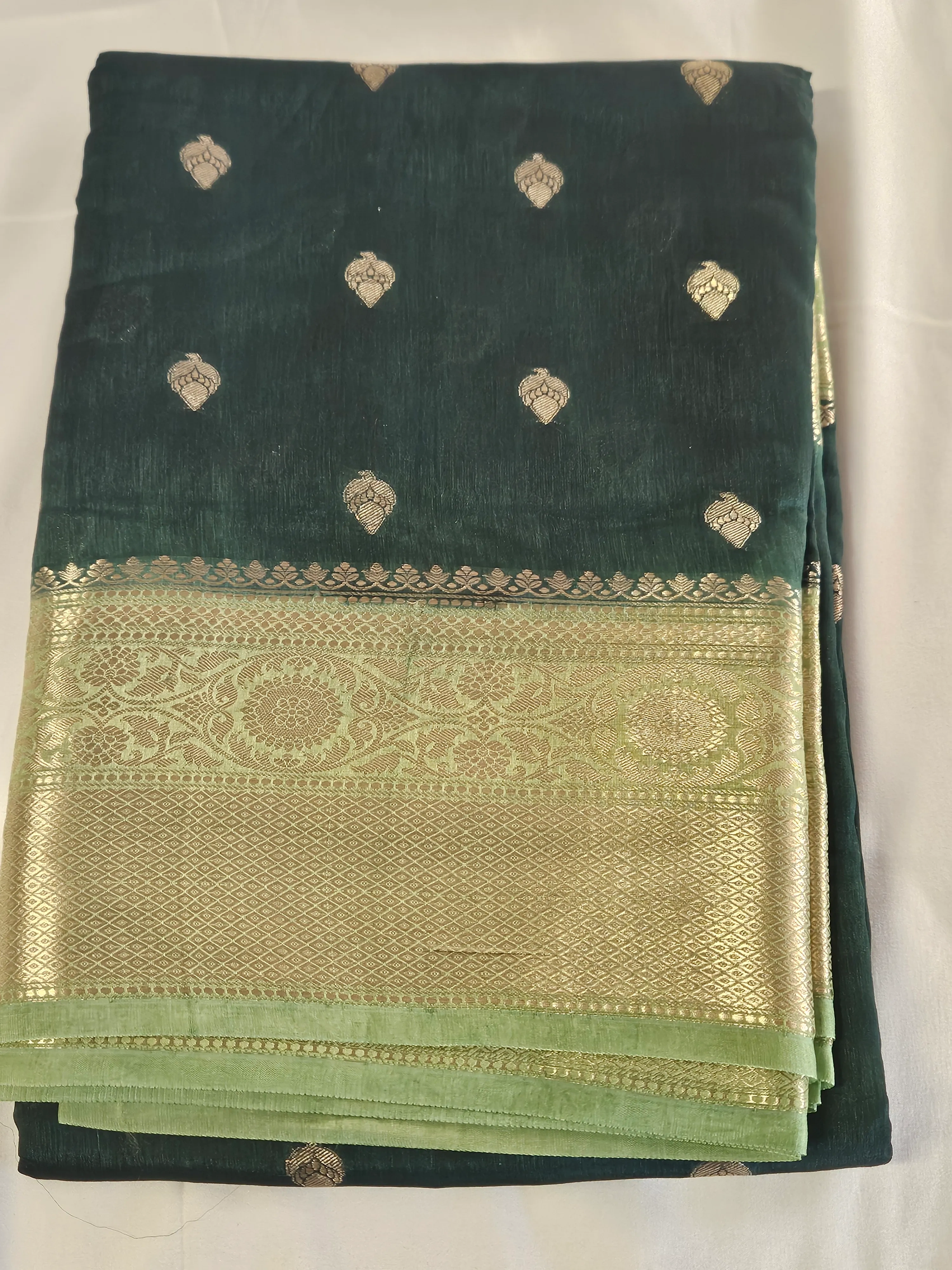
Raw silk (sometimes called Pattu in South India) has a slightly nubby texture and mattified sheen, making it less clingy than pure mulberry silk. The Pure Raw Mango Silk Saree ($145) balances traditional elegance with breathability, thanks to its handwoven finish and natural fibers.
- Origin: Woven by artisan clusters, with roots in both North and South Indian silk traditions.
- Best For: Summer weddings, festive gatherings, or as a statement piece for evening soirées.
- Styling Tip: For summer, choose a sleeveless or short-sleeved blouse in breathable lining, and avoid heavy innerwear.
Dola Silk Suits for Summer
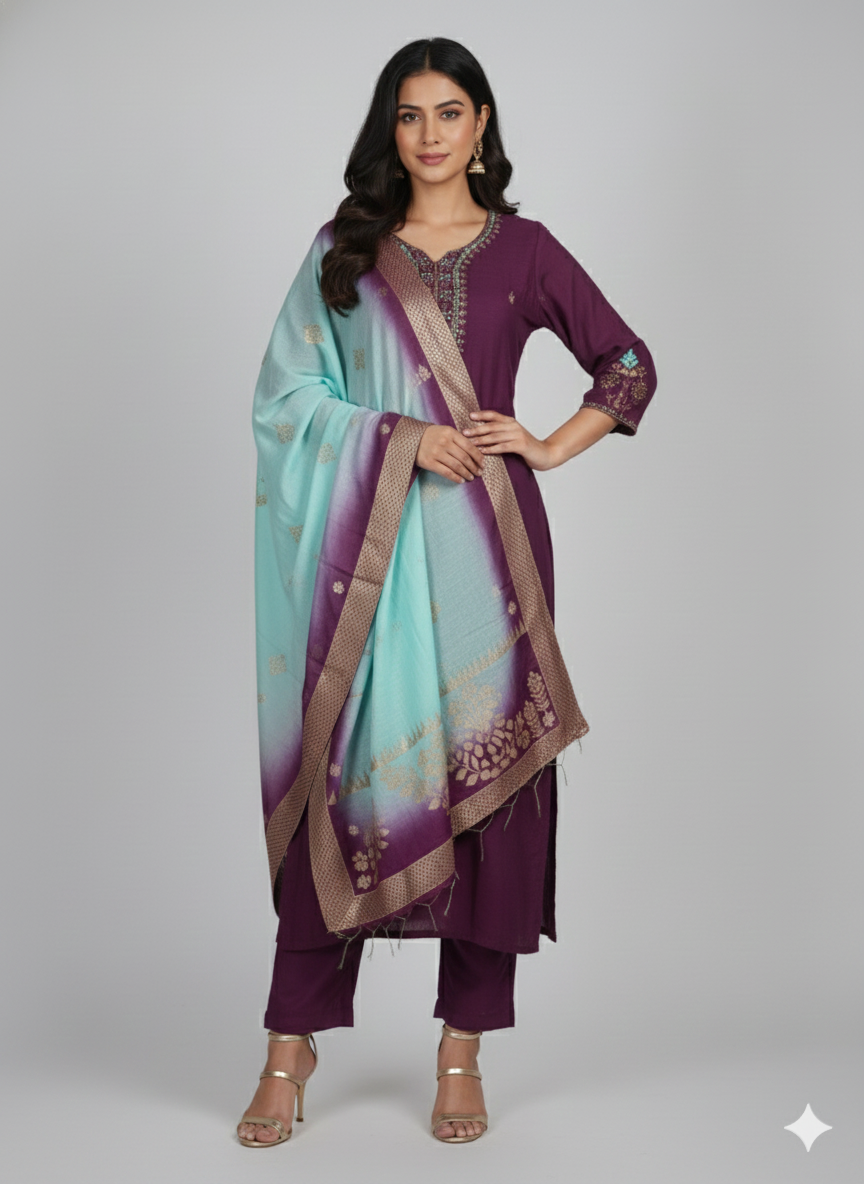
Dola silk is a lightweight, breathable blend, often used for suits and lehengas. The Deep Plum & Teal Handcrafted Dola Silk Suit ($45) features a soft, flowy drape with minimal heat retention, making it a great choice for summer semi-formal events.
- Dupatta Highlight: Ombre zari work adds festive flair without added weight.
- Useful Tip: Dola silk resists wrinkling better than cotton, making it ideal for travel and long events.
Mul Chanderi & Cotton Dresses
Mul Chanderi is a blend of cotton and silk, prized for the airiness of mul cotton and the subtle sheen of silk. The Dusty Blue Mul Chanderi Anarkali Dress ($50) and Royal Purple Chanderi Anarkali Dress ($55) each offer a summer-friendly solution for festive wear.
- Fabric Property: Mul Chanderi is ultralight and has a slightly crisp hand, allowing air circulation while maintaining structure.
- Styling Tip: For daytime events, opt for pastel or cool shades, and finish with silver jewelry and mojaris for a classic touch.
How to Choose the Best Saree Fabric for Hot Weather?
To choose the best saree fabric for summer, consider the following:
- Opt for lightweight weaves—mul cotton, Chanderi cotton, organza, or Kora silk.
- Look for loose, airy drapes rather than heavily starched or tight styles.
- Pick lighter colors to reflect heat and stay cooler.
- Avoid thick brocades, heavy embroidery, and synthetic linings for daytime or outdoor events.
Which Saree Fabric is Most Breathable?
The most breathable saree fabric is mul cotton. Mul cotton is a super-soft, loosely woven cotton from India, renowned for its featherlight feel and maximum air circulation. It keeps you cool in high temperatures and is gentle on sensitive skin, making it a summer staple for sarees and dresses.
Can You Wear Silk in Hot Weather?
Yes, you can wear silk in hot weather, but choose lighter weaves like Kora silk, Chanderi silk, or organza. These silks are semi-sheer, airy, and wick moisture better than dense brocades. For extra comfort, select sleeveless blouses and avoid heavy petticoats. Save heavier silks like pure Banarasi and Kanjivaram for air-conditioned or evening events.
Styling Tips: Summer Saree Looks for US Events
- Blouse Choice: Breathable linings (pure cotton or silk-cotton blends) add comfort. Try boat-neck or sleeveless styles for airflow.
- Jewelry: Antique gold or silver jewelry complements both silk and cotton. For daytime, go minimal; for evening, layer up.
- Footwear: Embellished mojaris or metallic heels—avoid tight, synthetic shoes for daylong comfort.
- Accessories: A bold clutch and floral gajra (hair accessory) can brighten your look while staying cool.
For more wedding and festive outfit inspiration, visit our Sarees category or see our guide on modern silks and festive styling.
Unique Summer Occasions: Wedding, Festival, Party
Many Indian-American weddings and festivals happen during US summer months. A silk saree like the Banarasi Kora Tissue Saree offers regal presence for evening receptions. For outdoor haldi, mehendi, or brunches, opt for pure cotton, Chanderi, or Mul Chanderi pieces such as the Dusty Blue Mul Chanderi Anarkali Dress.
Pro tip: Always drape your saree a little looser for summer events. Tighter pleats and petticoats can trap heat.
FAQ: Silk vs Cotton Saree for Summer
Is silk or cotton better for summer?
For hot summer days, cotton sarees are usually better—they're highly breathable, wick moisture, and feel cool against the skin. Lighter silk sarees like Kora, organza, or Chanderi can also be comfortable for indoor or evening occasions, but dense silks may feel warm outdoors.
Which saree fabric is most breathable?
Mul cotton is the most breathable saree fabric—it's soft, airy, and ideal for hot climates. Chanderi cotton and linen sarees also offer excellent airflow for summer comfort.
Can you wear silk in hot weather?
You can wear silk in hot weather if you choose lighter weaves like Kora silk or Chanderi. Pair with minimal inner layers and opt for sleeveless blouses to stay comfortable at summer events.
What is the coolest saree fabric?
The coolest saree fabric is pure mul cotton, thanks to its open weave and natural temperature regulation. It beats heat and humidity, making it a favorite for summer gatherings and day events.
Cultural Context: Summer Sarees in Indian Tradition
In India, saree fabric choices are intertwined with region and season. In Tamil Nadu, crisp Kanjivaram silks are reserved for temple festivals and weddings, while in Bengal and Andhra Pradesh, airy cottons and jamdanis are summer staples. The Banarasi Kora silk is prized in North India for its ability to look festive yet feel light, and Chanderi sarees from Madhya Pradesh have been celebrated since the 13th century for their "woven air" quality, as described by textile historian Rahul Jain.
Expert Tip: Summer Saree Care & Storage
- Silk: Always dry clean. Store in a cool, dry place wrapped in muslin. Avoid direct sunlight—UV rays can fade silk and zari.
- Cotton: Hand wash in cold water with mild detergent. Dry in shade to prevent color fading and maintain the crispness of the weave.
- For both: Refold sarees every few months to prevent permanent creasing.
For step-by-step tips on preserving delicate pieces, see our guide on accurate blouse measurements and saree care.
Shop the Collection
Ready for summer celebrations? Explore Swathi Design’s full range of sarees, dresses, and suits—each sourced from Indian artisan weavers, with California-based customer support and easy US shipping. For personalized styling, try our WhatsApp concierge or browse our full collection for summer-ready picks.
For summer fashion that looks as good as it feels, trust in the artistry of traditional Indian weaves—tailored for Indian-American life.
Featured in this guide
- Luxurious Handwoven Banarasi Kora Tissue Saree with Zari for Weddings
- Pure Raw Mango Silk Saree - Handwoven Wedding Luxury
- Deep Plum & Teal Handcrafted Dola Silk Suit with Ombre Zari Dupatta
- Dusty Blue Mul Chanderi Anarkali Dress with Mirror & Pink Embroidery
- Royal Purple Chanderi Anarkali Dress with Gold Zari for Weddings
Part of the Handwoven Silks: Chanderi, Tussar & Raw Mango guide collection.
Related guides
- Elevate Every Occasion: Handcrafted Indian Gowns & Frocks for Modern Celebrations in the USA
- Elevate Every Occasion: Pure Chanderi Pattu Silk Sarees for Indian-Americans in the USA
- Exquisite Russian Crape Silk Saree: Timeless Elegance for Every Occasion
- Luxurious Pure Russian Crape Saree: Timeless Elegance for Every Occasion
- Elevate Your Festive Wardrobe with Exquisite Handwoven Chanderi Sarees and Anarkali Dresses