One Saree, Three Occasions: A Styling Plan
The right drape, blouse, and accessories can make a single saree look fresh for every celebration. Here’s how to restyle Swathi Design’s Chanderi Silk Pattu Saree three ways—wedding, festival, and dinner—without repeating yourself or breaking the bank. Maximize cost per wear with confident, practical swaps.
One Saree, Three Occasions: A Styling Plan
Can one saree truly work for a wedding, a festival, and a chic dinner out—without anyone clocking the repeat? Absolutely. The secret is in the details: blouse swaps, drape variations, and a sharp eye for accessories. Let’s break down exactly how to restyle Swathi Design’s Pure Chanderi Silk Pattu Wedding Saree with Maggam Work Blouse for three very different US occasions.
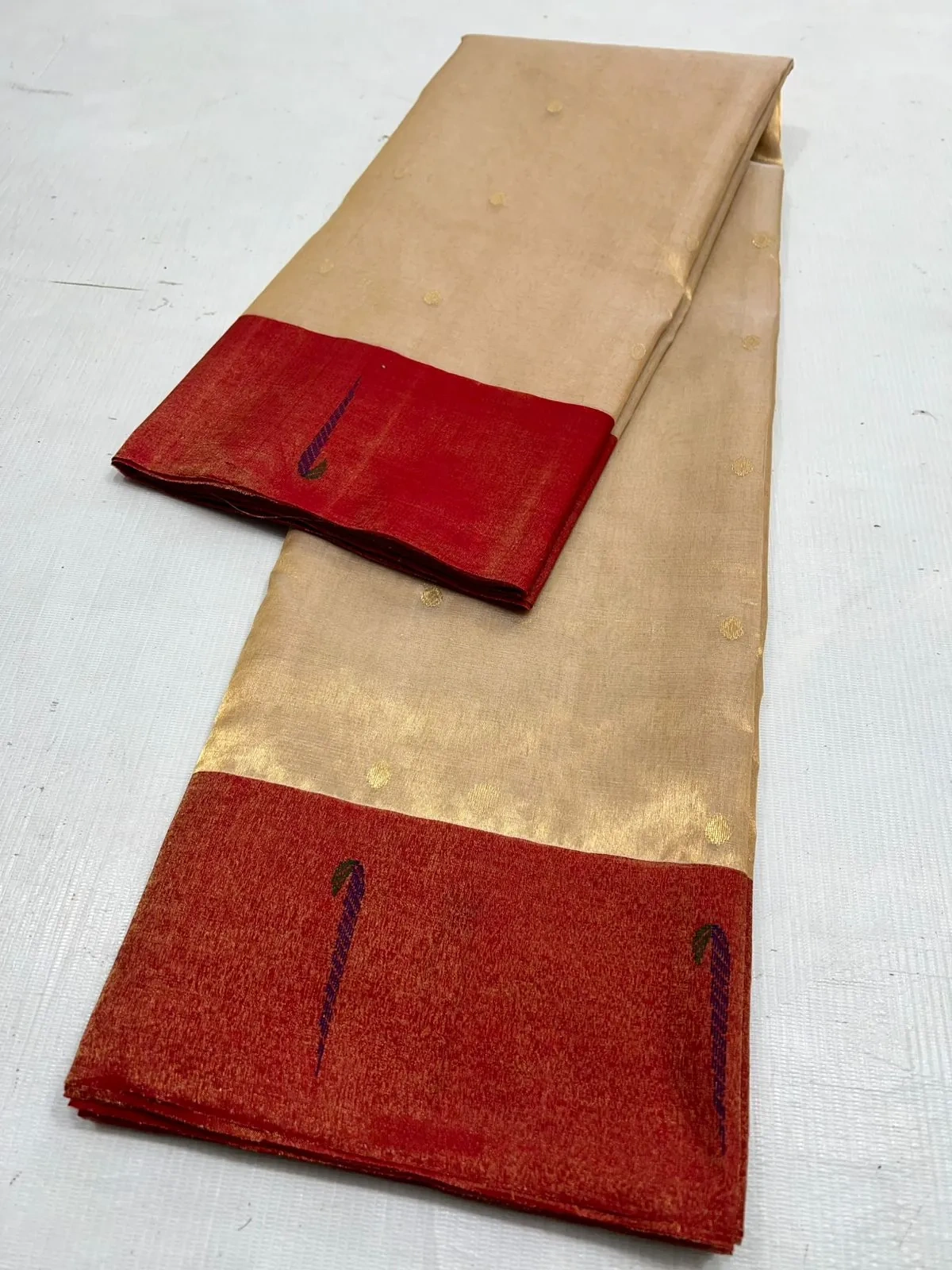
Why Plan for One Saree, Three Occasions?
One saree three occasions isn’t just about saving money—it's about honoring your investment and your story. Chanderi silk, woven in the heart of Madhya Pradesh for over 700 years, is prized for its lightweight feel and signature glossy finish. A saree like this is meant to be seen, not shelved. In the US, where every event brings a new guest list, restyling your saree with intention serves both your wallet and your personal style.
What is Chanderi Silk?
Chanderi silk is a handwoven textile from Chanderi, Madhya Pradesh, India, known for its lightweight, semi-transparent texture and lustrous sheen. Traditionally woven by the Devangan and Koshti communities, Chanderi sarees blend silk and cotton for breathable comfort, making them popular for Indian weddings and festivals.
Look 1: Wedding Guest—Classic Glam
For peak wedding season—think SoCal ballrooms or a grand Indian hotel—this saree shines in its purest, most traditional form. Here’s your canvas:
- Blouse: The original maggam work blouse, with intricate hand embroidery, delivers heritage and sophistication. Maggam embroidery, rooted in South India, uses zardozi, beads, and metallic threads for a regal finish.
- Drape: Go for the classic Nivi style, pleated and pinned for structure. Let the pallu (the decorative end) fan out across your shoulder to spotlight the intricate border and motifs.
- Accessories:
- Temple jewelry (think antique gold chokers and jhumkas) for an authentic Indian bridal guest look.
- Gold bangles stacked high—nothing says celebration like a wrist full of kadas.
- Embroidered potli bag or a metallic clutch for a practical yet festive finish.
- Heeled sandals for graceful movement across any dance floor.
- Hair & Makeup: Full glam: a classic low bun with gajra (flower garland), bold liner, and a red bindi to tie the look together.
Pro tip: For extra drama, double up the pallu and pin it at the waist for a cinched, statuesque silhouette—perfect for wedding photos.
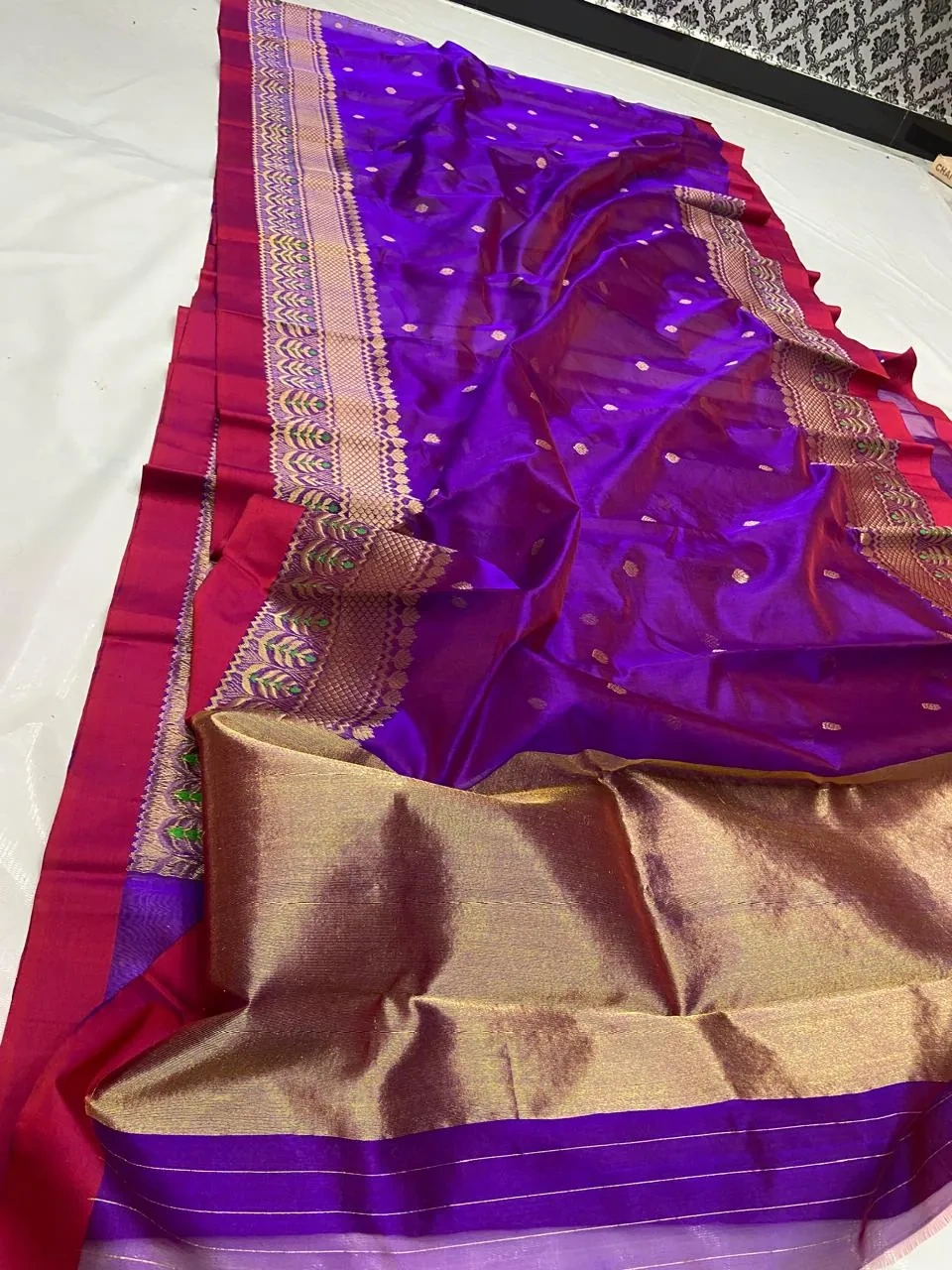
Look 2: Festival Brunch—Daytime Bright
Heading to a Diwali lunch, Holi brunch, or temple puja? You want comfort and color, but no less style. Here’s your swap plan:
- Blouse: Switch to a sleeveless or short-sleeve gold or contrasting jewel-tone blouse. If you have a maggam or zari blouse in green or royal blue, it pops beautifully against the saree’s hues. (Browse options like the Luxury Pure Chanderi Silk Saree with Intricate Zari and Maggam Blouse for inspiration.)
- Drape: Try a Bengali or seedha pallu drape—keeping the pallu in front showcases the border and lets you move freely. Or go for a relaxed Gujarati drape if you want a little more coverage.
- Accessories:
- Minimalist gold studs or delicate drop earrings.
- Stacked bracelets or a single statement cuff.
- Kolhapuri sandals or embroidered juttis for ease (especially if you’ll be on your feet or playing with kids).
- Fun, colorful potli or crossbody bag for hands-free mingling.
- Hair & Makeup: Soft waves or a loose braid, dewy makeup, and a bright lipstick to complement your saree’s palette.
Non-obvious tip: Layer a lightweight, cropped jacket or capelet over your blouse for early spring/fall California weather—this adds interest and warmth without hiding the saree.
Look 3: Dinner Out—Modern Chic
For a formal dinner, art gallery opening, or upscale birthday, the same saree can skew edgy and modern with just a few swaps:
- Blouse: Choose a fitted, high-neck sleeveless blouse in black or metallic, or even a turtleneck crop top for a sharp, contemporary feel.
- Drape: The butterfly drape (pleats fanned out for a slim silhouette) or a belted drape adds fashion-forward structure. Cinch the waist with a statement belt—think gold, enamel, or even a woven textile belt from your favorite indie label.
- Accessories:
- Geometric or oversized earrings—skip the traditional jhumkas tonight.
- Minimalist clutch or evening bag.
- Block-heeled mules or strappy stilettos.
- Subtle cocktail ring or layered dainty necklaces.
- Hair & Makeup: Sleek ponytail or straightened hair, bold lip, and a single metallic shadow for an urban polish.
Pro tip: For a true Indo-Western twist, pair your saree with a crisp white shirt blouse—collar popped, sleeves rolled. Perfect for fusion dinners or gallery nights in the city.
One Saree, Three Occasions: At-a-Glance Comparison
| Occasion | Blouse | Drape | Accessories |
|---|---|---|---|
| Wedding | Maggam work, traditional | Nivi classic | Temple jewelry, potli bag |
| Festival | Contrasting color, light zari | Bengali/Seedha pallu | Juttis, colorful bag |
| Dinner | Modern high-neck/metallic | Butterfly/belted | Geometric jewelry, clutch |
How to Style One Saree Three Occasions: Step-by-Step
- Pick your saree: A versatile silk, like the Pure Chanderi Silk Pattu Wedding Saree, works across formal and semi-formal events.
- Invest in 2-3 blouses: The cost of a custom blouse at Swathi Design typically ranges from $60 to $95, depending on embroidery and cut. A second blouse in a new silhouette or color instantly changes the vibe.
- Master 2 drape styles: Nivi for tradition, butterfly or seedha pallu for a modern or festive spin.
- Switch up accessories: Chunky jewelry for weddings, minimalist for dinner. A belt or statement bag can transform your look.
- Update hair and makeup: From classic gajra buns to sleek ponytails, small changes make a big difference.
For more on finding the right event saree, see our guide to US Indian wedding season ordering.
FAQs on Cost Per Wear and Restyling
How do you re-wear a saree without it looking the same?
To re-wear a saree without repeating the look, change up your blouse, drape, and accessories. For example, pair your saree with a contrasting blouse, try a new drape style such as Bengali or butterfly, and accessorize with different jewelry or bags each time. These swaps make each appearance feel unique.
Does changing the blouse really change the look?
Changing the blouse can dramatically alter the entire mood of a saree. A maggam work blouse leans traditional and regal, while a sleeveless or metallic blouse adds modern flair. Even a simple swap in color or fabric—like silk to tissue—can make the saree appropriate for a new occasion.
Which drapes read as formal versus casual?
- Formal: Nivi, butterfly, and pleated Gujarati drapes are polished and structured, perfect for weddings and galas.
- Casual: Seedha pallu, Bengali, or a loose open pallu suit daytime and informal settings.
How much does a second blouse cost?
At Swathi Design, a custom blouse ranges from $60 to $95 depending on embroidery, fabric, and tailoring. Investing in a second blouse—like a metallic crop or a bold contrasting color—lets you transform your saree for different occasions, maximizing cost per wear.
Cost Per Wear: The Numbers That Matter
Let’s do the math. If you invest $255 in the Pure Chanderi Silk Pattu Wedding Saree with Maggam Work Blouse and add a $75 second blouse, your total is $330. Worn three ways, that’s about $110 per outfit—less than most US cocktail dresses, with far more story and heritage. And with every additional wear, your cost per wear only drops.
For more on the economics and emotional value behind saree investment, read our post on the real cost of a saree beyond the price tag.
Real Swaps, Real Occasions: More Ideas
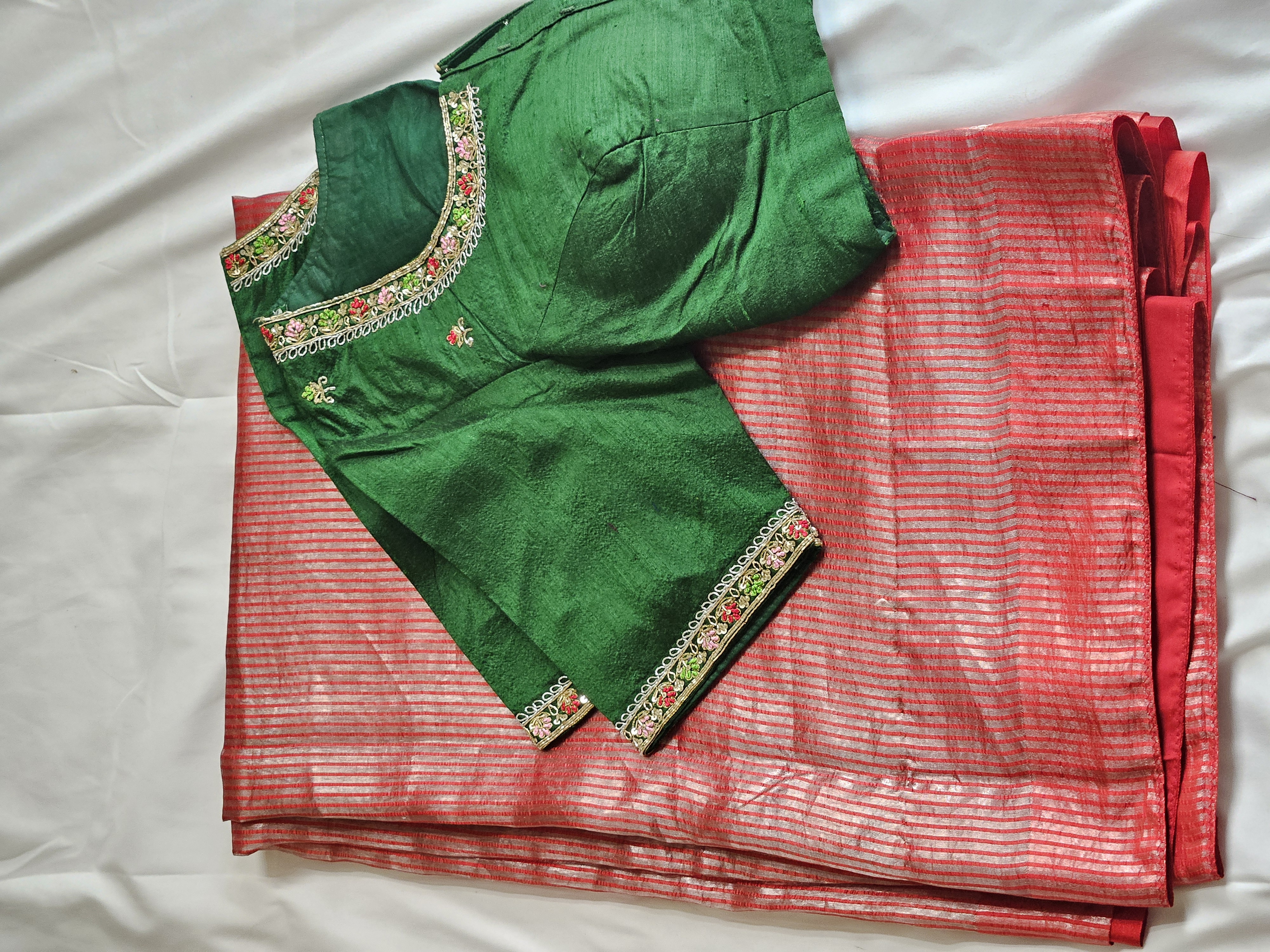
- Pair your Chanderi saree with the green maggam blouse from the Red Banarasi Tissue Saree with Green Maggam Embroidered Blouse for a festive, color-blocked look at your next puja.
- Borrow a zari or sequin blouse from another saree in your collection to create a new ensemble for each event—no new purchase needed.
Do’s and Don’ts for Restyling the Same Saree
- Do steam and air out your saree between wears—Chanderi silk is delicate and benefits from gentle care.
- Don’t over-accessorize when you’re aiming for a modern look—let the drape and blouse do the talking.
- Do ask Swathi Design’s WhatsApp stylist for blouse pairing ideas—they know the catalogue inside-out.
- Don’t store your saree in plastic—opt for muslin or a breathable cotton bag for longevity.
How to Judge a Saree From Photos Before Buying?
To judge a saree from online photos, examine close-ups for fabric texture, border width, and pallu detailing. Look for multiple angles and natural light shots to assess color accuracy. Ask the seller for fabric composition and care instructions—Swathi Design provides full details and US-based customer support for peace of mind.
Shop the Collection
The best value in ethnic fashion comes from a saree that travels with you through every milestone. Browse Swathi Design’s saree collection for handpicked Chanderi, Banarasi, and more, or explore the full catalogue. Invest once, wear often, and tell your story—one saree three occasions at a time.
Featured in this guide
Part of the Handwoven Silks: Chanderi, Tussar & Raw Mango guide collection.
Related guides
- Elevate Every Occasion: Handcrafted Indian Gowns & Frocks for Modern Celebrations in the USA
- Elevate Every Occasion: Pure Chanderi Pattu Silk Sarees for Indian-Americans in the USA
- Exquisite Russian Crape Silk Saree: Timeless Elegance for Every Occasion
- Luxurious Pure Russian Crape Saree: Timeless Elegance for Every Occasion
- Elevate Your Festive Wardrobe with Exquisite Handwoven Chanderi Sarees and Anarkali Dresses