Indian Gown Sizing for US Buyers: A Guide
Curious how Indian gown sizing maps to US sizes? This guide breaks down the measurements you need, alteration margins, and practical tips for finding an Anarkali or ethnic gown that fits beautifully—plus styling inspiration from Swathi Design’s artisan-crafted pieces.
Indian Gown Sizing for US Buyers: The Essentials
Here’s the short answer: Indian gown sizing rarely matches US sizing one-to-one. Most Indian designer Anarkalis and gowns, including Swathi Design’s artisan-crafted pieces, are tailored with some built-in flexibility, but getting the best fit means knowing your bust, waist, hip, and length measurements. You’ll want to check the alteration margin, understand the fit intent, and—when in doubt—size up for easier tailoring. Let’s demystify the process, one step at a time.
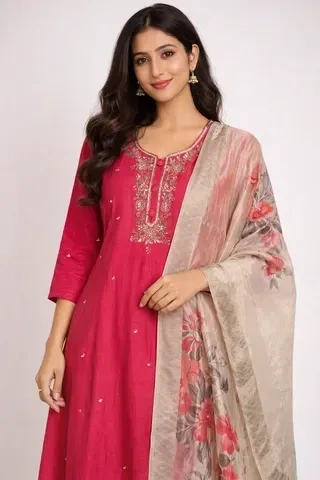
Before You Start: What You'll Need
- Measuring tape (soft, tailor’s type)
- Well-fitted undergarments
- Someone to help (for accuracy on bust/length)
- Your preferred heel height (for gown length)
- Pen and paper or phone notes
Step 1: Take Your Measurements
Accurate measurements are the foundation for a great fit in Indian gown sizing. Here’s what to measure and how:
- Bust: Measure around the fullest part of your bust, keeping the tape level and comfortably snug.
- Waist: Measure at your natural waist—typically the narrowest point just above your belly button.
- Hips: Stand with feet together and measure around the fullest part of your hips and seat.
- Shoulder Width: Edge-to-edge, across the back (helpful for tailored Anarkalis).
- Gown Length: From the top of your shoulder (where a blouse seam sits) to your preferred hem—factor in shoe height if you’ll wear heels.
- Armhole/Bicep: For fitted sleeves, especially if you have athletic arms.
Tip: Always measure over the undergarments and shoes you plan to wear with the gown for the most accurate numbers.
Sample Measurement Table
| Measurement | How to Measure | Notes |
|---|---|---|
| Bust | Fullest part, parallel to floor | Keep tape comfortably snug |
| Waist | Smallest part above navel | Relax, don’t suck in |
| Hips | Widest part of seat/hips | Feet together |
| Length | Shoulder to desired hem | Add heel height |
Step 2: Understand Indian vs US Sizing
Indian gown sizing can run smaller than typical US sizing, and often uses numeric sizing (32, 34, 36, etc.) based on bust circumference in inches. Free-size, semi-stitched, or "one size fits most" gowns are common, with adjustable drawstrings or side zips for flexibility—like Swathi Design’s Pure Chinon Anarkali Gown (US sizes 4-12).
Indian vs US Gown Size Conversion Table
| US Size | Indian Size (Bust in Inches) | Fits Bust (in) |
|---|---|---|
| 4 | 32 | 32-33 |
| 6 | 34 | 34-35 |
| 8 | 36 | 36-37 |
| 10 | 38 | 38-39 |
| 12 | 40 | 40-41 |
Pro-tip: For Anarkali gowns and semi-stitched styles, always check the maximum and minimum bust/waist ranges—there’s often a 2-3 inch alteration margin.
Step 3: Know Your Alteration Margin
Most hand-crafted Indian gowns, especially from artisan-focused brands like Swathi Design, are constructed with generous seam allowances (often 1.5-2.5 inches per seam). This allows for expert tailoring to your exact fit—vital for US buyers who may not match Indian sizing off the rack.
- Check if the product is "free size" or "semi-stitched" for maximum flexibility.
- Ask Swathi Design’s WhatsApp stylist about alteration margin before buying for reassurance.
- Don’t be afraid to size up—taking in at the sides is easier than letting out.
Learn more about policies and expectations in our Returns on Indian Ethnic Wear guide.
Step 4: Consider Gown Length and Petite Fit
Indian gowns, especially Anarkalis, are typically cut for an average height of 5’4”–5’6”. If you’re petite (under 5’3”), the gown may pool at the hem. Here’s how to handle it:
- Check the listed length on the product page—measure from shoulder to hem for yourself.
- If possible, request a custom hem from Swathi Design’s support (many artisan pieces can be tailored before shipping).
- Look for styles with borderless hems or simple gold piping (like the Ivory Muslin Anarkali Gown)—these are easier to shorten without losing decorative detail.
- Invisible platforms or moderate heels can help, but avoid excessive hemming on heavily embellished pieces.
Step 5: Final Selection & Buying—What to Check Before Ordering
- Double-check your measurements against the product’s stated size range (US 4-12 is typical for Swathi Design gowns).
- Confirm alteration margin and fabric type (muslin, chinon, etc.)—muslin is soft and breathable; chinon is silky and drapes beautifully.
- Review Swathi Design’s pre-order vs ready-to-ship timelines if you’re shopping for a fixed event date.
- Save your unboxing video for 48 hours after delivery—required for claims on damage per Swathi Design’s policy.
- Remember, US shipping is flat-rate, and you can always reach out to the WhatsApp stylist for live fit confirmation.
How to Style an Indian Gown for Fall Events
For a real-world scenario: imagine you’re invited to a fall sangeet in Seattle or a Diwali party in New Jersey. You want to look radiant, feel comfortable, and wear something that honors tradition yet feels current. Here’s how you’d style Swathi Design’s signature pieces:
3 Ways to Wear Your Anarkali Gown
- Classic Wedding Guest: Pair the Deep Teal Anarkali Gown with bold gold jhumkas, a beaded clutch, and embroidered juttis. The gold zari work nods to regal Mughal traditions, while the tailored pants keep it fuss-free.
- Modern Festive: Style the Ivory Muslin Anarkali Gown with layered pearl necklaces, nude block heels, and a sleek low bun. Its hand-drawn motifs are inspired by Lucknowi chikankari, and the fabric’s gentle drape flatters every silhouette.
- Evening Chic: For the Pure Chinon Anarkali Gown in navy blue, add a metallic clutch, strappy silver sandals, and diamond studs. The chinon’s luminous sheen is perfect under evening lights; hand-embellished details catch every glance.
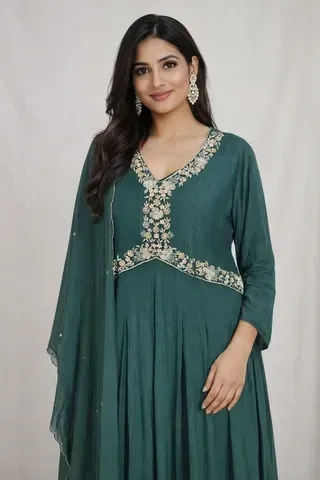
Shop the Looks
- Ivory Muslin Anarkali Gown – $30.00
- Pure Chinon Anarkali Gown – $48.00
- Deep Teal Anarkali Gown – $45.00
Browse all artisan-crafted dresses at Swathi Design Dresses.
What is Indian Gown Sizing?
Indian gown sizing is a garment measurement system used across India for ethnic dresses and Anarkalis, typically based on bust circumference in inches (32, 34, 36, etc.), rather than US-style numeric sizing. Many designer Anarkalis offer semi-stitched or free-size fits, with alteration margins built in for flexibility. Always compare your measured bust, waist, and hip to the product’s listed range for the most accurate fit.
FAQs on Indian Gown Sizing
Do Indian dresses run small?
Yes, Indian dresses—including Anarkalis and gowns—tend to run smaller than comparable US sizes. Most designs are cut with a slimmer silhouette, especially at the bust and waist. Always check the size chart and compare your measurements. Sizing up is recommended if you are between sizes, as alteration margin allows for tailoring down.
How much extra fabric is left for alterations?
Most hand-crafted Indian gowns have an alteration margin of 1.5 to 2.5 inches per side seam, especially in artisan-crafted brands like Swathi Design. This lets you let out or take in the gown by one full size in either direction. For semi-stitched or free-size gowns, side seams and back darts offer added flexibility for custom tailoring.
What measurements should I take before ordering?
To ensure the best fit, take your bust, waist, hip, and length measurements. Use a soft measuring tape, wear your intended undergarments and shoes, and have someone assist for accuracy. Compare your numbers to the product’s listed size range before ordering. For fitted sleeves, measure your armhole and bicep as well.
How do I handle length if I am petite?
If you are petite, check the gown’s finished length (shoulder to hem) and compare to your height with shoes. Many Indian gowns can be hemmed by a local tailor, especially if they have simple or borderless hems. For heavily embellished borders, ask if Swathi Design can alter before shipping, or use moderate heels to offset extra length.
Cultural Context & Artisan Craft
Anarkalis are a classic silhouette in Indian fashion, dating back to the Mughal courts of the 16th century, where the flowing, empire-waist style was worn by nobility. Today, artisan communities in Rajasthan, Lucknow, and Gujarat handcraft these gowns with regional embroidery—zari, chikankari, gota patti—preserving centuries-old techniques. Swathi Design sources directly from these artisan weavers, supporting traditional craftsmanship in every gown.
For example, gold zari embroidery, as seen on the Deep Teal Anarkali Gown, involves twisting gold-plated thread into decorative motifs—a practice recognized by the Indian Handloom Board as a cultural heritage art form. Muslin, used in the Ivory Muslin Gown, is prized for its breathability and soft handfeel, originally woven along the banks of the Ganges in Bengal.
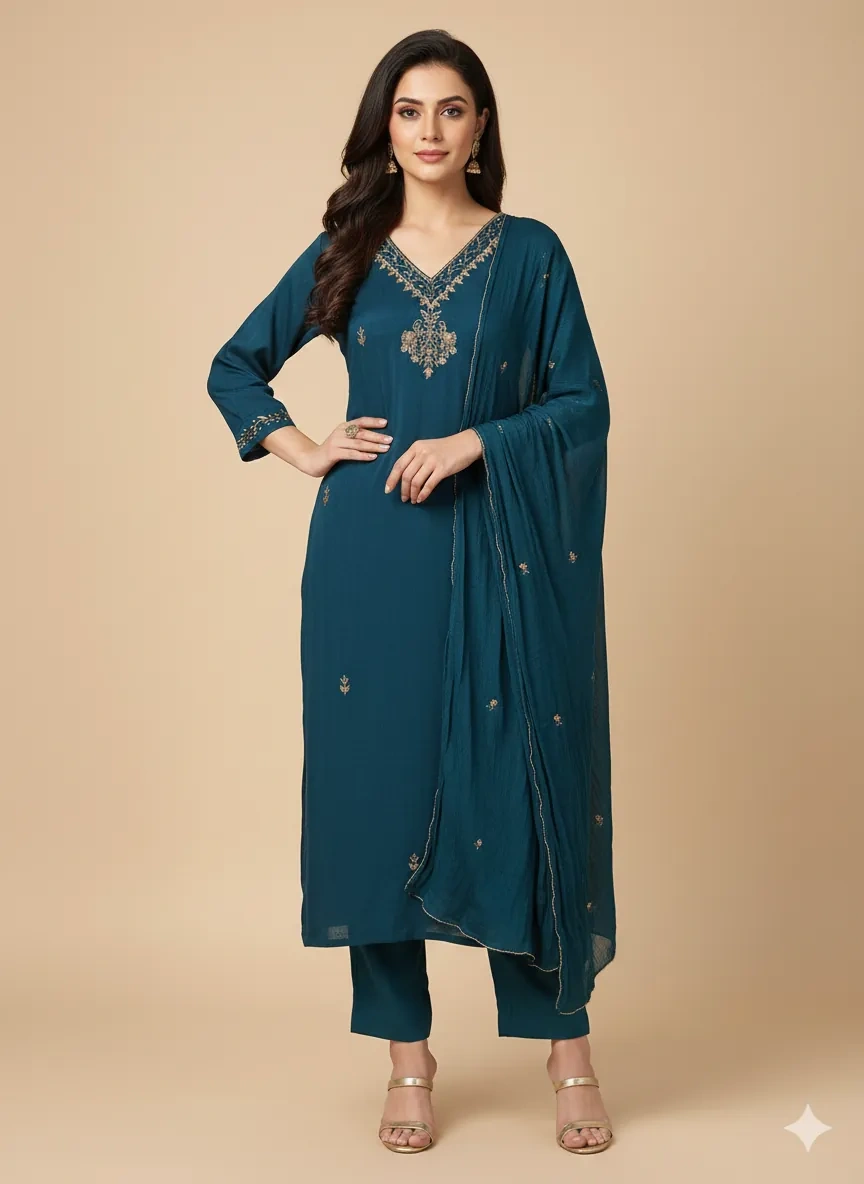
Shop the Collection
Ready to find your perfect fit? Browse our full collection of artisan-crafted Indian gowns and Anarkalis—with live measurement support, fair policies, and real US sizing guidance from Swathi Design. Step into your next celebration with confidence and timeless style.
Featured in this guide
Part of the Designer Sarees Online — USA Buying Guides guide collection.
Related guides
- Swathi Designs Boutique: Where to Buy Authentic Indian Wedding Sarees in the USA
- Handwoven Sarees Online USA: Your Essential Guide to Indian Elegance, Artisan Craft, and Modern Styling
- Kanchipuram Silk Saree USA: The Ultimate Guide to Buying Authentic Wedding Sarees Online
- Luxury Handwoven Sarees Online in USA: The Ultimate Buying Guide
- Timeless Chanderi & Silk Suits for US Weddings: The Ultimate Guide to Ethnic Elegance in the USA