Before investing in a saree online, especially premium silks, it's essential to know how to verify a saree seller. Learn how to check provenance claims, assess photo consistency, ensure payment safety, and the key questions any legitimate seller will answer — so you buy with confidence.
Before You Start: Why Saree Verification Matters
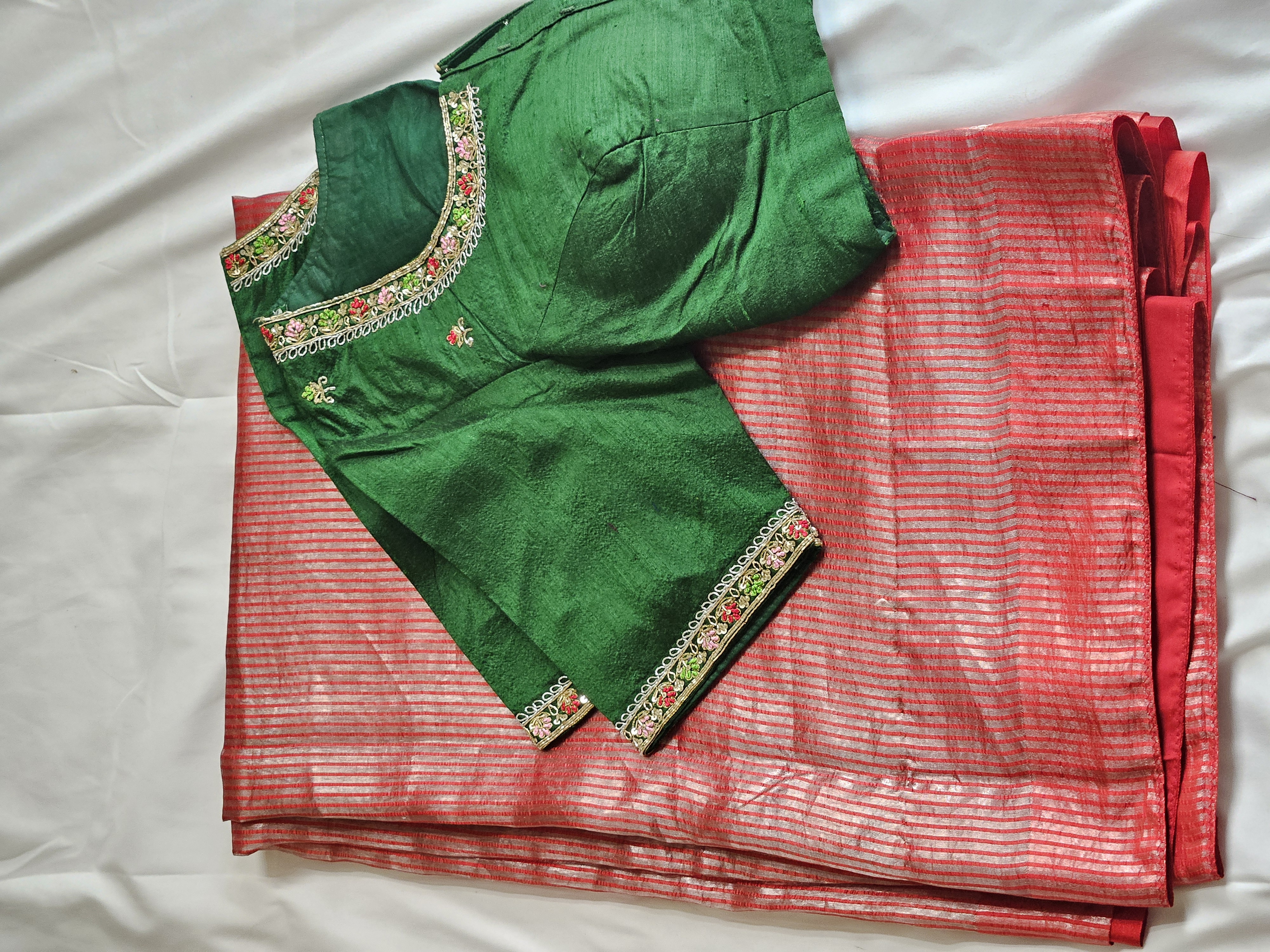
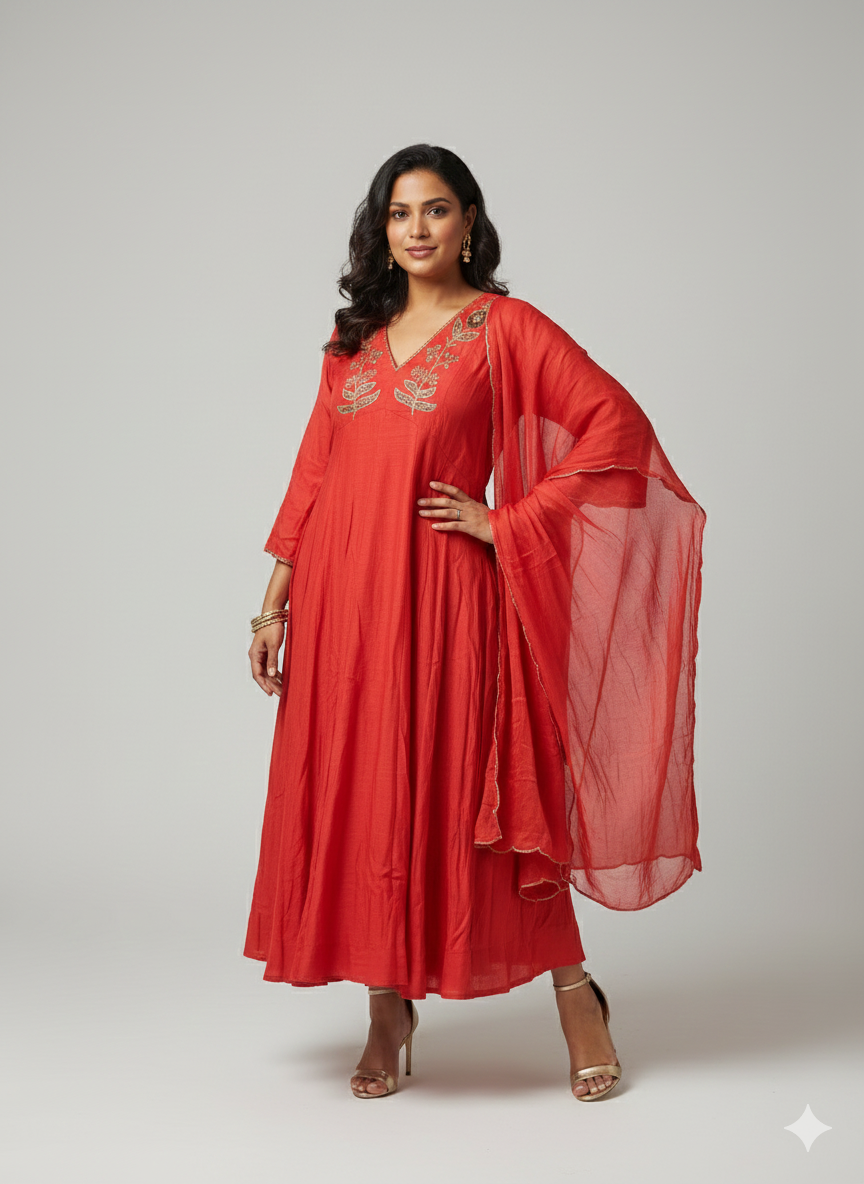
Buying a saree online is a leap of trust. For Indian-American women seeking heritage pieces or contemporary ethnic wear, provenance and authenticity are more than buzzwords—they determine quality, comfort, and cultural value. This is especially true for investment purchases like Banarasi, Kanjivaram, or Chanderi. As a textile specialist, I am often asked: How to verify a saree seller before you pay? The answer lies in understanding craft origins, recognizing genuine seller signals, and using practical checks. Below, I explain each step, with concrete tips and examples from Swathi Design’s curated collection, such as the Red Banarasi Tissue Saree with Green Maggam Embroidered Blouse and Red Chanderi Anarkali Dress with Gold Zari.
What You'll Need
Device with internet access
Notepad or note-taking app
Seller’s product listing and contact information
Reference images or info for the saree/fabric you’re considering
Step 1: Scrutinize Provenance Claims
Check for region-specific details: Authentic sarees—like Banarasi from Varanasi, Kanjivaram from Tamil Nadu, or Chanderi from Madhya Pradesh—have distinct weaving techniques and motifs. For example, Banarasi sarees are famed for their brocade work, often using real zari (gold or silver thread) on pit looms. Sellers should be able to specify region, artisan community, and weaving method.
Ask about GI tags and certifications: Genuine weaves may come with a Geographical Indication (GI) tag, which protects traditional crafts. While not every saree carries a tag, a knowledgeable seller will discuss this openly. For silks, "Silk Mark" certification is a sign of authenticity.
Request close-up photos: Details like the motif, border, pallu, and reverse side (showing warp and weft interlacing) help reveal authenticity. In Swathi Design’s Red Chanderi Anarkali Dress, the gold zari and sheer dupatta border are hallmarks of traditional Chanderi techniques.
Definition Snippet: Provenance claims are statements about the origin and authenticity of a saree, including its weaving region, artisan source, and traditional techniques. Reliable sellers support these claims with details, close-up photos, and certifications like GI tags or Silk Mark labels.
Watch out for stock or catalog images: If a photo appears on multiple unrelated sites or is heavily edited, the seller may not own the product.
Request custom photos or videos: Ask for a timestamped video or a photo of the saree draped over a neutral surface. A legitimate seller will provide this on request.
List Snippet:
Look for high-resolution, consistent images
Check for watermark or timestamp
Request a custom photo or video
Compare with known authentic product images
Step 3: Ask the Right Questions
Who wove this saree? Where? Real sellers know their supply chain and can identify weaving clusters, such as Bhagalpur for tussar or Kanchipuram for silk. At Swathi Design, sarees are sourced directly from artisan weavers in India.
Is there a return, damage, or authenticity policy? Trustworthy sellers offer clear policies, such as Swathi Design’s 48-hour damaged-item video policy and WhatsApp styling help.
Can I get a close-up of the zari or embroidery? Ask to see the zari threads or maggam embroidery—real gold zari has a soft, warm sheen and does not flake easily.
Step 4: Check Payment Safety and Transaction Methods
Use secure, traceable payment methods: Credit cards, PayPal, or authorized payment gateways offer buyer protection. Avoid wire transfers or direct bank deposits for first-time purchases.
Check for SSL encryption: The store’s checkout page should show “https://” and a padlock icon.
Request a proper invoice: Legitimate sellers issue itemized receipts with tax details, product names, and return instructions. Swathi Design provides flat-rate US shipping and clear order confirmations.
Step 5: Spot Red Flags and Seller Behaviors
Unrealistic prices: If a Banarasi silk saree is advertised far below market value (e.g., $50 for what should be a $300+ piece), it may be a fake or power-loom imitation. Genuine handloom sarees require skilled labor and time.
Reluctance to answer questions: If a seller avoids specifics about origin, fabric, or refuses to show additional photos, proceed with caution.
No clear return or damage policy: Reliable sellers, like Swathi Design, display policies transparently and respond promptly to inquiries.
Lack of contact information: Authentic boutiques provide business addresses, customer service numbers, and WhatsApp or email contact.
How to Verify a Saree Seller: Key Steps
Check provenance claims for regional and artisan details
Assess photo consistency and ask for timestamped images
Question fabric, technique, and policy specifics
Use safe payment options with receipt and order confirmation
Watch for red flags like low prices, vague answers, or missing contact info
Following these steps can help ensure your investment in sarees such as the Red Banarasi Tissue Saree is both safe and satisfying.
What is an Authentic Banarasi Tissue Saree?
Banarasi tissue saree is a variation of Banarasi silk, woven in Varanasi, Uttar Pradesh. Its hallmark is an airy, translucent texture achieved by interlacing silk threads with metallic zari. The result is a luminous, feather-light drape ideal for weddings and festivals. Genuine versions feature handwoven borders and intricate pallu motifs, often inspired by Mughal art.
Handloom vs. Power-loom Sarees: Spotting the Difference
Feature
Handloom Saree
Power-loom Saree
Weave Irregularity
Minor slubs, small imperfections
Perfectly uniform
Reverse Side
Visible floats of threads
Neat, machine-finished
Zari Quality
Soft sheen, non-flaking
Often bright, may flake
Price Range
Higher ($200+ for silk)
Lower ($50-150)
Authenticity Test: The Burn Test (for Silk Only)
Genuine silk, when burned, smells like burning hair and leaves a crisp ash. Synthetic fibers melt and smell chemical. Warning: Only perform this on a loose thread, and only if permitted by the seller.
How to Care for Handloom Sarees
Dry clean for the first wash: Especially for zari or maggam-embroidered sarees like the Red Banarasi Tissue Saree.
Store in a muslin cloth: This allows the fabric to breathe and prevents zari tarnish.
Refold sarees every few months: This avoids permanent creasing on the folds.
Avoid direct sunlight: Both display and storage should be away from harsh light to preserve color and sheen.
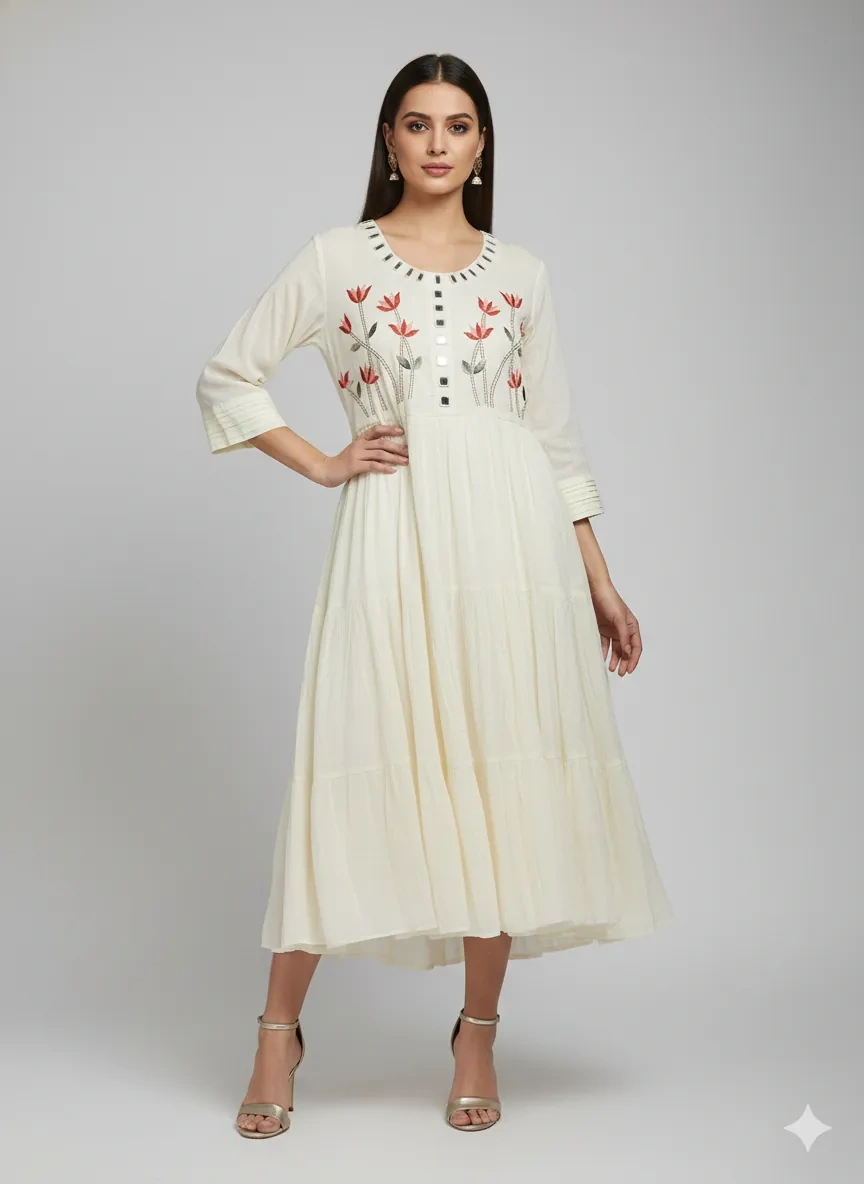
For cottons: Gentle hand wash in cold water with mild detergent preserves the embroidery and color, as with the Cream Mul Cotton Tiered Frock.
Non-obvious tip: When storing sarees with mirror or zari work, place acid-free tissue paper between folds to prevent abrasion and tarnish.
Mul cotton frocks: The Cream Mul Cotton Tiered Frock works beautifully for summer gatherings; pair with statement earrings and kolhapuris.
For more outfit inspiration, browse the Dresses and Sarees collections.
FAQ: Verifying Saree Sellers Online
Q1: What questions should a legitimate seller answer?
A legitimate seller should readily answer: the saree’s region and artisan source, fabric composition, whether the item is handloom or power-loom, details about returns and damage policy, and specifics on payment and shipping. Sellers like Swathi Design also offer WhatsApp support for styling and product queries.
Q2: What are the warning signs of a fake listing?
Warning signs include: prices far below market average, stock or duplicated images, reluctance to provide more photos or product details, no return/damage policy, vague contact info, and pressure to use untraceable payment methods.
Q3: How should payment be handled safely?
Use secure payment methods — credit cards, PayPal, or trusted gateways — that offer buyer dispute protection. Request an itemized invoice and order confirmation. Avoid direct transfers or cash apps for first-time purchases from new sellers.
Q4: Can provenance claims be verified?
Provenance claims can be verified by asking for GI tag or Silk Mark certification, close-up photos of unique motifs, and details about the weave and artisan. Compare seller information with recognized textile boards or museum references for the region in question.
Ready to explore authentic sarees and dresses, responsibly sourced from India’s artisan weavers? Visit browse our full collection to find verified, quality pieces for every celebration.