Anarkali vs Indo-Western Gown: Silhouette, Flare & Occasion
Anarkali vs gown: which style suits your next celebration? Textile specialist Priya Menon explains the key differences in silhouette, comfort, and styling for Indian-American women, using real Swathi Design pieces. Learn how to spot authentic handwork, care for your pieces, and confidently pick the right floor-length look for any occasion.
Anarkali vs Gown: Quick Comparison Table
| Feature | Anarkali Gown | Indo-Western Gown |
|---|---|---|
| Origin | Mughal-era India (16th century) | Contemporary India, influenced by Western ballgowns |
| Silhouette & Flare | Fitted bodice, exaggerated flare, often paneled | Straighter cut, minimal flare, fluid drape |
| Occasion Fit | Weddings, pujas, traditional festivals | Receptions, cocktail parties, fusion events |
| Comfort | Breathable, moves with the body, suitable for dancing | Lightweight, usually easier to walk in, less volume |
| Styling | Pairs with ethnic jewelry, dupatta optional | Best with statement earrings, clutch, minimal layering |
TL;DR: If you seek a dramatic, traditional silhouette for weddings or religious occasions, opt for an Anarkali. For contemporary fusion events, a streamlined Indo-Western gown offers ease and global appeal. The right choice depends on the event, your comfort, and personal style priorities.
What is the difference between an Anarkali and a gown?
Definition Snippet: An Anarkali is a traditional Indian floor-length dress with a fitted bodice and a flared skirt, rooted in Mughal court fashion, while an Indo-Western gown blends Indian textiles and embellishments with the streamlined silhouette of Western eveningwear. The Anarkali emphasizes flare and movement, often with panels (kalis), whereas the gown favors a sleeker, less voluminous drape.
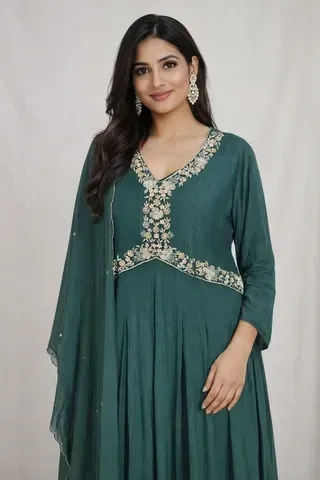
The Anarkali’s construction centers on a tightly tailored upper body and a skirt that fans out dramatically from the waist or bust. This design, dating back to 16th-century Mughal courts, was originally crafted in handwoven silks with rich zari work—think of the famed Banarasi or Lucknowi chikankari styles. In contrast, the Indo-Western gown adapts this concept, borrowing Indian textiles (like pure chinon, muslin, or mul cotton) but cutting them into Western-inspired forms: fewer panels, minimal gathers, and a focus on simplicity. Swathi Design’s Pure Chinon Anarkali Gown embodies the classic Indian approach, while their party gowns (in the Dresses category) show the modern evolution.
Origins and Craftsmanship: The Story Behind Each Silhouette
Understanding why these silhouettes endure requires a look at textile history. The Anarkali, named for a courtesan in Emperor Akbar’s court, was favored for its ability to flatter all body types—its signature flare is achieved by joining multiple triangular fabric panels (kalis) into a circular skirt. Traditionally hand-stitched or assembled on pit looms, this technique is still practiced in parts of Uttar Pradesh and Rajasthan. Authentic Anarkalis use natural fabrics: silk, cotton, or, in Swathi Design’s case, pure chinon—a lightweight, plain-woven silk cousin prized for its soft drape and subtle sheen.
Indo-Western gowns, meanwhile, rose to prominence in the late 20th century as Indian designers began reimagining occasion wear. These gowns typically use power-loomed or handwoven fabrics but prioritize a single-piece construction, with shaping achieved through darts and princess seams rather than paneling. The off-white Silk Muslin Lehenga at Swathi Design bridges these worlds—crafted in 100% muslin, a heritage Bengal weave, but styled for contemporary appeal.
How to Spot an Authentic Anarkali
- Check the inside seams: true kalidar Anarkalis will show numerous joined panels, not just gathers at the waist.
- Fabric hand-feel: Pure chinon is soft, slightly crinkled, and cool to the touch—not plasticky like polyester georgette.
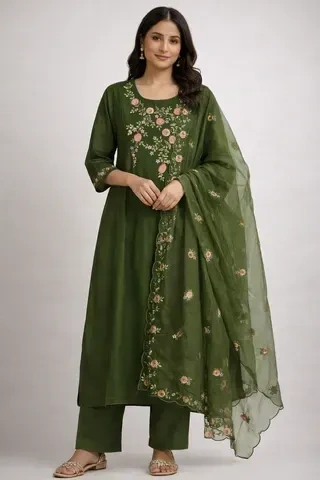
- Look at embellishments: Hand-embroidery and beadwork will show tiny irregularities; machine work is too perfect. Swathi Design’s Pure Chinon Anarkali Gown showcases real handiwork, visible in the minute thread knots and subtle color gradations.
Authenticity Test: The Chinon Touch
Rub a small section of the Anarkali gently between your fingers—authentic chinon will feel cool and will not generate static, unlike synthetics. Hold it up to the light: the weave should reveal a fine, even texture with slight natural slub (thicker threads), a hallmark of handwoven or high-quality chinon.
Anarkali: Pros & Cons
- Pros: Dramatic flare flatters most body types, especially pear and hourglass shapes. Traditional handwork and fabrics connect you to Indian heritage. Comfortable for long events and dancing.
- Cons: Full skirts can overwhelm petite frames if not tailored; require more storage space; maintenance is key to avoid crushing the flare.
The Pure Chinon Anarkali Gown from Swathi Design is a striking example, offered in jewel tones like maroon, navy blue, and emerald green—colors that suit a range of Indian-American skin tones. The free-size design (US 4-12) uses internal tie strings or adjustable seams for a seamless fit, and its lightweight chinon ensures comfort at weddings, Diwali, or formal family events. Pair with polki chandbalis for a traditional look or a statement ring for a modern touch.
Indo-Western Gown: Pros & Cons
- Pros: Streamlined fit suits minimalist, contemporary tastes. Easier to manage and travel with. Versatile for cross-cultural gatherings or US-based receptions.
- Cons: May lack the drama or cultural resonance of a true Anarkali. Fewer styling options for traditional jewelry.
Swathi Design’s collection of Indo-Western gowns (see Dresses) is tailored for the Indian-American woman who wants ethnic flair with modern ease. These typically feature subtle embroidery and a more fitted shape, allowing for movement and blending seamlessly at formal US venues.
How to Style an Anarkali for a Reception
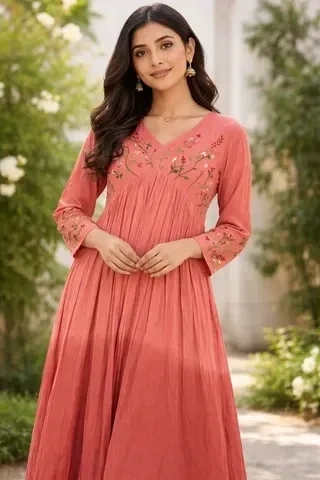
List Snippet: To style an Anarkali for a formal US-based reception, follow these steps:
- Choose a dark, jewel-toned Anarkali for evening sophistication.
- Pair with shoulder-grazing earrings and a metallic clutch.
- Opt for a sleek bun or side-swept waves to highlight the neckline.
- Add a lightweight dupatta if the event is formal; drape it on one shoulder for a modern look.
- Finish with strappy heels that match your jewelry’s metal tone.
Tip: For petite women, choose Anarkalis with minimal border or vertical embroidery to elongate the frame.
Why choose an Anarkali over a gown?
For Indian-American women seeking a blend of tradition and figure-flattering flare at weddings or religious functions, an Anarkali offers cultural resonance and comfort unmatched by Western-inspired gowns. The silhouette’s history and artisanal handwork make it a meaningful choice for significant occasions.
Fabric Breakdown: Chinon, Muslin, and Mul Cotton
Chinon: A soft, finely woven silk variant, chinon is prized for its feather-light drape and subtle luster, originating from northern India. Unlike stiffer silks, it moves fluidly—ideal for full-skirted Anarkalis. Swathi Design’s Pure Chinon Anarkali Gown leverages this property for comfort and movement.
Muslin: This historic Bengal weave, once called “woven wind” by European traders, is celebrated for its breathability and smoothness. The Off-White Silk Muslin Lehenga is hand-embroidered, offering a minimalist yet rich effect—suitable for both traditional and Indo-Western styling.
Mul Cotton: Soft-spun on handlooms in regions like West Bengal and Andhra Pradesh, mul cotton is among the most breathable Indian textiles. Swathi Design’s Pastel Mul Cotton Kurta Set exemplifies how mul can be shaped into elegant, festive attire for all-day comfort.
How to Care for Your Ethnic Gown or Anarkali
- Hand wash in cold water with mild detergent or opt for professional dry cleaning, especially for pieces with hand-embroidery.
- To preserve flare, hang the Anarkali/Gown on a padded hanger; avoid folding for long periods.
- Store with a muslin cloth cover (not plastic) to let the fabric breathe and prevent color transfer.
- Non-obvious tip: After each wear, gently steam the skirt from the inside out to restore volume and maintain the original drape.
Figure-Flattering Choices: Which Silhouette Suits Whom?
The Anarkali’s flare is especially kind to pear and apple body types, as it skims over the hips and midsection. Its vertical seam lines lengthen the body—a boon for petites. The Indo-Western gown, with its sleeker cut, flatters straight or rectangular frames and those who prefer a subtler outline. Both can be tailored to fit at Swathi Design; ask about the internal tie system or seam adjustments for off-the-rack pieces.
FAQs: Anarkali vs Gown
Q1: What is the difference between an Anarkali and a gown?
An Anarkali is a traditional Indian dress with a fitted bodice and a flared skirt, constructed from multiple fabric panels. A gown, in the Indo-Western context, is a floor-length dress inspired by Western eveningwear, with a streamlined silhouette and minimal flare. Both use Indian fabrics and embellishments but differ in shape and cultural resonance.
Q2: Is an Anarkali more traditional than a gown?
Yes, the Anarkali is more traditional: its roots trace back to Mughal India, and it is a staple at religious and family events. The Indo-Western gown is a modern invention, blending Indian textiles with Western cuts, and is more common at receptions or fusion parties.
Q3: Which is better for a reception, Anarkali or gown?
For a wedding reception, both work, but the choice depends on your style. An Anarkali offers drama and tradition, while a gown is sleeker and easier to manage. Pair your choice with appropriate jewelry: ethnic for Anarkali, minimalist for gown. Consider comfort if you expect to dance or move often.
Q4: Can an Anarkali be worn as Indo-Western?
Absolutely. Style an Anarkali with a belt, skip the dupatta, or pair with Western accessories (like metallic pumps or a box clutch) to give it an Indo-Western twist. Choose subtle embroidery and lighter fabrics for a more contemporary, versatile look.
Anarkali vs Gown in Real Occasions: What to Wear When
- Weddings: Anarkali for religious rituals, Indo-Western gown for receptions.
- Festivals: Anarkali in silk or chinon for Diwali, paired with antique jewelry.
- Formal Parties: Gown in subdued colors, paired with a bold accessory, suits cross-cultural events.
- Family Gatherings: Mul cotton kurta set for comfort and style in smaller settings. See Swathi Design’s Handcrafted Pastel Mul Cotton Kurta Set.
For more occasion-specific advice, read our guide on What to Wear for First Karva Chauth or browse our Dresses for more inspiration.
How to Choose: Anarkali vs Gown for Your Next Event
- Identify the occasion: religious, traditional, or contemporary/fusion.
- Consider expected movement: Anarkali for dancing, gown for seated/formal events.
- Match your jewelry: heavy gold/polki for Anarkali, sleek pieces for gown.
- Account for climate: mul cotton or muslin for summer, chinon or silk for cooler temperatures.
- Fit and frame: Anarkali for curves or petites, gown for straight or tall silhouettes.
Shop the Collection
Explore handcrafted ethnic fashion for every occasion. Find your perfect Pure Chinon Anarkali Gown, Off-White Silk Muslin Lehenga, or Pastel Mul Cotton Kurta Set at Swathi Design, or browse our full collection for more authentic Indian-American styles. For personalized styling help, use Swathi Design’s WhatsApp service or browse the Dresses category.
Priya Menon, Textile & Handloom Specialist
Featured in this guide
Part of the Indian Wedding & Festive Dressing guide collection.
Related guides
- Chanderi Silk Suits in USA: Embrace Ethnic Grace for Weddings & Festive Occasions
- Elevate Your Festive Wardrobe: Stunning Indian Dresses for US Weddings & Celebrations
- Celebrate Indian Heritage in the USA: Pure Silk Gowns for Weddings & Festive Glamour
- Elevate Your Wedding Look with Exquisite Pure Banarasi Kora Tissue Sarees
- Timeless Elegance: Discover the Pure Banarasi Kora Tissue Saree Collection for Weddings & Festivals